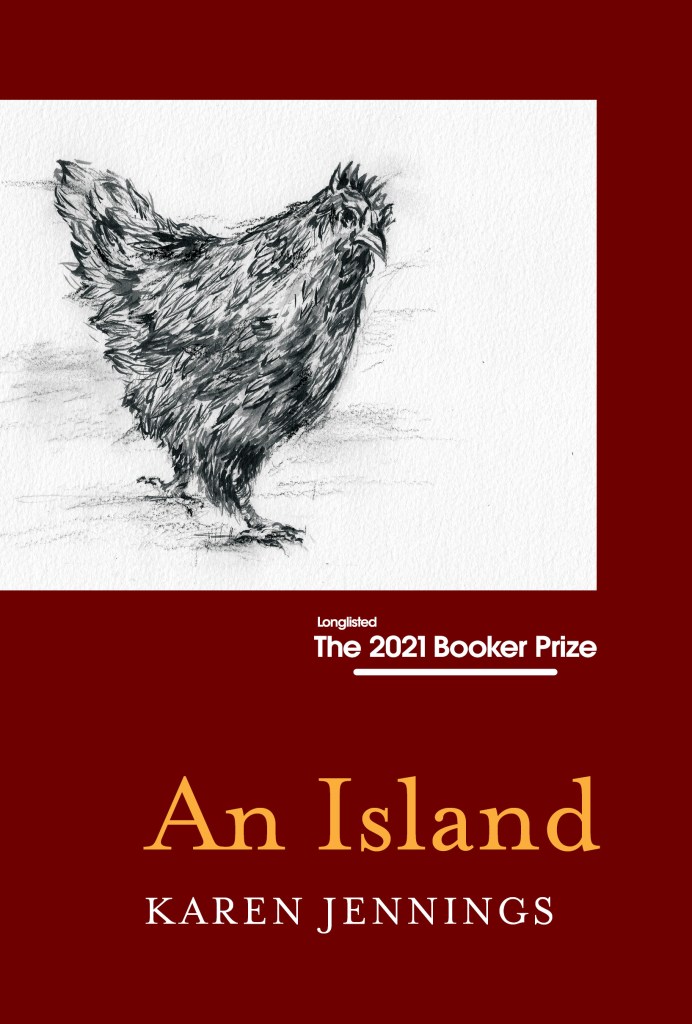
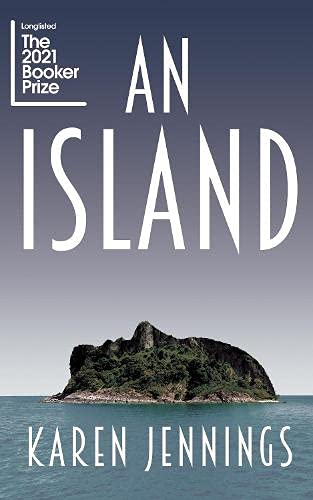
AN ISLAND by KAREN JENNINGS longlisted for the 2021 Booker Prize!

Karavan Press is thrilled and deeply honoured to announce that An Island by Karen Jennings has been longlisted for the 2021 Booker Prize. Co-published with UK publisher, Holland House Books, An Island tells the story of Samuel, a lighthouse keeper.

Samuel has lived alone for a long time; one morning he finds the sea has brought someone to offer companionship and to threaten his solitude …

A young refugee washes up unconscious on the beach of a small island inhabited by no one but Samuel, an old lighthouse keeper. Unsettled, Samuel is soon swept up in memories of his former life on the mainland: a life that saw his country suffer under colonisers, then fight for independence, only to fall under the rule of a cruel dictator; and he recalls his own part in its history. In this new man’s presence he begins to consider, as he did in his youth, what is meant by land and to whom it should belong. To what lengths will a person go in order to ensure that what is theirs will not be taken from them?

A novel about guilt and fear, friendship and rejection; about the meaning of home.

“The far southern extremities of our planet produce remarkable, distilled, and ravaged tales. An Island has to be counted as among the most remarkable of these. Karen Jennings offers a chilling, immersive portrait of Samuel, a lighthouse keeper on a remote island off the African continent. He is a man at the edge of history, until the arrival of a refugee stranger returns him to everything he most needs to forget. A gripping, terrifying and unforgettable story.”  — Elleke Boehmer
THE 2021 BOOKER PRIZE LONGLIST ANNOUNCEMENT

‘A Circle of Women’ by Tracey Randle

Tracey Randle kindly shared with us this beautiful poem she was challenged to write. See which Karavan Press title is woven into the fabric of her ode to bookclubs, women and reading:

A circle of women

A circle of women facing each other might look like:
An embroidered cloth found in a forgotten museum store
Their names pulled in and out in cotton
As fingers and minds met each week
To sew something of themselves into the
collective cloth  

A circle of women facing each other might look like:
towers of books piled up like small mountains
the names of writers and poets pulled in and out
As fingers quietly turned pages
To read something of themselves in the
collective stories

A circle of women facing each other might look like:
all the hopes and dreams and fears they carry
of when breath becomes air
sewn into a cloth or told through another book’s story
As fingers and minds meet
Taking notes on grief
Daring greatly to speak something of their louding voices into the 
collective space

A circle of women facing each other might look like:
A starless sea of stories filled with 
empty champagne flutes and a stack of china plates smeared with crumbs
washing up on a hibiscus coast
A garden light flashing on and off in the night
As the oak leaves and nighttime birds catch their laughter
Recognising that on earth we are briefly gorgeous

A circle of women facing each other might look like:
All the embroidered cloths our grandmothers have ever made
All the towers of books women have discussed together
while thinking up a hurricane
A line of tears caught in thread
A seam of hope woven in a tapestry
A string of words that prevents the great alone 
We are so much more than girl, women, other
Where the pull of the stars shows us 
The wonder of acceptance

To read more about Tracey click here: Cape Herstorian

Thank you, Tracey, for reading and sharing ‘A circle of women’ with us.

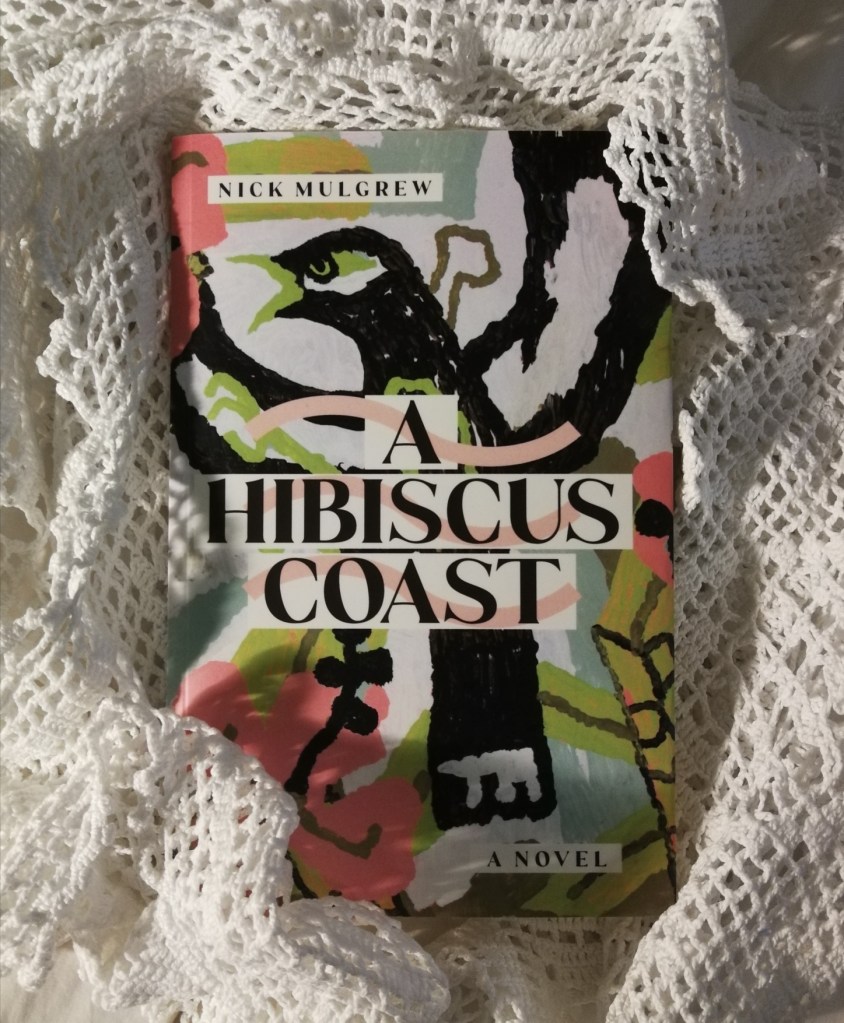
A Hibiscus Coast by Nick Mulgrew wrapped in a tablecloth crocheted by my (Karina’s) great-grandmother.

Dawn Garisch on the genesis of her novel, BREAKING MILK, shortlisted for the 2021 Sunday Times/CNA Fiction Award

2021 Sunday Times/CNA Fiction Award shortlist

In this novel, I explore aspects of separation and connection. Several mothers I know are estranged from their adult children, and many of us are disconnected from nature, intuition and creativity. I track the nuanced task of knowing when to intervene and when to withhold action in the lives of our own or other women’s children.

However, there are situations where we need to cut – initiation, divorce, surgery. Breaking Milk uses the metaphor of milk and cheese-making to ground these preoccupations during one day in the life of Kate, a geneticist who became a farmer when ethics in her lab were compromised. I job-shadowed a friend to learn about this ancient craft that employs patience and invisible micro-organisms to preserve milk.

I am interested in the idea “you can be right, or you can have relationships”; also how our intelligence has had some disastrous consequences for the natural world on which we depend.

Embedded in these concerns is the role of women in society – what it takes to say no, and how a woman finds her feet after divorce. The books that have informed my inquiry are Disgrace by JM Coetzee, and Accident: A Day’s News by Christa Wolf.

Sunday Times Books

Continue reading:

Extract from Breaking Milk by Dawn Garisch

Kate Sidley reviews Breaking Milk by Dawn Garisch for the Sunday Times: “A small world of deep metaphorical meaning”

Read about the organic cheese farm that inspired the setting for Dawn Garisch’s Breaking Milk: FYNBOSHOEK

Follow the cheese farm on Instagram: FYNBOSHOEK CHEESE FARM

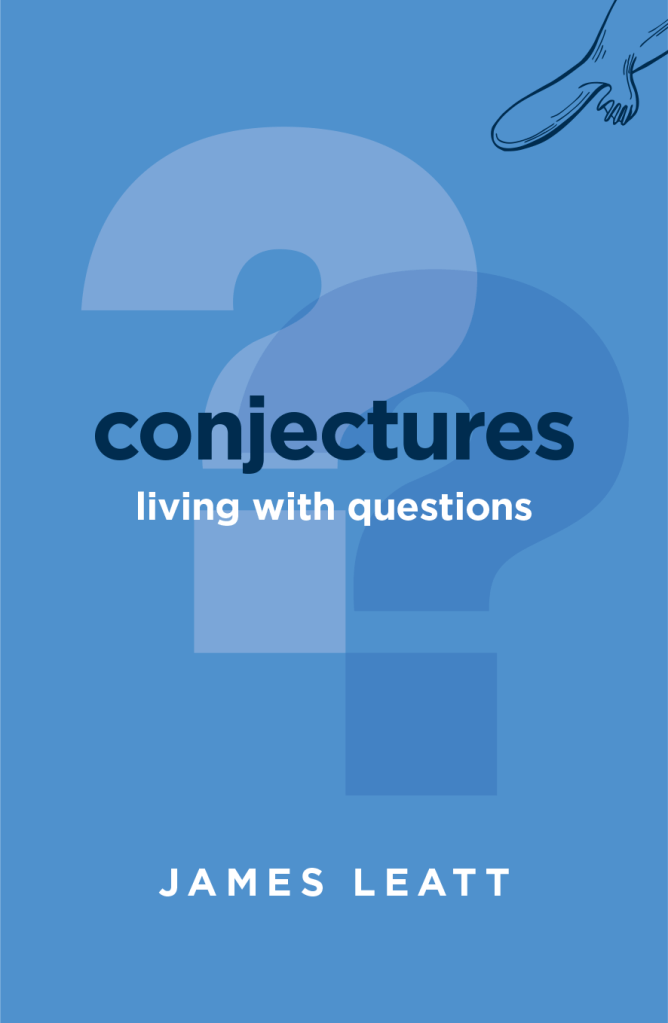
Forthcoming from Karavan Press: CONJECTURES by JAMES LEATT

Conjectures, when the book still went by a different working title, was one of the first manuscripts to arrive on Karavan Press’s doorstep. “Lovely to be entrusted with an author’s intellectual and creative work. A great honour and responsibility. Looking forward to the read…” I commented about it on Instagram at the time.

The manuscript and the author came highly recommended by a writer who has been running creative writing classes for a long time and who knew that this book was special and needed a home with an independent publisher. They thought we would be a good fit. And so it is.

Reading James’s reflections about his life and work, I felt as if someone had written about my own intellectual and spiritual journey, but with the deeply grounded theoretical and practical insights that I had lacked at the time when I was travelling this path. He writes with care, integrity and joy, and an unmistakable gratitude for the treasures he had discovered along the way – a journey marked by many difficult questions and challenges, but also rewards and achievements.

Beautifully written, Conjectures will appeal to readers who have questions of their own and are willing to open their hearts and minds to them, no matter how complex and arduous the attempt may be. Some of us might arrive at a different destination, but the journey itself is quite a thrill.

The book’s cover and content have been designed by Stephen Symons. We are in the final stages of production and I can’t wait to share this intellectual and creative literary gem with our Readers.

Karavan Press title: Conjectures – Living With Questions by James Leatt

DESCRIPTION

James Leatt was nine when the Nationalist Party came to power, and eleven when he saw a documentary of the Allied forces liberating Nazi death camps. For most of his life the shadows of apartheid and the Holocaust have dogged his beliefs about faith, the meaning of life and the moral challenges humankind faces.

Conjectures is a philosophical reflection on his life and times as he grapples with the realities of parish work in black communities, teaching ethics in a business school under apartheid, managing a university in the dying days of the Nationalist regime, and eventually working in higher education in post-apartheid South Africa.

Weaving strands of his personal life with the questions of theodicy and modernity as well as drawing upon the Western philosophical tradition and the wisdom of East Asian traditions such as Taoism and Buddhism, he comes to terms with a disenchanted reality which has no need for supernatural or magical thought and practice.

He has learned to live with questions. If you no longer believe in God and a sacred text, what are your sources of meaning? What kind of moral GPS allows you to find your way? Is what might be called a secular spirituality even possible?

Conjectures traces the author’s search for a secular way of being that is meaningful, mindful and reverent.

ISBN: 978-0-620935-87-6

Publication date: August 2021

Also available on Kindle: Conjectures – Living With Questions

ABOUT THE AUTHOR

DR JAMES (JIM) LEATT began his career in banking before becoming a Methodist minister, working on the Cape Flats, in District Six and at the Federal Theological Seminary, Alice. In 1977, he became Lecturer in Religious Studies at UCT. His work in industrial relations mediation and interest in applied ethics led to a joint appointment with the GSB at UCT in 1980. Three years later, he was appointed to the first chair in Social Ethics at a South African business school. In 1985, he became a Deputy Vice Chancellor and Vice Principal at UCT, and in 1991, he took up the post of Vice Chancellor and Principal of the University of Natal, where he initiated a major strategic review of the university. On his return to Cape Town, he became CEO of the Cape Higher Education Consortium involving the four public universities in the Western Cape, and consulted in higher education.

He is the author of journal articles, chapters in books, and is editor-in-chief of Contending Ideologies in South Africa (David Philip, 1986 & 1989). He was a founder member of the Independent Mediation Service of SA (IMSSA). He retired after eleven years as Deputy Chair of the Board of Directors of the Institute for Democracy in South Africa (IDASA), and as Deputy Chair of the Tertiary Education Network (TENET).

James and his wife Jenny live in Somerset West. They have two children, Christopher and Ann-Marie.

BREAKING MILK by DAWN GARISCH shortlisted for the Sunday Times/CNA Fiction Award

FICTION AWARD

CRITERIA

The winner should be a novel of rare imagination and style, evocative, textured and a tale so compelling as to become an enduring landmark of contemporary fiction.

CHAIR OF JUDGES KEN BARRIS COMMENTS:

It is always difficult to select a shortlist in a competition at national level, and this year the fiction prize included books published in both 2019 and 2020. It was also a two-year period in which many of SA’s best and brightest novelists happened to publish, from gravitas-rich veterans to brilliant newcomers. It was a daunting but immensely enriching task for the panel, and we finally settled on five excellent novels.

Marguerite Poland is in scathing form in her heartbreaking tale of a young black missionary in the Eastern Cape, while Siphiwe Gloria Ndlovu writes about colonialism and toxic masculinity with biting accuracy. Mark Winkler’s story is a subtle reflection on collective guilt and individual isolation, and Dawn Garisch’s portrayal of the struggle for connection is intelligently and beautifully observed. The youngest author in the line-up is Rešoketšwe Manenzhe with her engaging debut about migrancy and the destruction wreaked on a mixed-race family by the so-called Immorality Act.

FICTION AWARD SHORTLIST

Breaking Milk
Dawn Garisch (Karavan Press)

Set on a farm in the Eastern Cape, and taking place over one day, this is a finely wrought meditation on motherhood, not only in personal and human terms, but also with regards to ourselves as destructive children of the earth.

The History of Man
Siphiwe Gloria Ndlovu (Penguin Fiction)

A brilliant portrait of a white, male colonialist seen through the eyes of a black woman writer. Emil Coetzee was a supporting character in Ndlovu’s prize-winning predecessor The Theory of Flight, and here she places him in the centre of the story, examining the forces that created this “man of empire”.

Scatterlings
Rešoketšwe Manenzhe (Jacana Media)

Taking place more than 100 years ago, this is a highly original novel about migrancy that incorporates myth and ritual and the stories of extraordinary ordinary women. On this journey, someone will get lost, someone will give up and turn back, and someone may go all the way to the end.

A Sin of Omission
Marguerite Poland (Penguin Fiction)

A wrenching, deeply felt story about Stephen Malusi Mzamane, a young Anglican priest, trained in England but now marooned in a rundown mission in Fort Beaufort. He is battling the prejudices of colonial society, and the church itself, when he is called to his mother’s rural home to inform her of his elder brother’s death.

Due South of Copenhagen
Mark Winkler (Umuzi)

A skilled examination of memory and culpability. Max Fritz lives quietly in a small Lowveld town, the editor of the local newspaper. Seemingly contented, he is shadowed by his childhood, and by the border war he was forced to take part in. When news of a boyhood friend reaches him, the past rears up painfully.

Read all about the Fiction & Non-Fiction shortlists here:

The 2021 Sunday Times/CNA Literary Awards shortlists

Forthcoming from Karavan Press: THE SKIPPER’S DAUGHTER by Nancy and Nancy Richards

Ahoy there, dear Readers!

Some stories are simply unforgettable. When I first heard about this one, my reaction was: ‘If you cloak this in a novel, nobody will think it plausible.’ But the story of The Skipper’s Daughter is not a novel, it is the most incredible – true – family story. Truth stranger than fiction, as they say.

The beloved broadcaster and journalist Nancy Richards has been weaving together the various strands of this family story over the past three decades, interviewing her mother – the heroine of the tale – searching family archives and correspondences, speaking to family and friends, travelling, and writing down everything that she could remember herself. The lockdown last year finally gave her an opportunity to put it all together. The result is this stunning book – part her mother’s diaries and recollections, part letters and newspaper articles chronicling the main events of the story, and part Nancy’s own commentary and annotations, all beautifully illustrated with photographs and images of memorabilia collected over many years – that will transport readers in time and place and make you wonder about the extraordinary events as they unfolded after Nancy Richards Senior, at the age of sixteen, decided to go to sea with her father. And this, in 1938 …

On the long stretch down to Australia, I really became quite the proficient sailor. I had to steer the ship at some stage during the day. The first time I was taken to see the white wavy wake following the ship at the initial attempt, but eventually I became adept at keeping a straight course. My father was somewhat appalled at my mathematics though. He taught me the rudiments of trigonometry and how to use a sextant. Each noon, I had to ‘take the sights’ of the sun and work out the ship’s position.

Nancy Brooks was sixteen when she went to sea with her father. Despite a gypsy fortune-teller’s warning to her mother, on 2 July 1938, she signed up as Captain’s Clerk for a shilling a week on the SS Nailsea Manor. Leaving from Birkenhead in Liverpool, the ship was to circumnavigate the world. The log Nancy Fancy Pants, as she became known, types during the voyage tells tales of exotic ports, fascinating people and places, and the rope-and-grease routine of a sailor. On board, she masters navigation, the Morse code as well as all the sea knots, and she flies high on the swing the crew rig up for her. On land, she learns even more, but when a squall takes its toll one stormy night in Australia, she is unprepared for the lessons death brings. Between the neatly typed lines of her extraordinary record, she captures her own journey, of self-discovery, and love. The Skipper’s Daughter interweaves the log with Nancy’s recollections and is lovingly shared with us by her daughter, Nancy Richards.

ISBN: 978-0-620-93588-3

Publication date: July 2021

A percentage of the proceeds from sales of this book will be donated to the National Sea Rescue Institute.

The book was designed by Monique Cleghorn. Working on it with these two fabulous women (and Lulu assisting) has been one of the greatest literary joys of the past year and I cannot thank Nancy enough for sailing this wonderful project into the Karavan Press harbour and Monique for making the book look so beautiful.