Nancy Richards reviews Tunnel by Nick Mulgrew

I have been in some unexpected, uncomfortable and unsettling situations in my book journeys. But never quite like the one that stretches out in Tunnel. The title itself conjures a certain inescapability with a darkness, at the end of which there is not always light. A tunnel is described as an ‘artificial passage – especially one built through a hill or under a building road or river’. It’s the artificial bit, that gets to me, it’s not natural and in this particular tunnel, it’s certainly not normal.

It starts out innocently enough with Andreas and Samuel sniping at each other in the familiar, but spikey the way that couples getting on each other’s nerves do. They’re in Samuel’s inherited Oldsmobile, a bad start, and headed for a much-needed weekend away – on a road that goes through a mountain, via, yup, a tunnel. If you’re from the Cape, you’ll recognize which one. But if you’re phobic about breaking down in a tunnel, better stop reading now. Because this is when the you-know-what hits the fan. Suddenly they’re not alone. Enter a khaki-clad woman just flown in from Harare, in a red rental. Turns out she’s a location scout, but the point is, she’s competent, not so the boys. And then there’s the robotic radio message. And just when you think you’ve got this, clearly this is no ordinary aborted road trip. ‘Ledi and the man’s eyes met as they listened. In the orange light of the tunnel, his eyes shone like amber, studded with inclusions, a glistening stillness at odds with his demeanor.’ Nor is it no ordinary piece of writing.

More characters enter the uncompromising tunnel and psychologies start to clash – it’s complicated, there’s a minibus full of previously screaming little girls, a diabetic driver and ‘they’, Mo, a bristly roadblock officer, with personal issues. There are ominous seismic noises off and the insistent Voice of South West.

Actually, all the entrapped have got issues, one way or another – and they’re all starting to snipe. I couldn’t possibly tell you what happens without giving you an escape route – but there’s a wreck, ants, the incisors of a grey-brown baby and a desiccating lack of liquid and food involved. Apocalyptic springs to mind. I can only suggest you take the book to bed with a large glass of water, a strong nerve and hopefully someone who will give you a reassuring hug. It’s just a story. I think.

First published on the Good Book Appreciation Society.

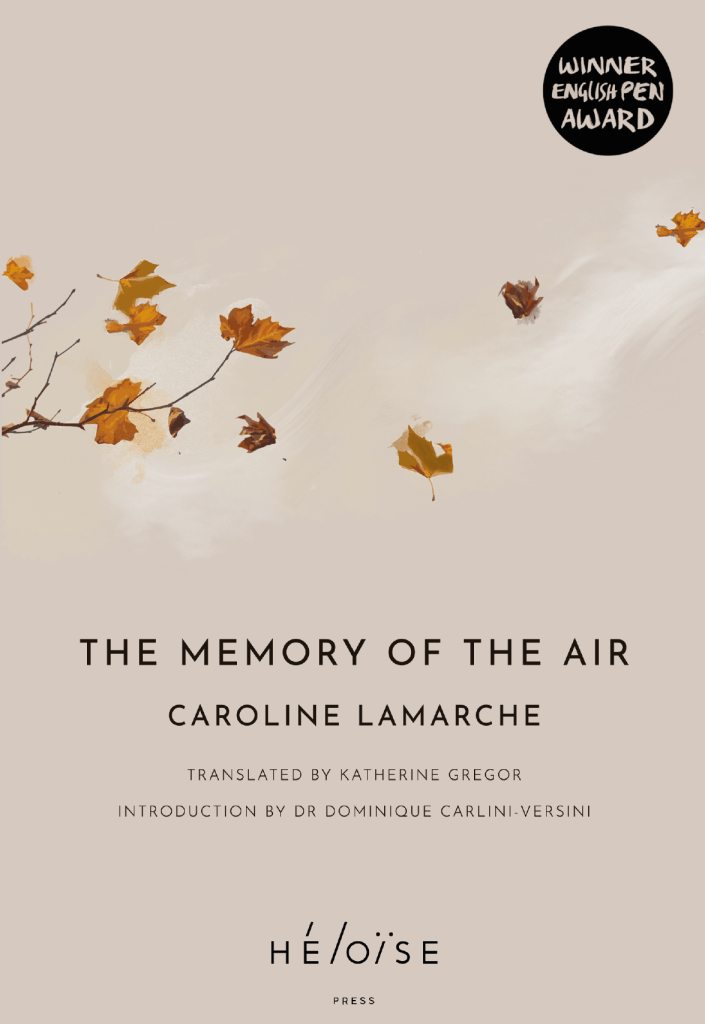
Dawn Garisch reviews The Memory of the Air by Caroline Lamarche

Words are never sufficient, there comes a time when the body naturally takes over, so to speak. (73)

In the introduction, British academic Dr Dominique Versini describes Belgian author Caroline Lamarche’s book as semi-autobiographical. She alerts us that the text concerns rape, and commends Lamarche for her contribution to the subject.

So we enter the story knowing that this specific form of violence will be / has been committed. By whom? Where? How? This replicates the chronic uncertainty many women experience, aware of the prevalence of rape, and that it is frequently committed by someone familiar.

In the opening chapter, the protagonist dreams of a dead woman lying in a gully. This dream body compels the author, in tandem with the reader, to make the regular and dangerous descent, visiting her and what she stands for in order to care for her and to understand her. She is both dead and alive, both old and young, she is dead yet no longer disempowered.

The rest of the book is the slow uncovering of the story within the story.

Early on, we meet the last man she loved, whom she calls Man-fore (man before what? is a question that haunts the reading); much of the book dwells on the complexities of this relationship as the story spirals in towards several disparate yet related events and their aftermath. This exploration includes how one might recount the story of trauma, and to whom; how that story is received, interpreted, and then used for or against the person describing what happened. Both the police and someone close to her use details of her narrative against her; the reader might also find themselves weighing up the contributing factors in her account − even as the protagonist makes herself extremely vulnerable in the telling − thereby deciding how and where our empathy might land.

Writing is a form of witnessing; through this practice, the writer might uncover the depths of their own experience, thus supporting her quest for meaning and for finding some resolution. A reader, following the author’s process, could also come to a new understanding.

Lamarche’s book did that for me. Her skill in using understatement and stream of consciousness, together with evocative images, has left me with much to ponder after a powerful emotive experience, despite her relatively unemotive language. I am reminded of Annie Ernaux’s work.

The final scene in the book makes an analogy that is shocking and perceptive, expanding our understanding of the author’s narrative. As a writer, reader, and woman, I found this book original, compelling and thought-provoking.

The Memory of the Air by Caroline Lamarche (Héloïse Press)

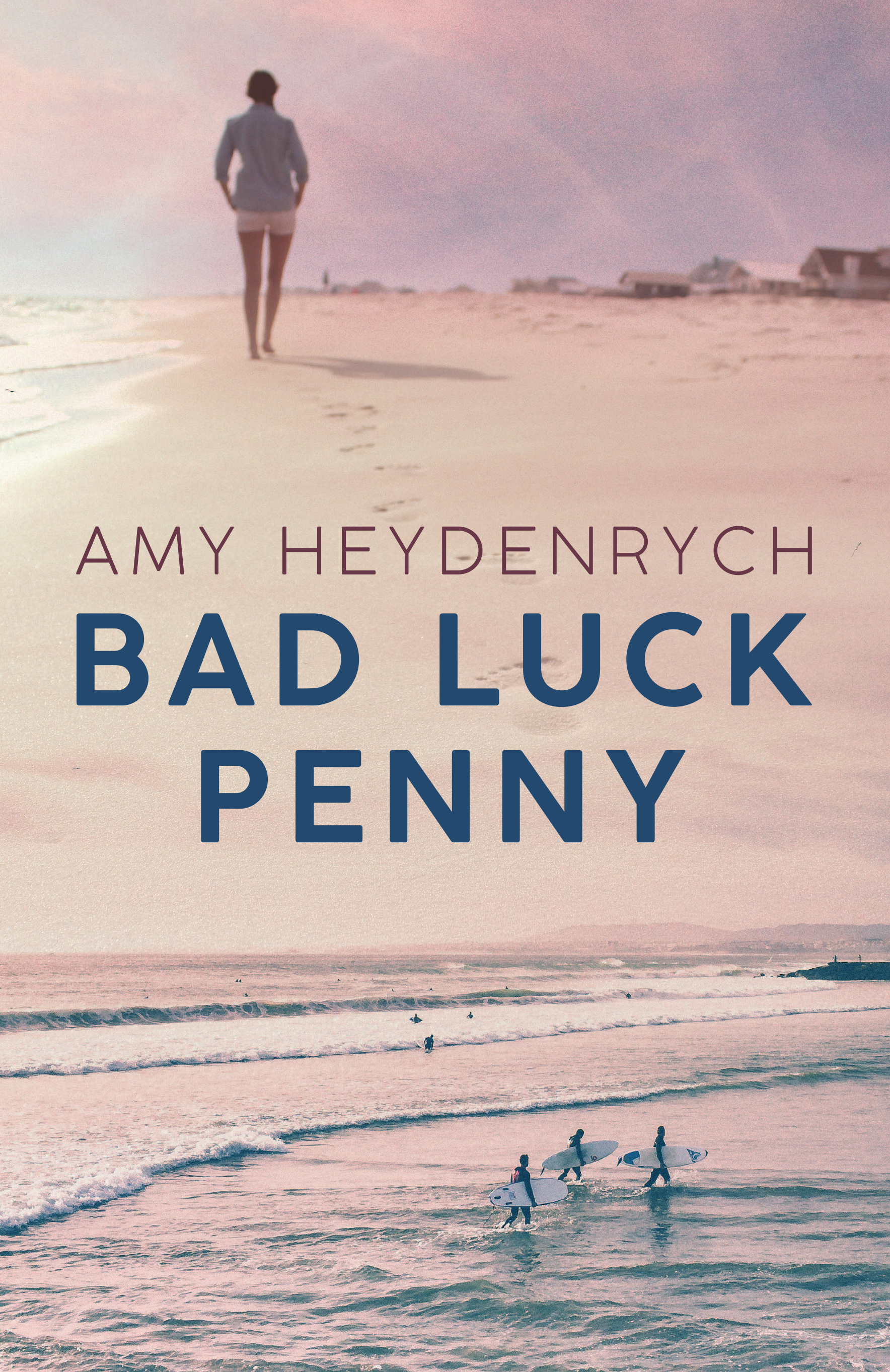
What readers say about BAD LUCK PENNY by Amy Heydenrych

“This novel touched me in surprising and unexpected ways. We all know Amy Heydenrych can write, but Bad Luck Penny takes her body of work to new and exciting heights. By telling the intimate, personal story of one family grappling with the aftermath of COVID, the novel evokes themes of generational trauma, broken hearts and shattered dreams. Yet her wry and witty writing style makes it a highly entertaining read. What captured me most was Lou’s story, with which, without giving too much away, many South African women can identify.” – Anna Stroud, author of Who Looks Inside

Bad Luck Penny by Amy Heydenrych is a stunning book. It’s going to win all the literary awards. The writing is beautiful, introspective and melancholic. I loved reading this book slowly, so I could fully appreciate the beautiful writing … it was delicious. A book about family, grief, trauma, making mistakes and dealing with a mid-life crisis all set in an unmistakably South African context. Definitely my book of the year so far!” – Catherine Jarvis, YA author

“A heartwarming family drama – deliciously and dangerously nostalgic.” – Gail Schimmel, author of, among others, Never Tell a Lie, Little Secrets, and most recently, The Finish Line

“The most beautiful family story I have read in a long time.” – Anna Vaulina, reader

“One of my favourite niche genres is the story of the female protagonist who returns to her childhood holiday home as an adult. These books are often set in America (think the Hamptons and Martha’s Vineyard) or the UK (the Cornish coast). The protagonist unearths family secrets and quite often rekindles – for good or for ill – her relationship with the old flame who never left. Bad Luck Penny belongs firmly in this genre, but is set – delightfully enough – in False Bay, near Simon’s Town. Lou returns to her grandparents’ home with her husband and child in tow, to celebrate the life of her beloved late grandfather. She is also determined to revitalise her flagging literary career by telling her grandmother’s story while she is still alive. The Australian branch of the family is there too with their tone-deaf expat comments that are sure to set her teeth on edge. Also lurking in the village is that old flame, whose hotness burns as high as ever. The novel also reckons with some aspects of our recent apartheid and post-apartheid past. A lovely read! IYL The Paper Palace by Miranda Cowley Heller.” – Fiona Snyckers, author of, among others, Now Following You, Lacuna, and most recently, The Hidden

“My book of the month … is Amy Heydenrych’s (aka Amy Johnstone’s) Bad Luck Penny. It’s set in Scarborough in the Cape during the time of Covid and the July riots but also deals with the protag’s gran’s story from when she was young. It’s poignant and funny and the family dynamics in the book are so gorgeously written, I feel like it might just be Amy’s best book yet. My favourite line (amongst many favourites) ‘Her love language was martyrdom’. Fam, I snorted my coffee.” – Pamela Power, author of, among others, Ms Conception, Things Unseen, and most recently, The Sick Room

Bad Luck Penny adeptly balances the hilarious with the heartfelt in its exploration of midlife, motherhood and a family in crisis. A deeply honest and compassionate story about a woman looking to the future while wrestling with her past.” – Hayley Chewins, author of The Turnaway Girls and the upcoming I Am the Swarm

“An epic tale of family, storytelling at its very best.” – Qarnita Loxton, author of the Being Series and most recently, What’s Wrong with June

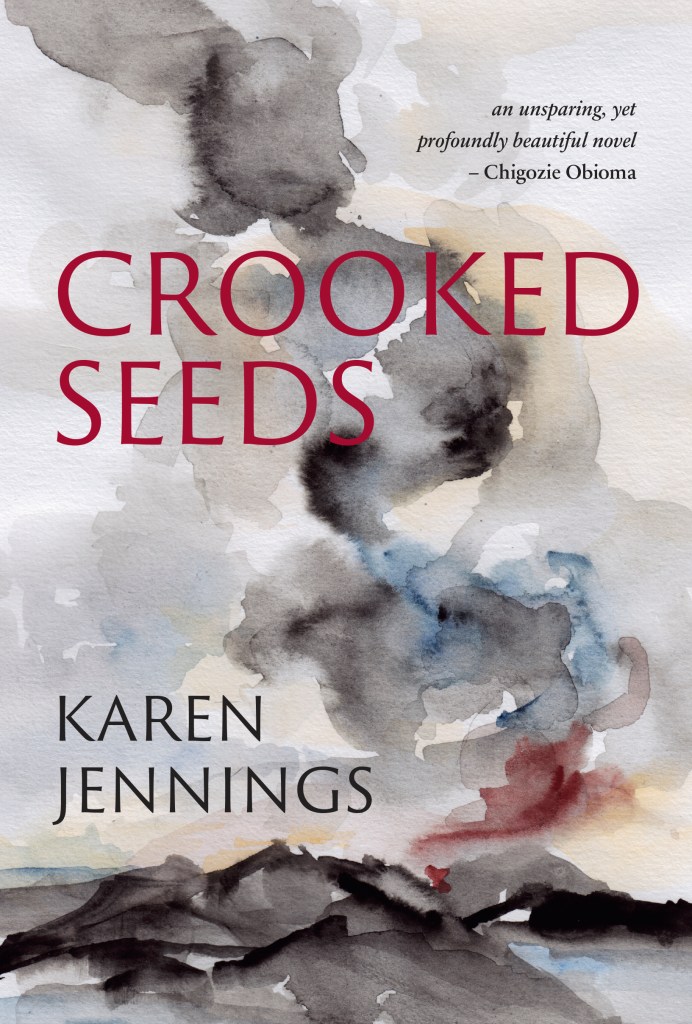
Gail Gilbride reviews Crooked Seeds by Karen Jennings

Karen Jennings has delivered another masterpiece! The compelling Deidre Van Deventer confronts her family’s dark past in this riveting novel about trauma, guilt, and entrapment. In her dismal abode in the drought-ravaged Cape Town of 2028, the protagonist receives a call from the South African police department. Her family home, reclaimed by the government, is now the scene of a criminal investigation. After decades underground the remains of bodies have been found on this property. Detectives interrogate Deidre about her missing brother’s links with a 1990’s pro-apartheid group, but she appears to know nothing about this.

What Deidre does know is that, because of her sibling, she was denied her dream life. Instead, she is left with an aging mother, and she’s dependent on government help and kind neighbours. Fresh evidence surfaces and detectives keep gently pressurising Deidre to give them anything at all that she might remember …

Jennings’s vivid, stark prose and visceral imagery secure her a place as one of our greatest writers.

I dare you to read this intense, unforgettable novel.

Gail Gilbride is the author of Under the African Sun and Cat Therapy.

Steven Boykey Sidley reviews ‘Inside your body there are flowers’ by Diane Awerbuck

There is a commercial hierarchy in publishing which marks where money is most easily and quickly made at a given moment in the zeitgeist – the industry keeps a close watch on these trends. After all publishing companies need to stay in business. Perhaps even make a profit or two.

So we have forensic crime or romcom or up-lit or immigrant stories or sci-fi or light mystery or historical dramas or fantasy or erotica all battling for their moment in the sun. Which is often duly afforded them from time to time by the changing dictates of public taste.

But there are a few genres which, if they are lucky to be published at all, generally languish sad and neglected at the bottom of the revenue table and at the back of the bookstore. We all know which they are, because we so rarely buy them.

They are short stories and poetry.

I read short stories only occasionally. The most recent was Lauren Groff’s Florida and I remarked in a review that I posted at the time that a short story is it’s own microscope. Every word, every sentence, every phrase must count towards a 4 or 9 or 14 page plotlet. Every ounce of fat must be pared, only muscle must remain – lean, strong, compressed. Its fuel is its scarcity of on-page real estate.

And so, this collection by Diane Awerbuck. The difficulty in writing a cohesive review about short stories is often their spread; one cannot possibly cover each story in a collection. Even so, there are things to be said.

The first is that Awerbuck is an astonishingly good wordsmith, forging sentences and phrases dripping with allusion and dimensionality or just the music of finely wrought language. Part of joy in reading this book is to read a sentence, stop, savour, and go back and read that one sentence again, its effect amplified by the repetition.

This alone is worth the price of admission, but the stories themselves bear commentary. Some of the characters in the stories overlap and drag the reader through time. An insecure and barely post-pubescent teenager meeting a bunch of army boys on a train, [almost] losing her virginity some years later in another, sinking into the grief of the spurned lover in another, wrestling the certainty of a dread disease in another, communing with her late father long lost to suicide in another.

There are individual stand-alone stories too, an unlikely lust-soaked love story in 19th century Fish Hoek, a larger-than-life celebrity corpse on display in a funeral home and the kind attentions lavished on it by the mortuary make-up technician, a story of sin and redemption attending a death in a Karroo farmhouse.

Threading through this entire collection are commentaries around the big themes of a life closely examined – love, sex, death, meaning, family, self – each buried in stories that bring something new to these well-worn territories; a surprise (sometimes gentle, sometimes shocking) stalks every plot.

(There is the whiff of autobiography in many of the stories, some of which are borne out in the acknowledgements, which have the effect of wanting to have a wine-drenched dinner with the author to probe further.)

If you have not ever bought a short story collection, or have bought just a few, do yourself this favour and buy Inside your body there are flowers. And after you have finished this gorgeous outing spare a moment of gratitude for those publishers who bet the commercially impossible odds on books like these, simply just because it strikes them as the right thing to do (Karina Szczurek at Karavan Press in this case, others mentioned in Awerbuck’s acknowledgments).

First posted on GBAS & RAGBL.

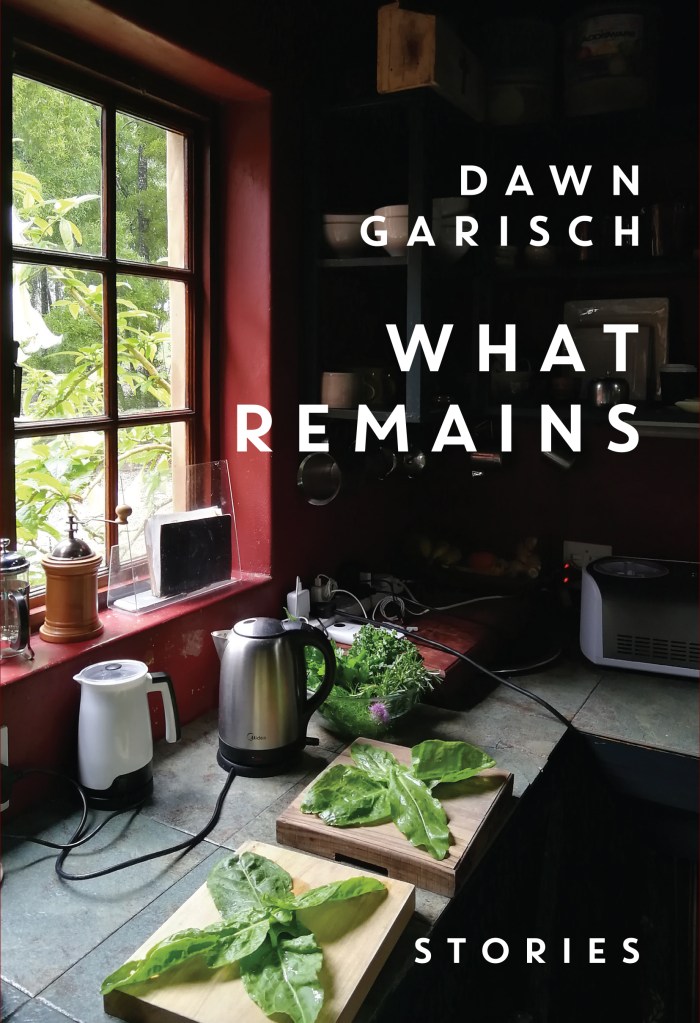
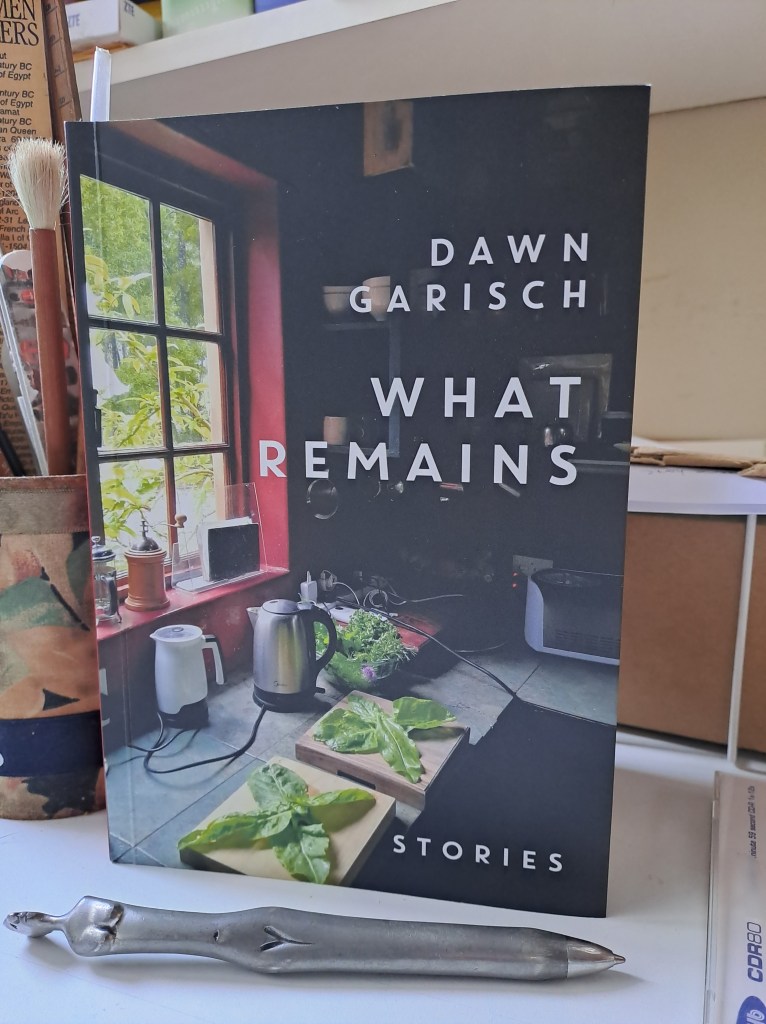
Arja Salafranca reviews WHAT REMAINS by Dawn Garisch for News24

Just before going to sleep one night, I read Dawn Garisch’s story Knock, Knock, which is about an encounter between a man and woman who are unknown to each other and meet randomly when the woman knocks on the man’s door asking for sugar. 

The nearest restaurant is two hours away, and they have both driven somewhere isolated in a quest for peace and a way to escape their everyday lives.

The story lulled me to sleep with its sweet melody of this serendipitous encounter and its satisfying conclusion.

What Remains is novelist Dawn Garisch’s powerful and compelling debut collection of short fiction. Not all the stories lulled me to sleep, though. Some left me a little uneasy, in a good way, mulling over and digesting the events of the stories.

Here are stories about marriages barely holding together by the crumbling remains of a long-ago glue that’s losing strength. Here are women who have lost husbands or are coming to terms with the realisation that the unions they stayed in so long weren’t quite as glorious as hoped. A man steps outside his life to take an unhealthy interest in other people, another man contemplates a dalliance with another woman, and a married man falls in love with another man …

Continue reading: News24

Nancy Richards reviews What Remains by Dawn Garisch for Woman Zone

Dear Dawn Garisch

I have just finished your book of short stories, What Remains. I am so sad. I am already missing my nightly fix of meetings with your panoply of thinking, suffering, worrying, reflective, ordinary-not-ordinary characters. Of stepping, albeit briefly, into their exquisitely word-painted lives, their shocking encounters, intriguing histories – in some cases deep into their hearts, their troubled psyches and relationships, in others, fathoms deep into their upbringings to touch on what makes them tick. Sometimes I could piece together the puzzle of their nostalgic pasts, and sometimes, at the endings, I was left wondering about their futures – their next steps, like sitting on the edge of a cliff …

Continue reading: Woman Zone