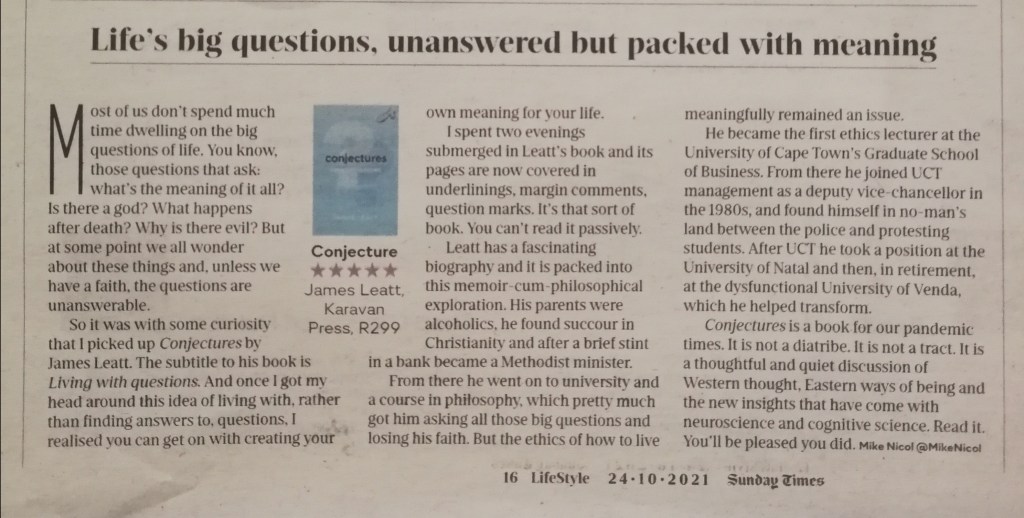
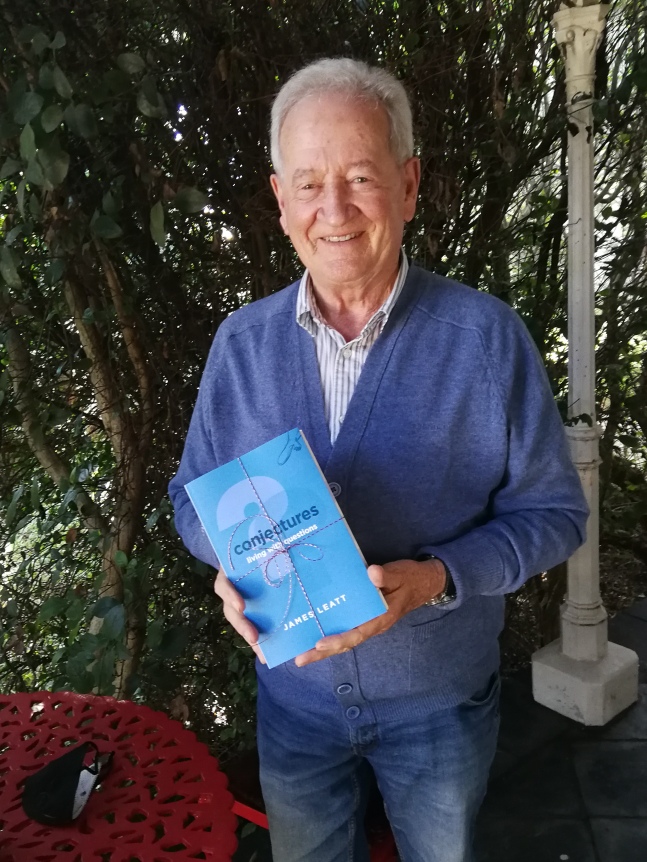
Event 2: “Let’s Talk About …” is SOLD OUT!
(All other events nearly so. Please book asap to avoid disappointment.)

Ancient paths. New literary journeys.
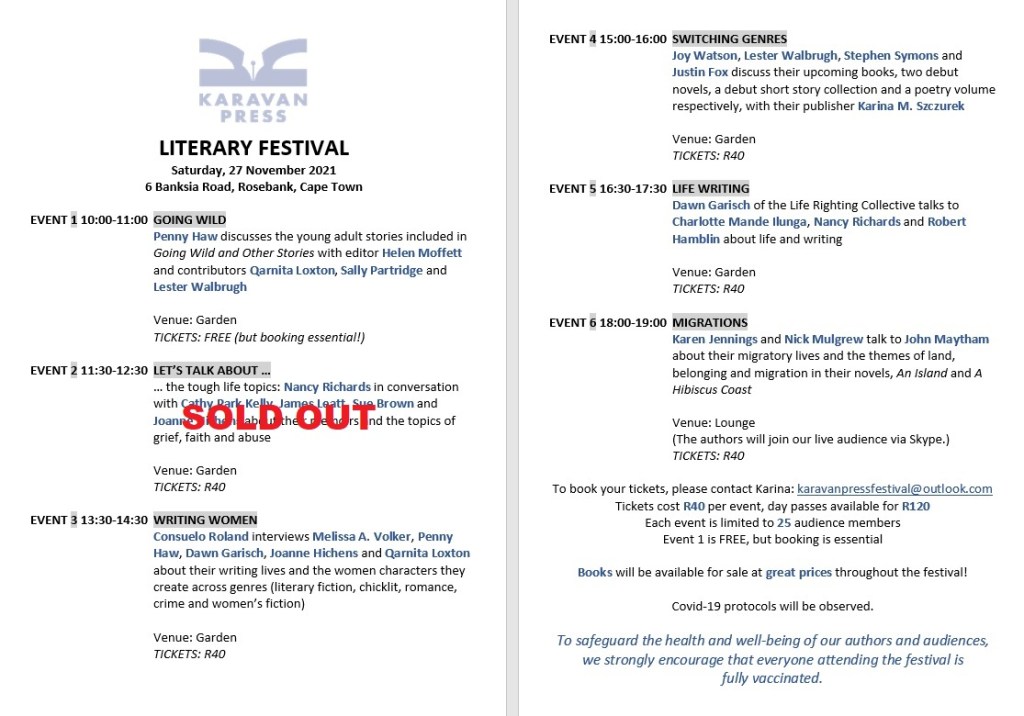
Event 2: “Let’s Talk About …” is SOLD OUT!
(All other events nearly so. Please book asap to avoid disappointment.)
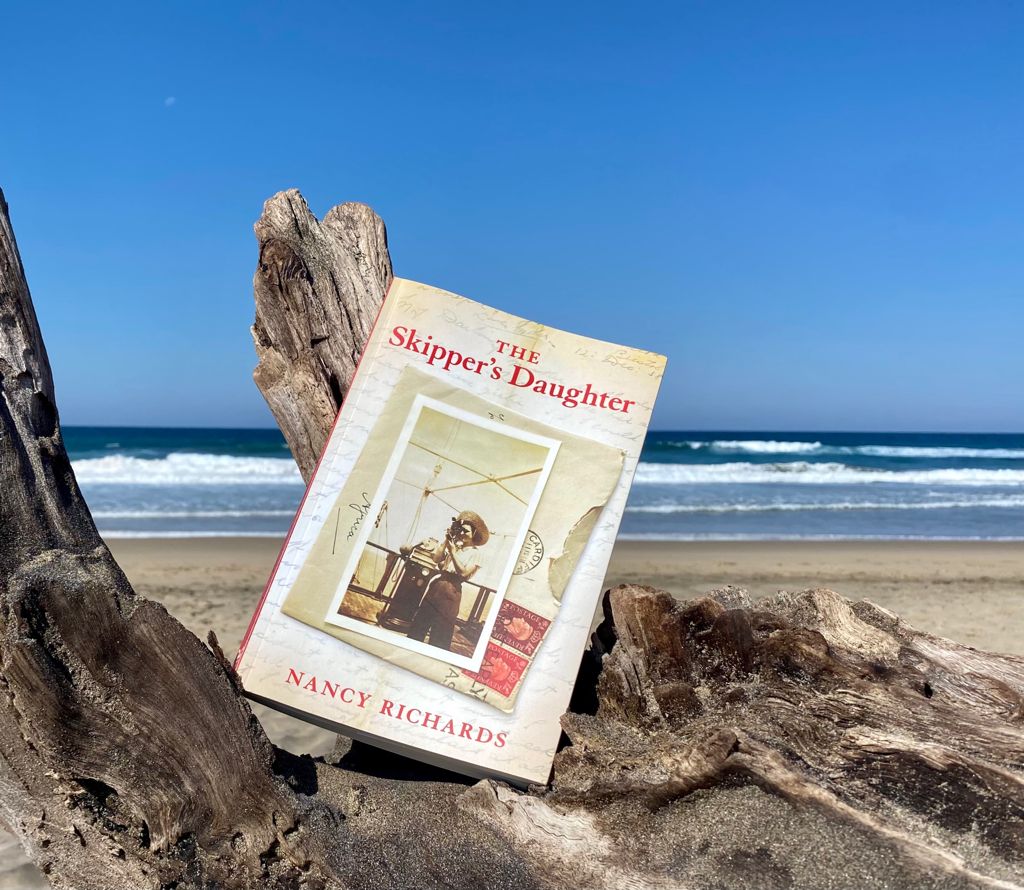
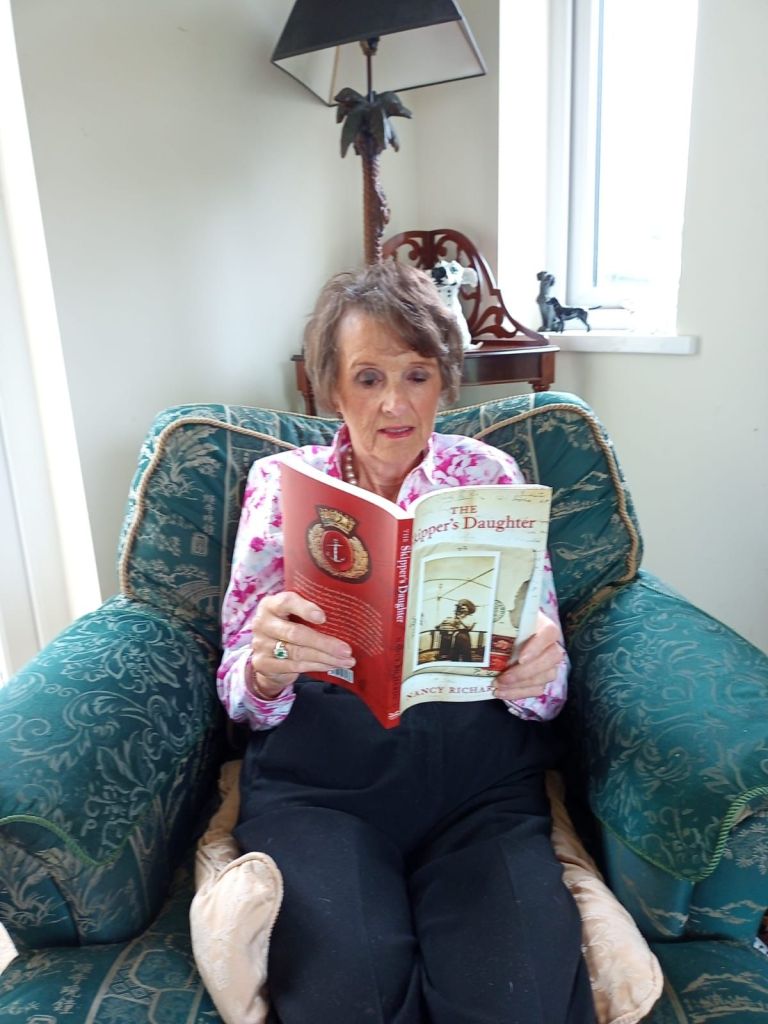
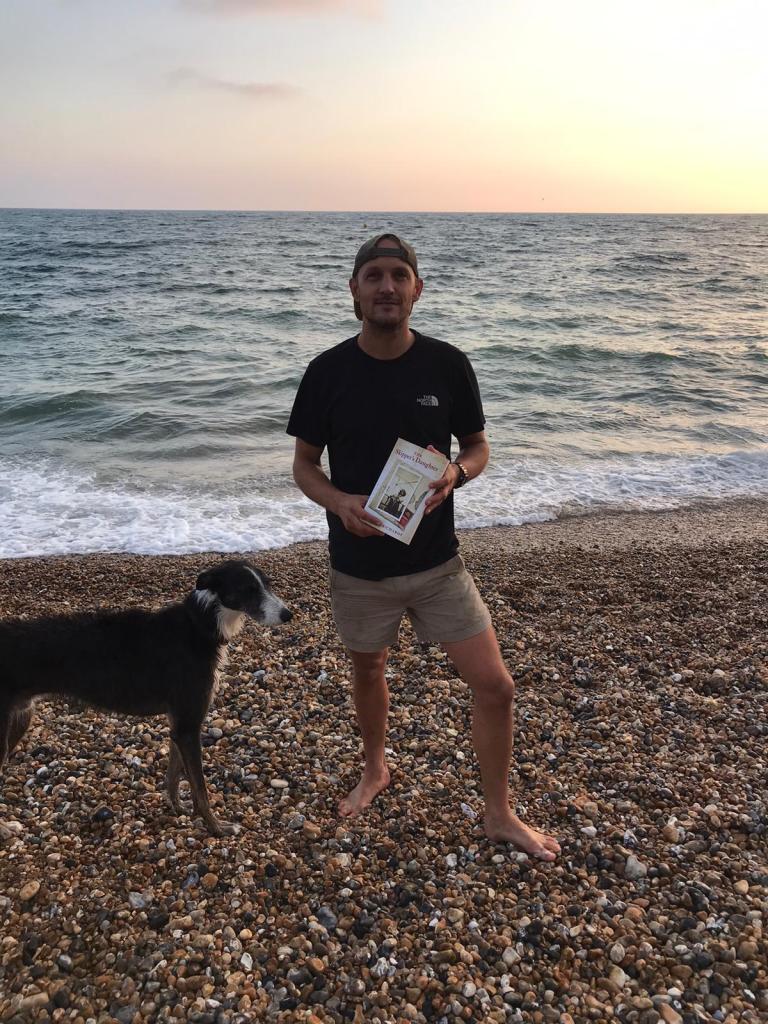
The most well-travelled Karavan Press title so far! Making waves across the world 🙂

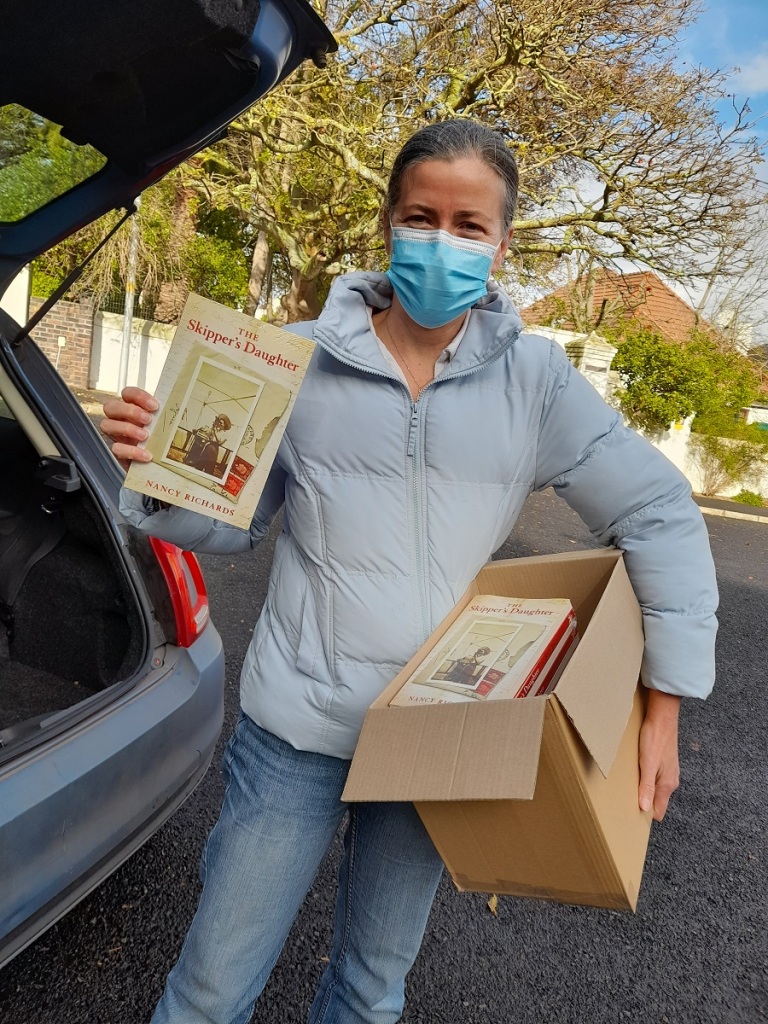

From the moment that Karina of Karavan Press arrived in Rosebank, Cape Town with the first batch from the printers, to when a smaller stash arrived at a Putney front door in London, ‘Skipper’ was destined to travel. Here are some moments from her voyage…





View original post 301 more words
Dear Readers,
Please join us for the Karavan Press Literary Festival on Saturday, 27 November 2021, in the garden and lounge of Karavan Press's headquarters at 6 Banksia Road, Rosebank, Cape Town.
Ticket numbers are limited to 25 per event, so please book early to avoid disappointment.
Let's talk books!
Literary greetings,
Karina


In 2019, when the first two Karavan Press titles – Melissa A. Volker’s A Fractured Land and Shadow Flicker – went to print, I was travelling in Turkey and Austria and asked Penny Haw to assist with checking the printer’s proofs that arrived while I was away. Melissa and Penny worked together to make sure that all was in order. For me, it was terrifying not to be able to oversea everything myself as I was completely new to this side of things as a publisher, but I also knew that our books were in excellent care.
This year, when Penny’s novels, Nicko and The Wilderness Between Us, were looking for a distributor in South Africa, being a fan of her work, I did not hesitate to offer entering an agreement with her and Karavan Press’s distributor, Protea Distribution. In this way, the books and their amazing author belong to the Karavan Press family and I am delighted to be working with Penny.
And so it was wonderful to see that, when I could not attend Penny’s book signing at Exclusive Books Constantia (I was interviewing Nancy Richards at her Greyton launch of The Skipper’s Daughter), Melissa was there.
This is what I meant when I wrote on our submissions page: “We want to establish strong bonds between our authors and readers, so please join the community of writers, creatives and readers that is Karavan Press” – the literary friendships between us.
Thank you to EVERYONE who makes this possible!


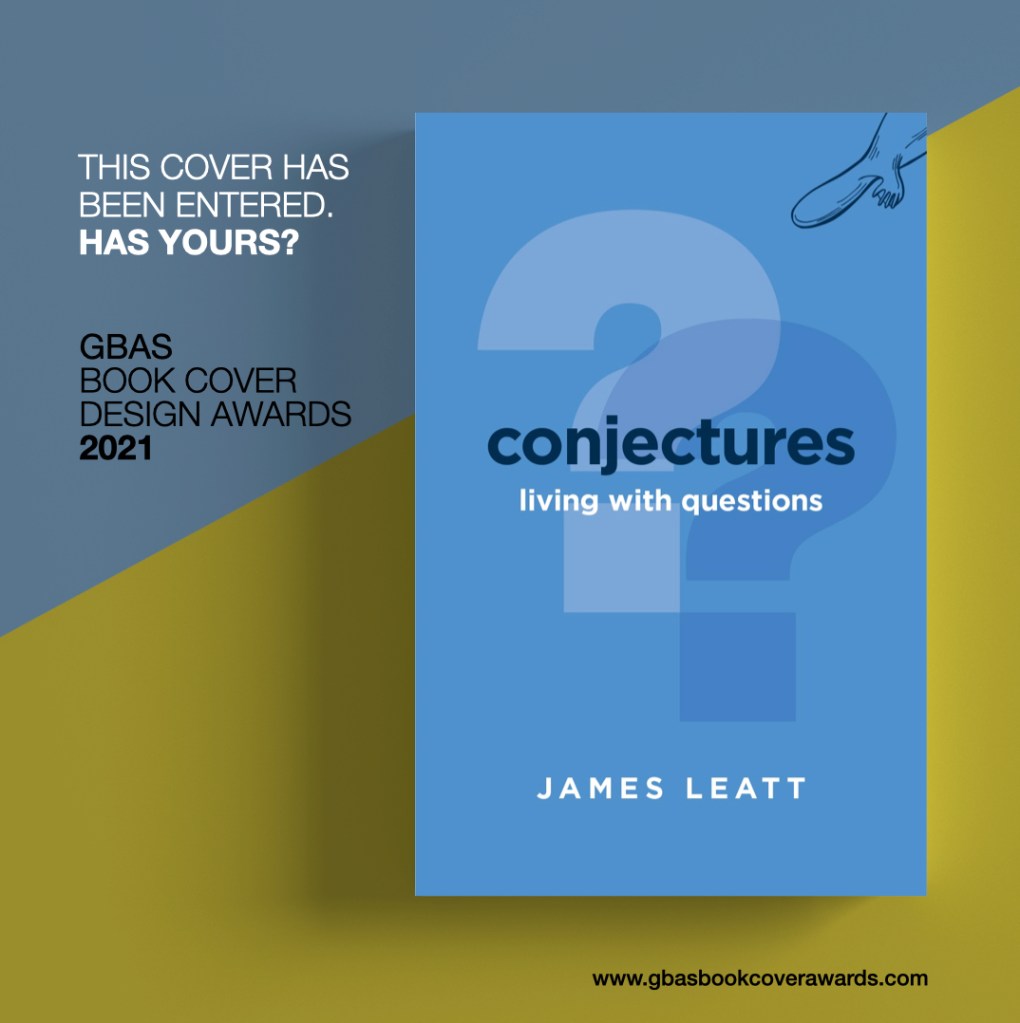




Celebrating the fabulous, multi-talented designers we work with:
Not representing Karavan Press at the Awards this year, but hopefully next year again, is Megan Ross, who designed the stunning covers of Melissa A. Volker’s novels, A Fractured Land and Shadow Flicker (2019). Melissa’s third novel is on its way …
In the meantime, Megan’s SSDA Disruption cover features at the Awards in 2021:


Spa manager Lauren runs a professional space, so when Wyatt, the pool cleaner, brings down the tone with his languorous manner and sketchy dress code, she loses her cool. Instead of being intimidated, Wyatt is captivated and tries to chip through her armour of hair gel and makeup to find the real Lauren inside. But he is reluctant to reveal too much of himself, and when Lauren finds out who he really is, the pool guy is in for the swim of his life.

MELISSA A. VOLKER is a reader, writer, beauty therapist and water woman. She lives in Cape Town with her husband, two daughters and a cat. She blogs about surfing and stand-up paddleboarding; writes eco-fiction, romance and short stories. Her first eco-romantic thriller, A Fractured Land, was published in the US in 2018 and was republished along with her second novel, Shadow Flicker, by Karavan Press in South Africa in 2019. Shadow Flicker won the Romance Writers Organisation of South Africa’s Strelitzia Award for the most promising manuscript in 2017. Melissa’s short story, ‘Spa Ritual’, was published in Hair: Weaving and Unpicking Stories of Identity. The Pool Guy is her first novelette.
Publication date: November 2021
ISBN: 978-0-620-96484-5




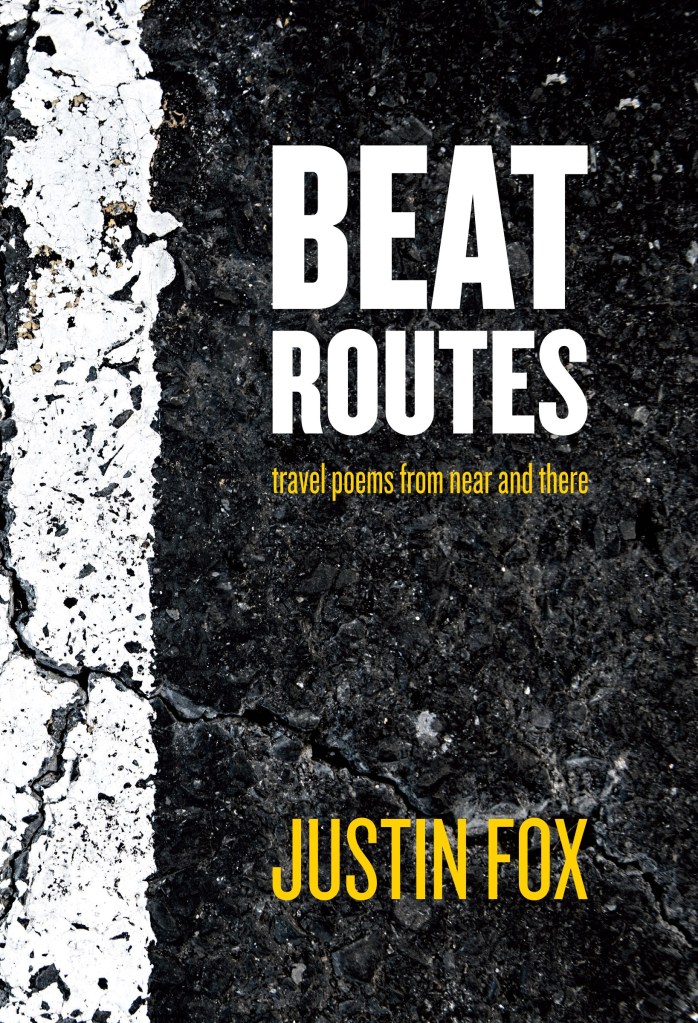
“Always restless and inquisitive, Justin Fox fashions his poems out of travel adventures of one kind or another, exploring a panorama of places, people and occasions. At the same time, he is always experimenting with how much he can bend language to his expressive will as he surfs along on waves of words, stopping to share moments, observe what is salient before moving on to the next port – and poem – of call. It makes for a thoroughly enjoyable mix.”
— DOUGLAS REID SKINNER
“We have been aware – the way we are conscious of an essential dimension of being human in this environment with these seas bordering this continent, as we would be of sentinels in the night scouting for daybreak and the dawning distances – of Justin Fox exploring and lighting up the life-trip we are embarked upon here in this forever Neverness. Even so, we are drawn in again and again, and are awed – beautifully so, searingly so, searchingly so, along lines of song – to where we know we belong. What a celebration to be invited to partake of the riches! ‘I am all of these and none of them. I am the land.’ How lucky we are to enter this volume of giving us back to ourselves in the poems of this fellow-being!”
— BREYTEN BREYTENBACH
ISBN: 978-0-620964-83-8
Publication date: November 2021
ABOUT THE AUTHOR
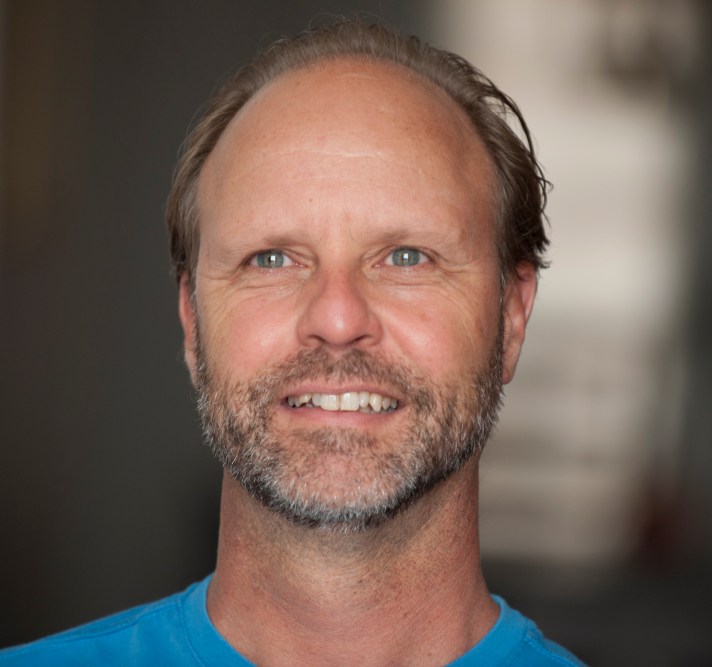
JUSTIN FOX is a poet, travel writer, photographer and former editor of Getaway magazine. His articles, poems and photographs have appeared internationally in a number of publications and he is the author of twenty books, including The Marginal Safari, Whoever Fears the Sea, The Impossible Five and The Cape Raider. Justin is the winner of two Mondi Awards for journalism and the Patricia Schonstein Poetry in McGregor Award. Beat Routes is his debut poetry collection.
Justin was a Rhodes Scholar and received a doctorate in English from Oxford University after which he was awarded a research fellowship at the University of Cape Town, where he taught part time for two decades.
Author photograph: Revel Fox
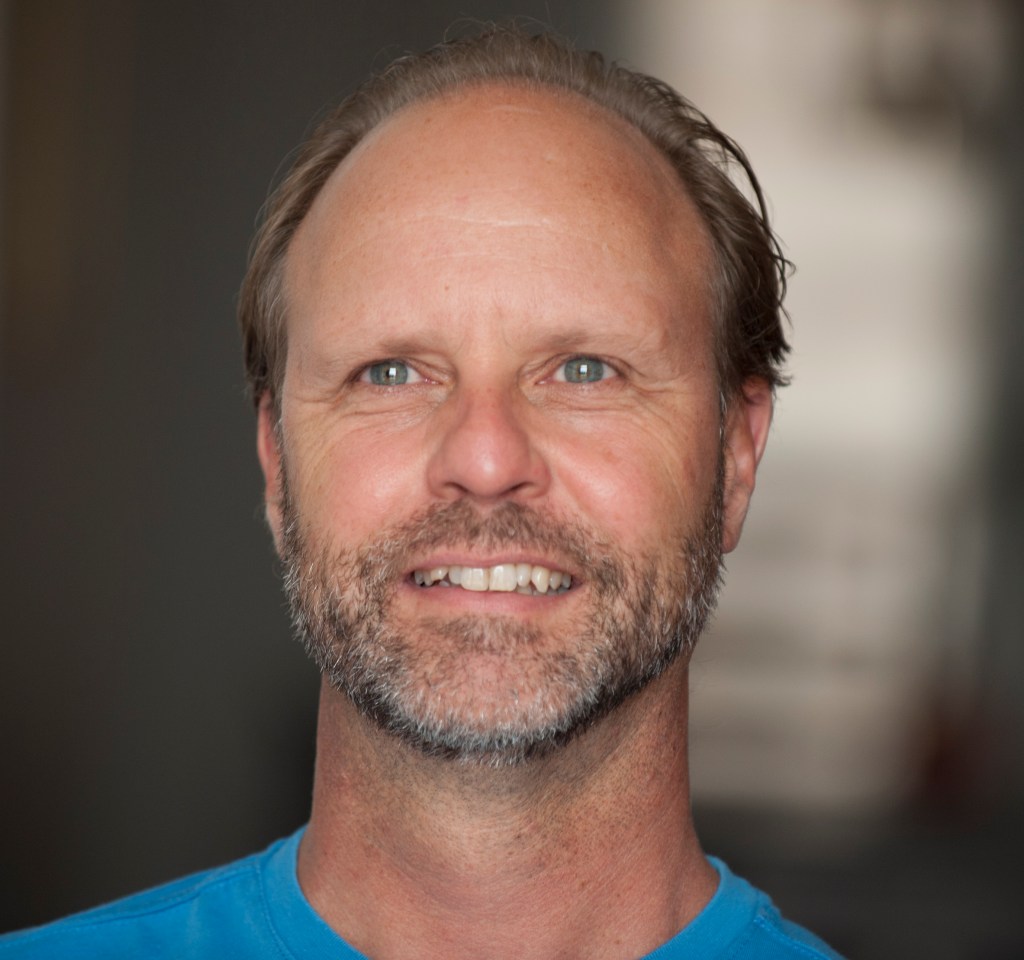
JUSTIN FOX is a poet, travel writer, photographer and former editor of Getaway magazine. His articles, poems and photographs have appeared internationally in a number of publications and he is the author of twenty books, including The Marginal Safari, Whoever Fears the Sea, The Impossible Five and The Cape Raider. Justin is the winner of two Mondi Awards for journalism and the Patricia Schonstein Poetry in McGregor Award. Beat Routes is his debut poetry collection.
Justin was a Rhodes Scholar and received a doctorate in English from Oxford University after which he was awarded a research fellowship at the University of Cape Town, where he taught part time for two decades.
Author photograph: Revel Fox