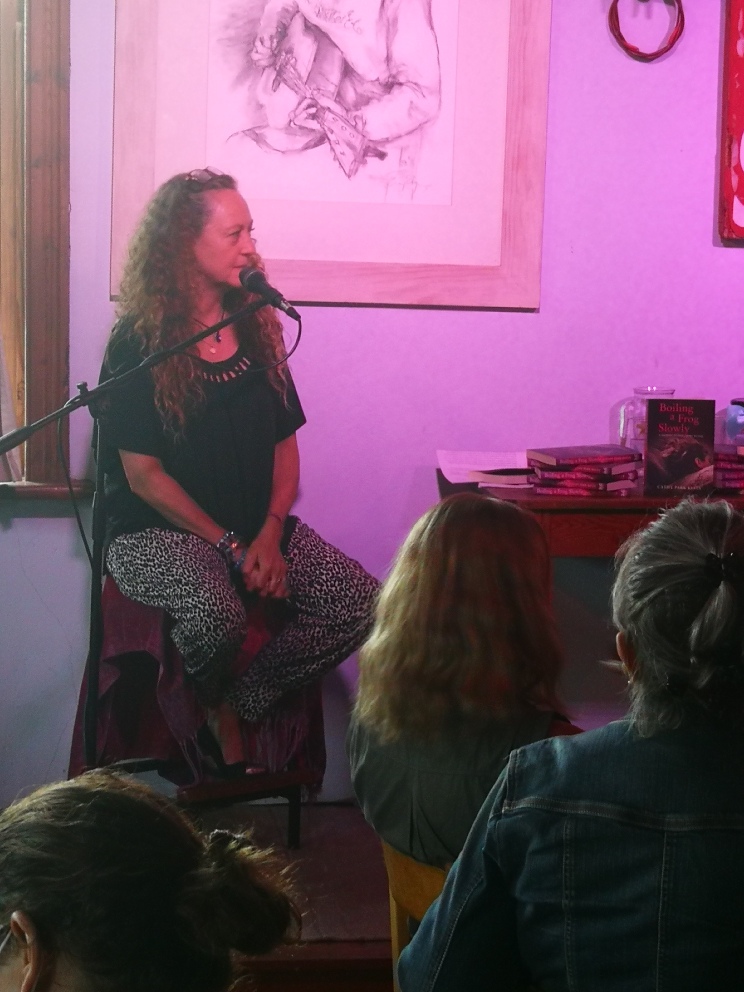
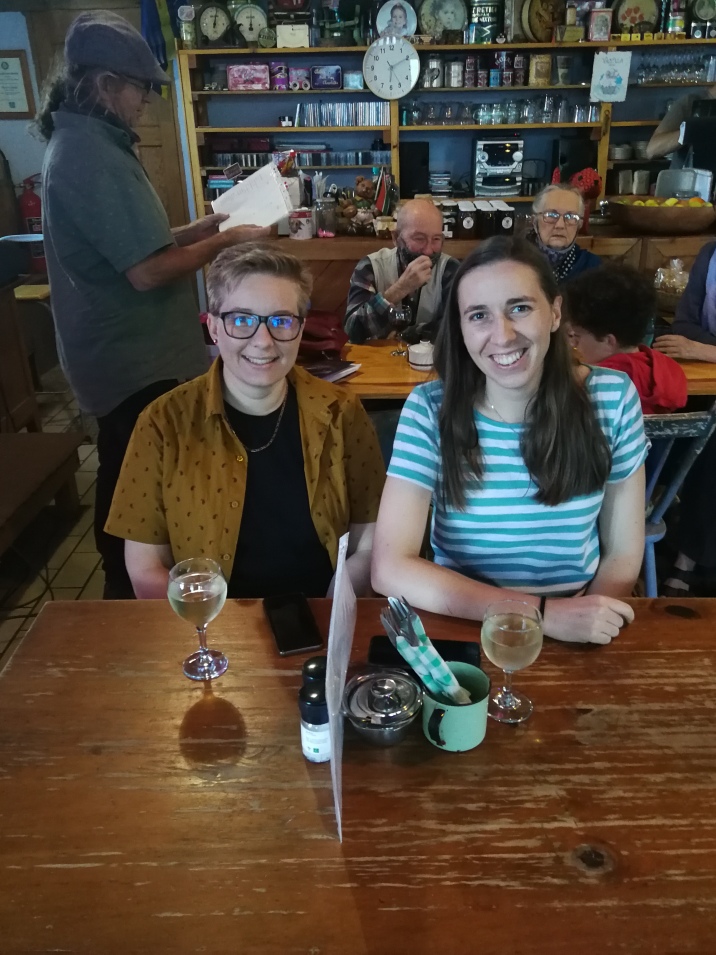
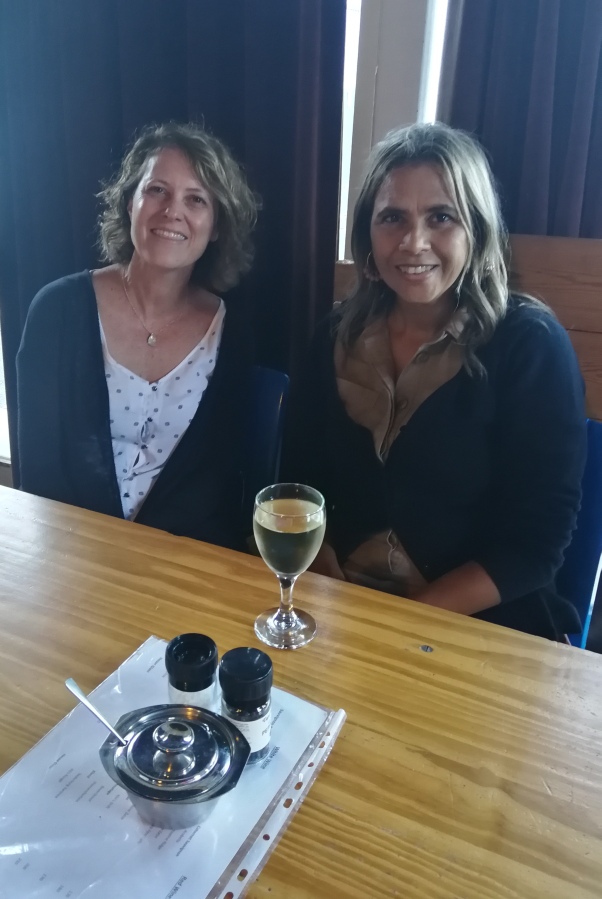
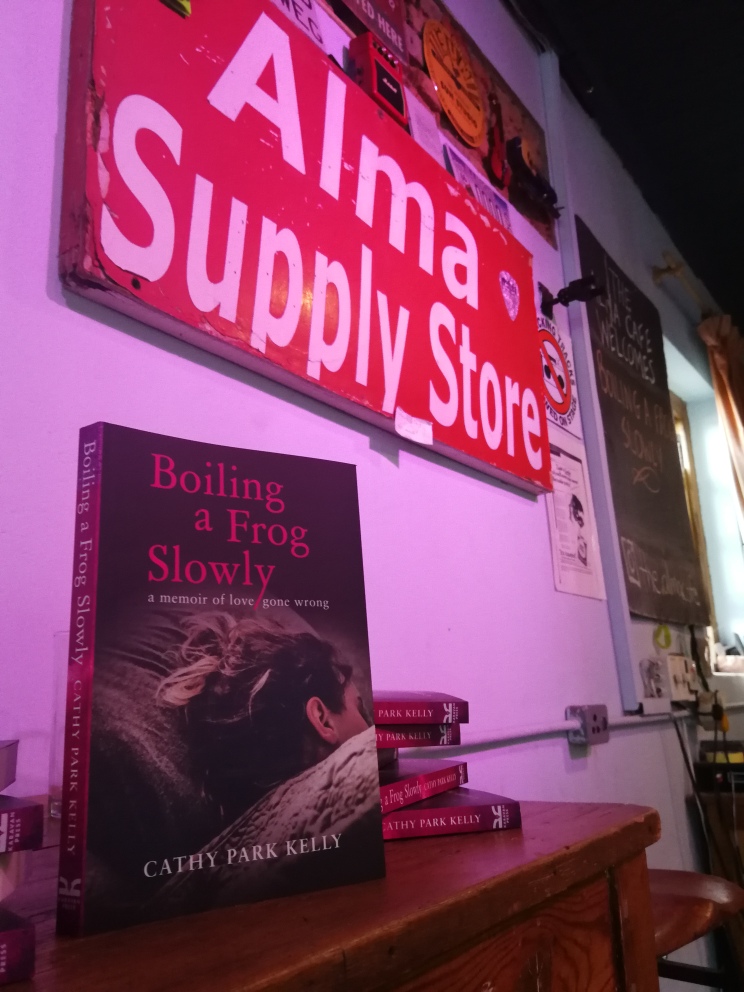
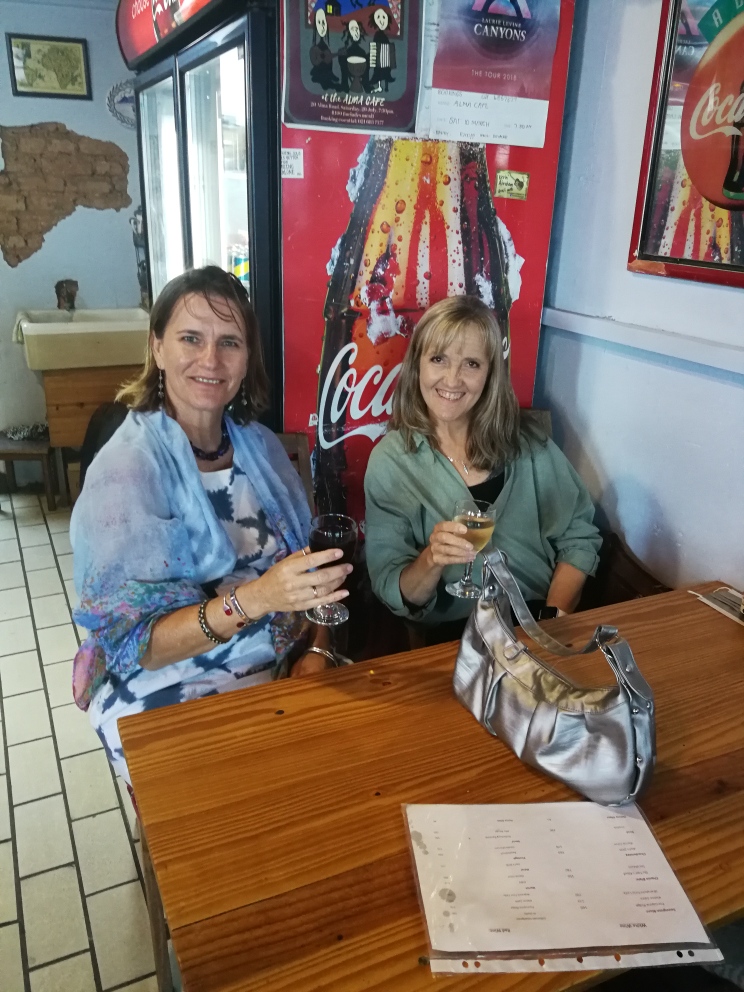
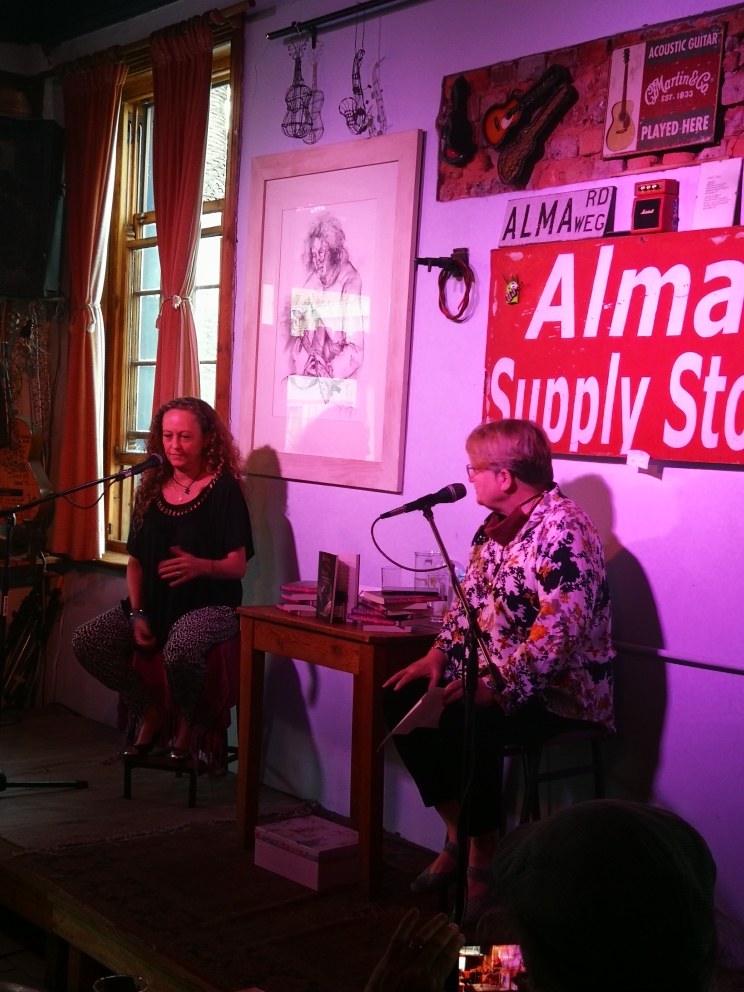
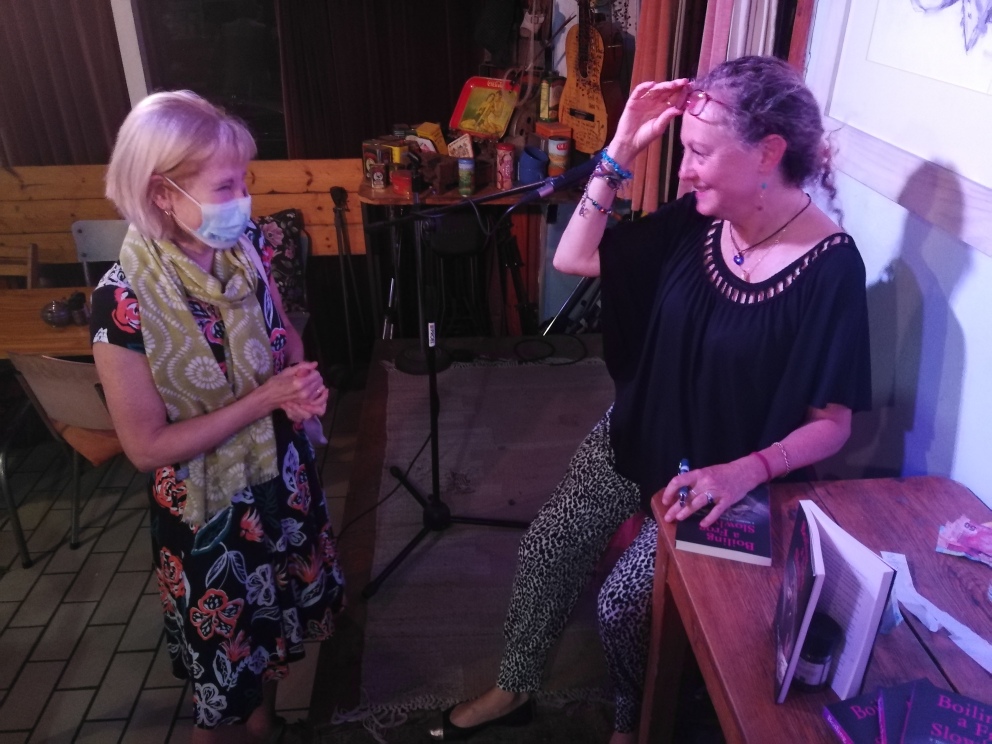
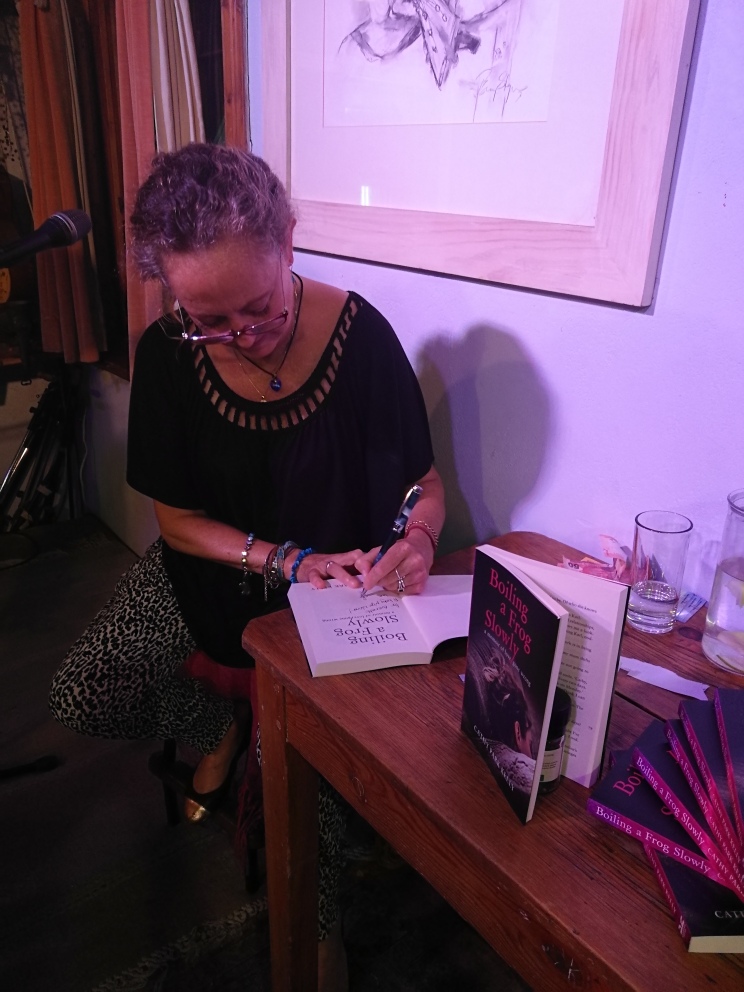
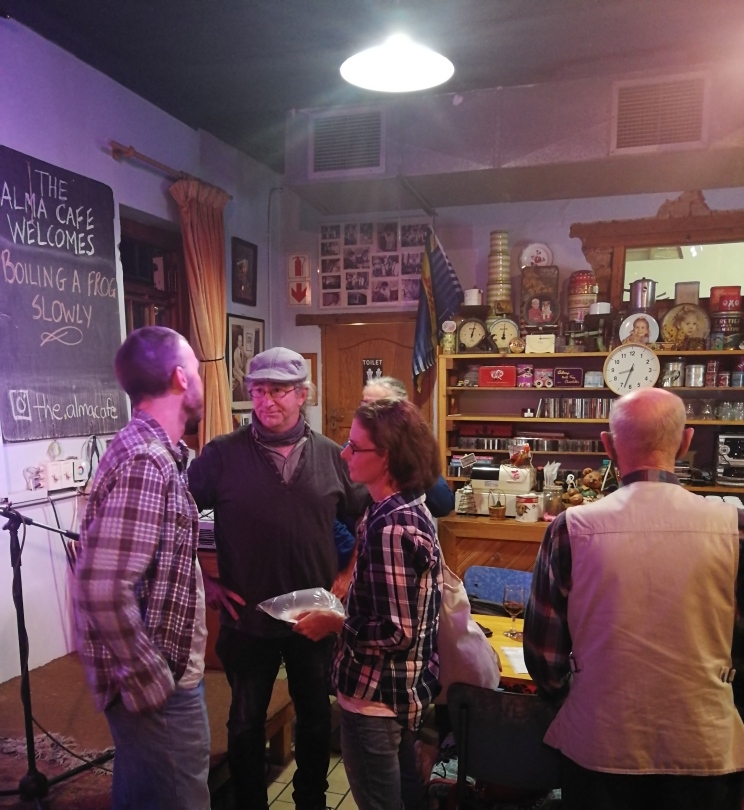
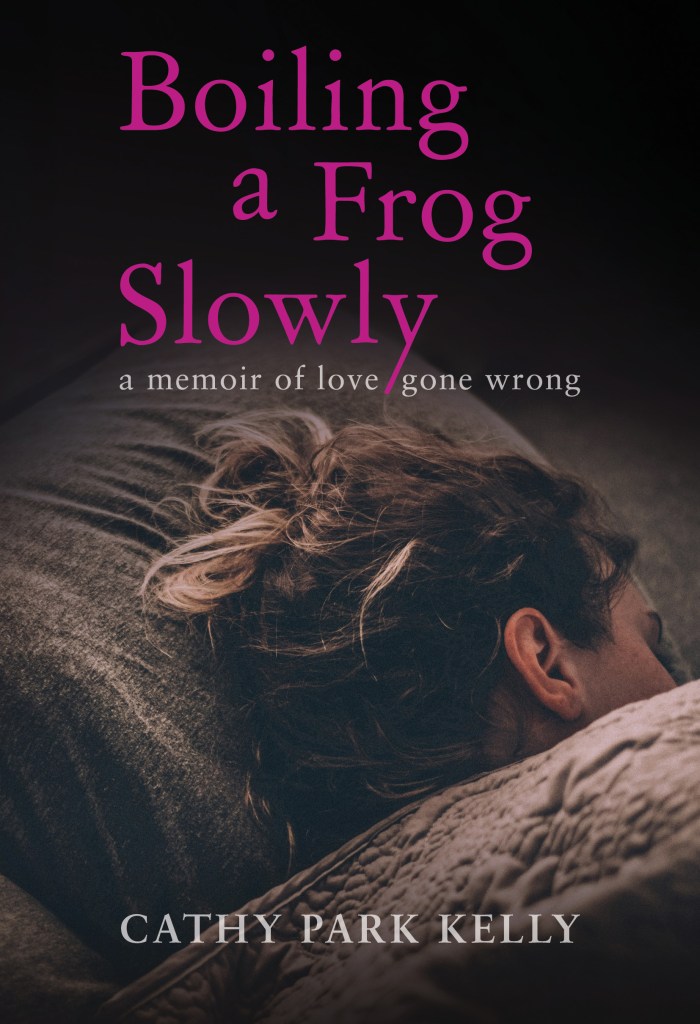
There are certain books one wishes would never have to be written, but because our reality is what it is, we can only be grateful to authors like Cathy Park Kelly for facing the darkest corners of our existence and exposing them to the light of understanding and healing. Cathy’s wrenchingly honest and powerful memoir about the abuse she suffered at the hands of a partner, Boiling a Frog Slowly, was launched at The Alma Café last night. The launch was postponed in December because of the fourth wave, but it could finally happen. Family, friends, authors, readers and the resident cat gather at the wonderful venue and celebrated Cathy and her empowering book with Alma’s legendary Cornish pasties and lemon meringue pies. Cathy was in conversation with local writer and editor, Máire Fisher. It was a beautiful evening and once again I applaud Cathy’s courage in bringing this book into the world.
Thank you to everyone who attended, and mountains of gratitude to The Folks at the café for making their space available for literary events and always making us feel so warmly welcomed.
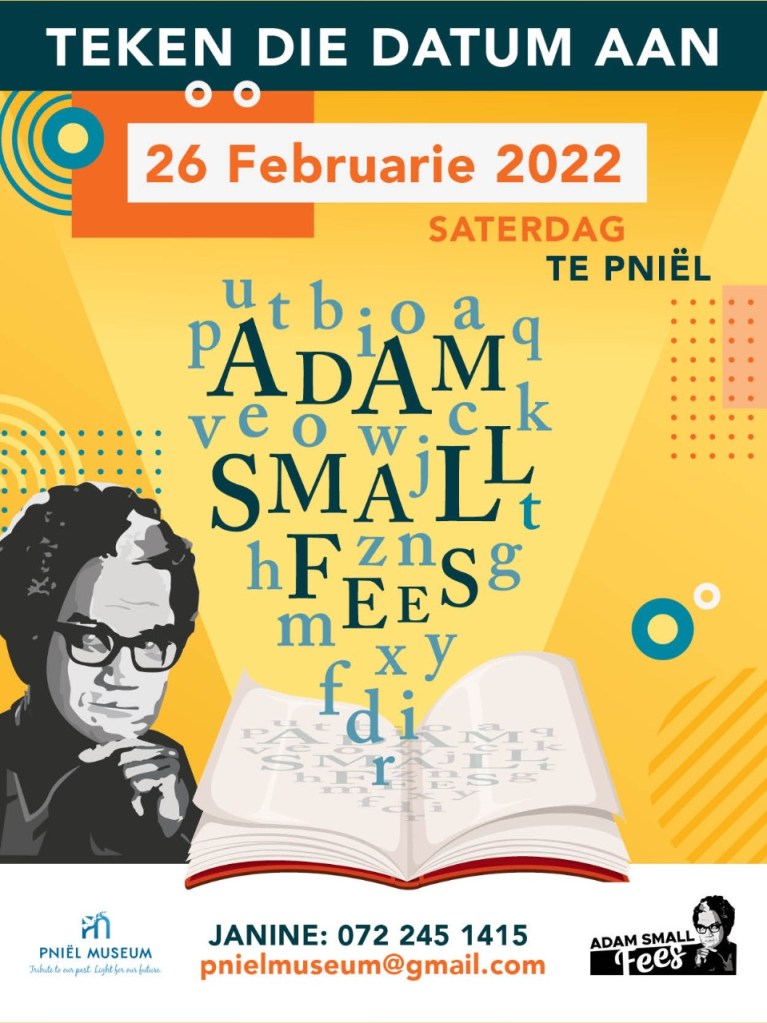
Cathy Park Kelly, Nancy Richards and Karen Jennings will be participating in the Adam Small Literary Festival in Pniel this year.
SATURDAY, 26 FEBRUARY 2022
PNIEL MUSEUM TEETUIN

13.45 – 14.15: Cathy Park – Boiling a Frog Slowly: A Memoir of Love Gone Wrong
14.15 – 14.45: Nancy Richards – The Skipper's Daughter
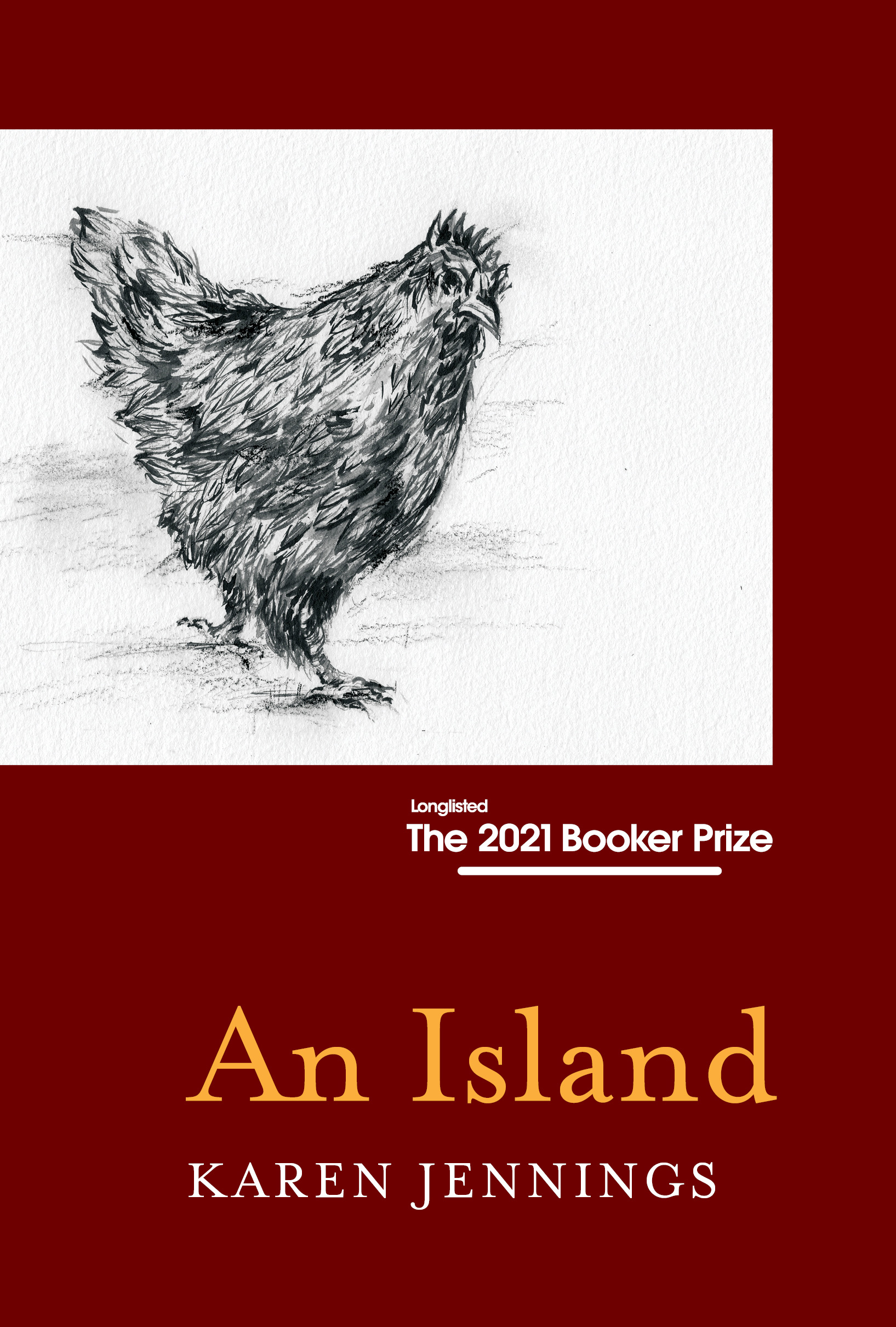
14.45 – 15.15: Karen Jennings – An Island: Longlisted for Booker Prize
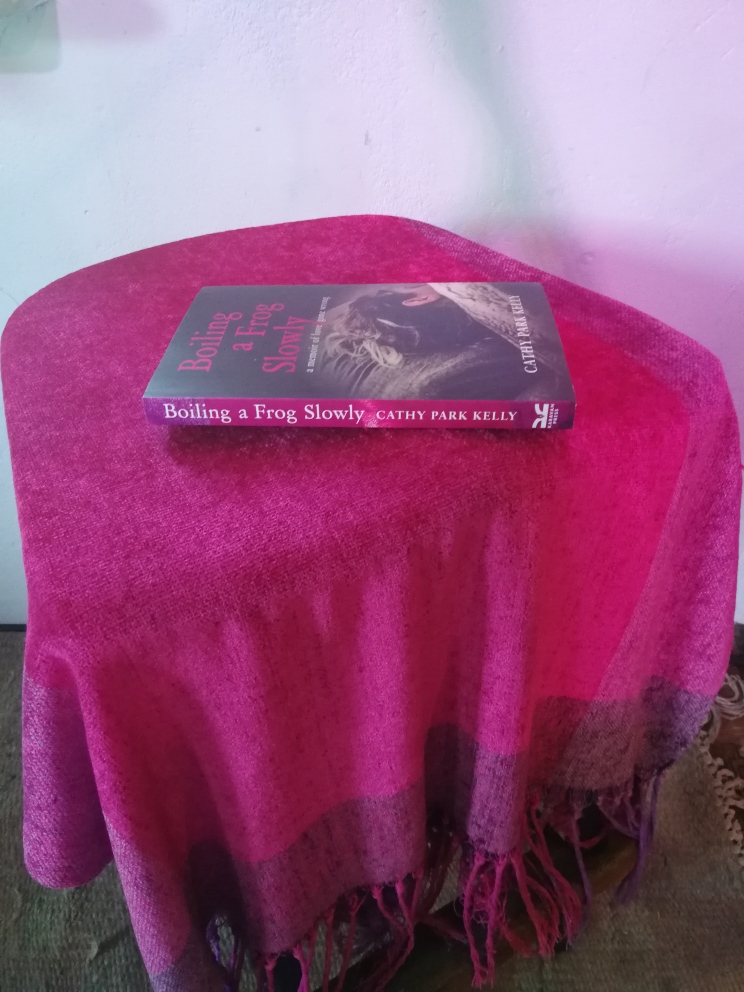
‘Boiling a Frog Slowly’ is an intensely personal memoir about escaping abuse
Cathy Park Kelly’s compelling and painstakingly honest book describes the insidiousness of abuse and how hard it is to leave a toxic and violent relationship
Boiling a Frog Slowly is a courageous, emotionally sincere exposé of a romantic relationship that slides into increasingly disdainful and abusive territory, when love indeed goes wrong. It’s about how terribly difficult it is, as a woman, to extricate oneself from a toxic, manipulative relationship in which one is treated with violence and contempt.
Right from the opening scene, which describes violence so extreme that I caught my breath, I was hooked and wanted to know how this could have happened to a woman I know — albeit on the periphery — as professional, caring and compassionate. What led to the point where Cathy was held down by her partner, as he scrawled the words slut, whore and c**t across her breasts with a red Koki pen?
Boiling a frog slowly is a courageous exposé of a romantic relationship that slides into increasingly disdainful and abusive territory, when love indeed goes wrong. In this interview, Joanne Hichens chats with Cathy Park Kelly about her experiences and the writing of her memoir.
Boiling a frog slowly, a memoir of emotional and physical abuse at the hands of an early lover and partner, is searing in its honesty. Your story shows how terribly difficult it can be for a woman to extricate herself from a relationship in which she is treated with violence and contempt. What prompted you to write your account of abuse at the hands of your male partner?
It’s what I do – I use my writing to explore my life and pick out threads that shine with truth for me. What I have learned, and what I am coming to trust, as I write more and share my writing more, is that these threads are universal. They are present in many human stories. When it comes to the story of the abusive relationship, I wanted to do two things: make sense of this experience for my own sake, and also make something out of this chapter in my life that I could share with others.
On the first, personal level, I used my writing to make sense of this chapter and to crack through the disbelief I was left with, to dig beneath the feeling of “What the f*ck?” to get at the truth of what it meant. I was weirdly fascinated, as well as confounded, by what I had gone through, so I used my writing to create some sense of order and understanding.
But, on the more universal level, I was driven to write this for the unknown reader out there. I felt that I had learned much and gained many insights, and this hard-earned knowledge burned inside me. It felt alive, like it wanted to be given a voice …
Someone once explained to me the frog in increasingly hot water concept – that he won’t notice till he literally boils to death. I remember being horrified that such an idea could have been put to the test – poor frog, for heaven’s sake. More shocking though is the thought that such a concept could apply to a human being – but seems it can. Despite an increasingly hot water relationship, Cathy Park Kelly, hung on in for eight tortuous years with a man she calls here Karl. Her book, a vivid recall of the undermining, violent and over-heated treatment she tolerated, just made me want to weep for her. And lash out at the perp …
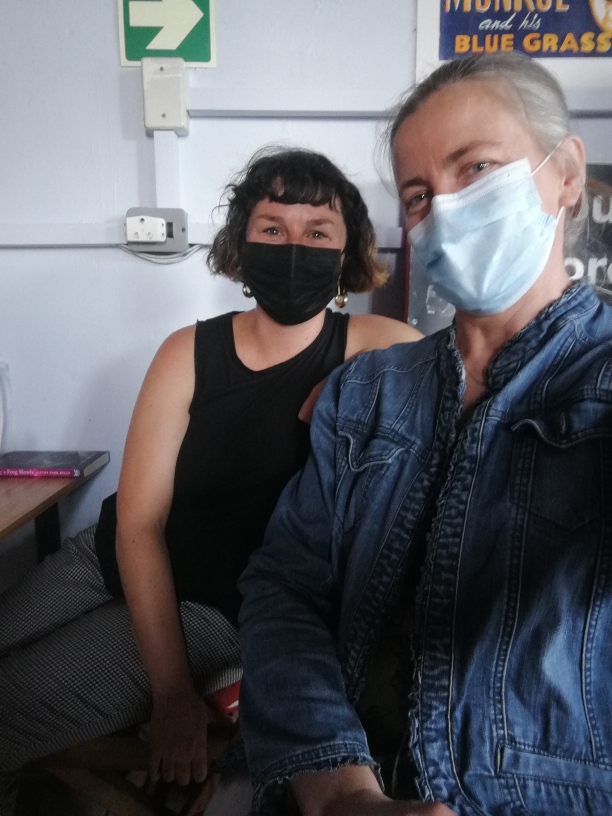
Sue Brown and Cathy Park Kelly at the Karavan Press Literary Festival
I am looking through my notes from a ‘how to write’ course. They speak of ‘dramatic imperative’, and stories only as strong as their antagonists. And of that crisis near the end of the book when yet another cruel hurdle leaves us agonising over whether the protagonist, our exhausted hero, will be thwarted – or not – so close to the end of her long, hard journey.
It strikes me that Friday’s shock travel ban would make a perfect illustration of this. All those thousands of heroes who were feeling pretty wrecked after almost two years of the pandemic, but cautiously optimistic about being with family and friends for Christmas. Or of going on that adventure. Getting to that job. Having the holiday they have dreamt of and saved up for.
Antagonists can come in many guises, my notes teach. Oh boy! Here we have no shortage of examples of those. A lethal virus and its mutations. Trigger finger journalists. Powerful, prejudiced countries with fearful constituents and bunker mentality politicians. And last but not least our hero’s internal antagonist, who thought she could bear no more disappointment, injustice and loss. Who could not even cry as she stood with her packed suitcase this past weekend, negative Covid test in hand, staring in numb disbelief at a departures board.
What my writing course notes did not say was how to rescue my hero, to give her journey a happy ending. I want to write relief, an eleventh-hour rescue, and tears of joy and reunion into this tale, but even this writer’s inner protagonist is finding believable words of consolation hard to come by.
The notes did mention that what a hero wants and what she really needs may be in conflict. That what a hero usually needs, according to the great moralists, is to not get what she wants.
In Cathy Park Kelly’s inspiring memoirBoiling a Frog Slowly, she describes how reading the self-help gurus reinforced her self-doubt. Her belief that her abuser was right, his anger her fault, that it was she who needed changing. And that when she eventually left her partner, Eckhart Tolle and his ilk were summarily boxed and dropped off at a charity shop.
I think this new travel ban story is one in which our hopeful, seeking heroes should not be pushed any further, or encouraged to seek ever more transcendent states of self-actualisation.
Can’t they, please, just be allowed to get what they want for a change?
On New Year’s Eve of 2010, Sue Brown’s twelve-year-old son, Craig, was diagnosed with a rare brain tumour. In the turmoil of the time, Sue instinctively turned her hand to writing. In 2017, six years after Craig had lost his battle with cancer, she published a memoir, The Twinkling of an Eye: A Mother’s Journey.She lives with her husband and their daughter in Cape Town. The family spends as much time as they can at Craig’s Cabin in Betty’s Bay. Sue continues to find hope and solace in the written word. Her new book,Earth to Mom: Personal Essays on Loss & Love, is a tribute to her son and the indelible mark he left on his family and friends.
Her warmth and empathy. His charisma and ambition.
Yet, Cathy feels safer teaching battle-scarred gangsters in a prison classroom than at home with her own partner.
By day she walks on eggshells. At night she sleeps on the backseat of her car. Her safe place is an all-night roadhouse; her best friend, her journal.
The slow boil intensifies until, one day, Cathy finds her grandmother’s armoire smashed to pieces in her bedroom, a hammer on the floor, her life in splinters beside it.
Part memoir, part inspiration, Boiling a Frog Slowly is unflinching in its confrontation of abuse and utterly courageous in its portrayal of redemption.
A story of loving, hurting, and healing – a gripping reminder that courage comes from within. Always.
– Tracy Going
A tale of insidious abuse told with heart-breaking honesty and humility. The triumphant ending is truly uplifting.
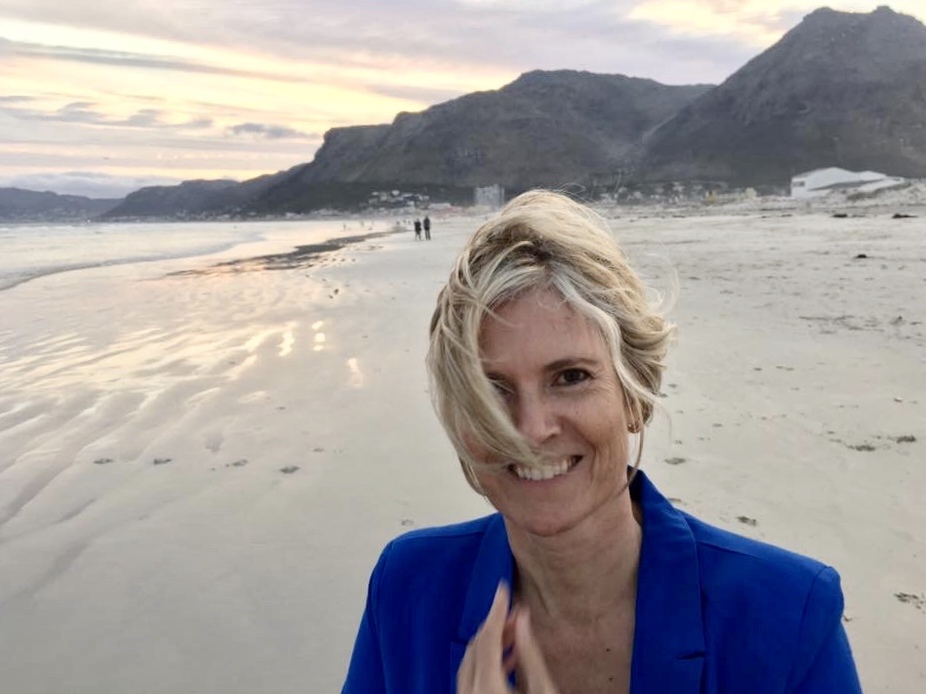
CATHY PARK KELLY is a writer who lives with her husband and son in a sunny valley in Cape Town.
She has a BA (Hons) in Applied Linguistics and has had non-fiction essays and short stories published in several South African magazines and anthologies. Her first book, Inside Outside, a memoir of teaching juvenile offenders awaiting trial, was quoted extensively by the (then) South African Minister of Correctional Services in a speech. This is the closest she has come to Parliament.
She loves how stories can crack open doors and offer seams of light in the dark.











 karavanpress.com