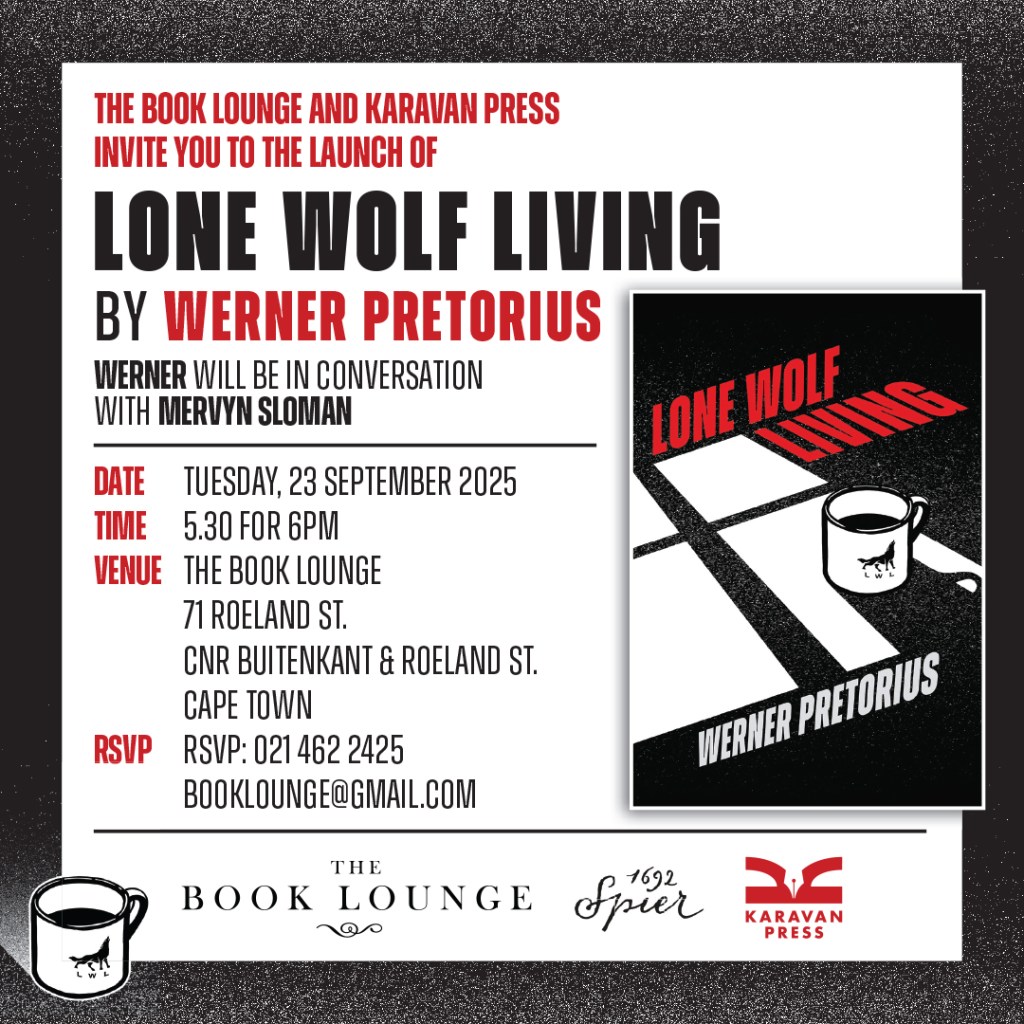
The Book Lounge launch of LONE WOLF LIVING by Werner Pretorius

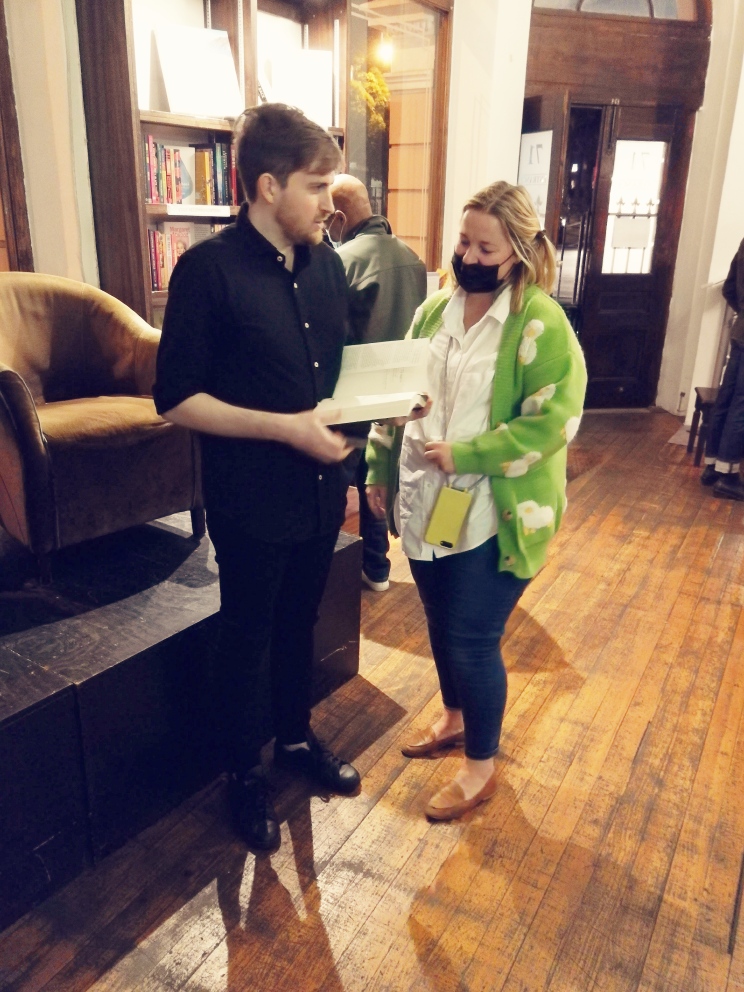
Tuesday, 23 September 2025: Please join us for the launch of Lone Wolf Living by the The Book Lounge’s very own Werner Pretorius. Werner will be in conversation with Mervyn Sloman. And in the beginning, I will share a story about how this stunning collection of stories came into being … Can’t wait!
Sign up for the programme today and your life will be instantly more rewarding and less miserable. Take a look at our Platinum Package starring James Bond, who, as it turns out, is from Pretoria West, and Bernie de Villiers, who is falling in love with all the wrong things for all the wrong reasons. Our Gold Package offers UFOs over Jansenville and sinister nightly encounters in Cape Town. Don’t miss the exodus to Mars or get stuck at an outpost left to fend for yourself while, on a distant planet, betrayals and a betrothal take place. Buy now and avoid disappointment!

Werner Pretorius lands with this collection of lost loves and eerie worlds. Broken hearts and peril combine in these stories that scratch beneath the surface of the mundane to find the crawling things that keep us up at night.

About the author

WERNER PRETORIUS holds degrees in Publishing and English from the University of Pretoria and a Master’s in Creative Writing from the University of Cape Town. His stories and short fiction have appeared in various magazines and anthologies. Lone Wolf Living is his first collection. He lives and works in Cape Town.

About the illustrator

DAWN BOLTON is a multi-faceted creative working in various media. She is a skilled jeweller, hand-crafting items in metals and recycled plastics. Her visual art language includes painting, pencil and ink drawing, and embroidery. This is her first collection of digital drawings.

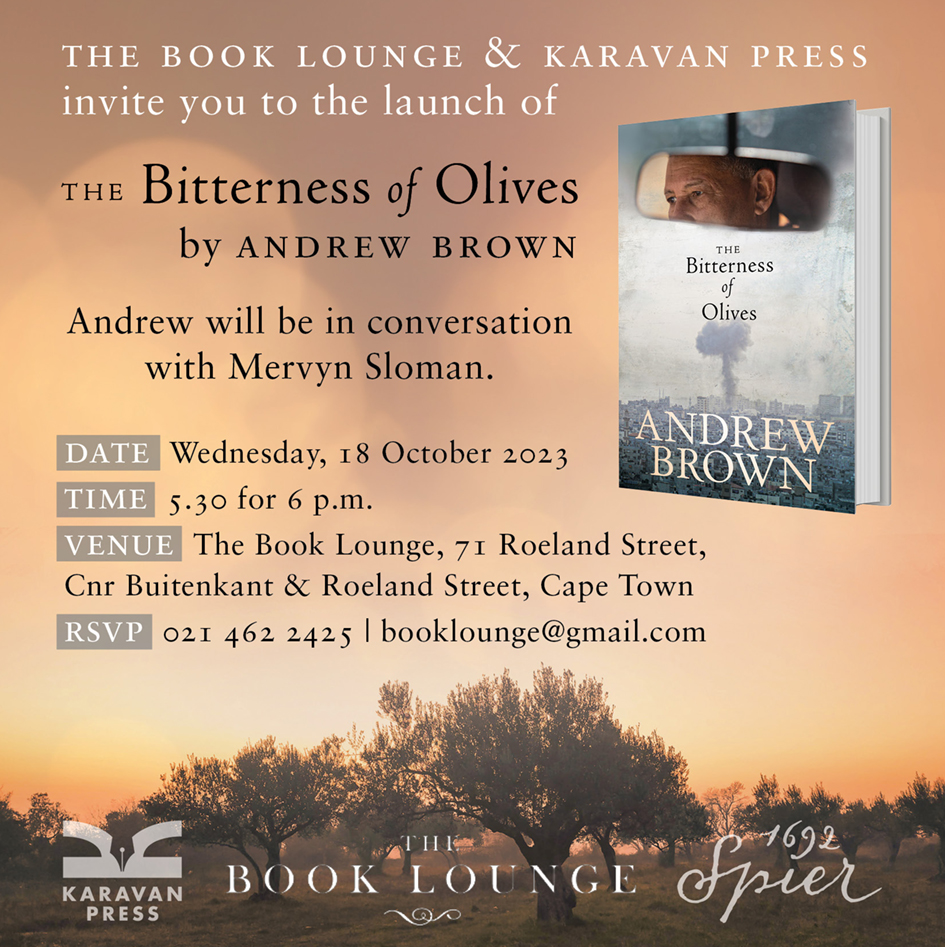
The Bitterness of Olives launched at The Book Lounge

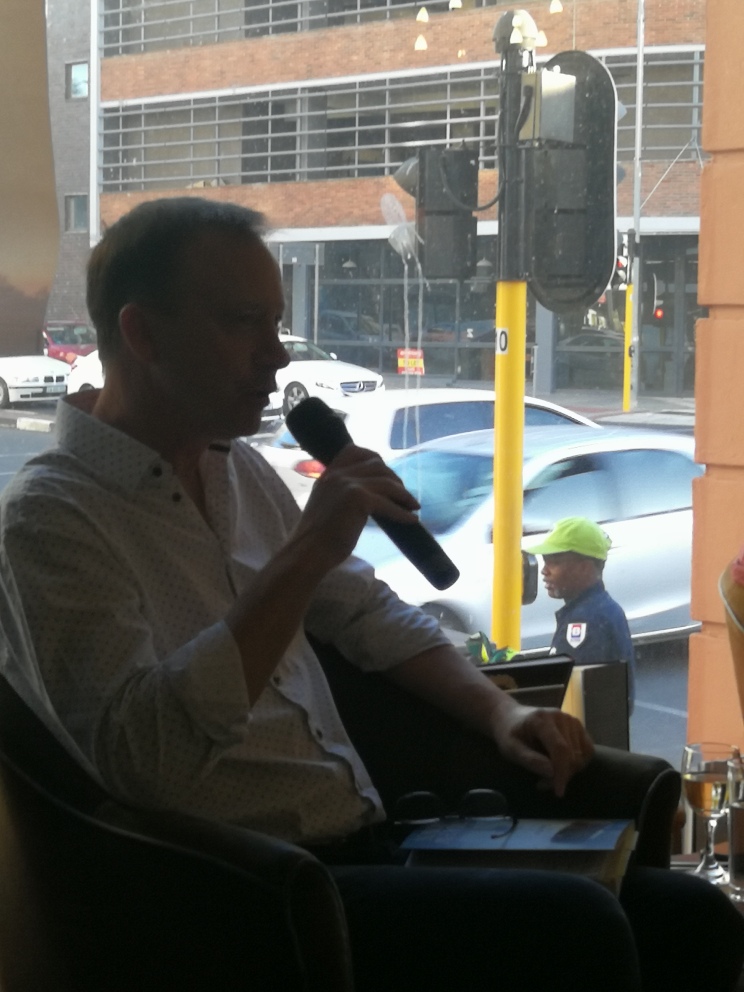
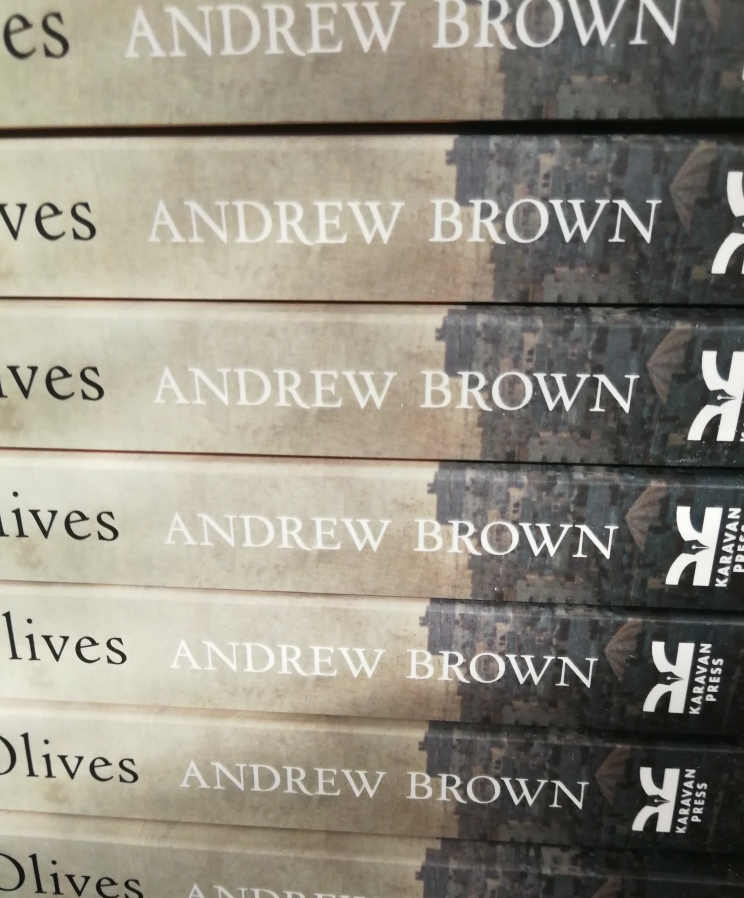
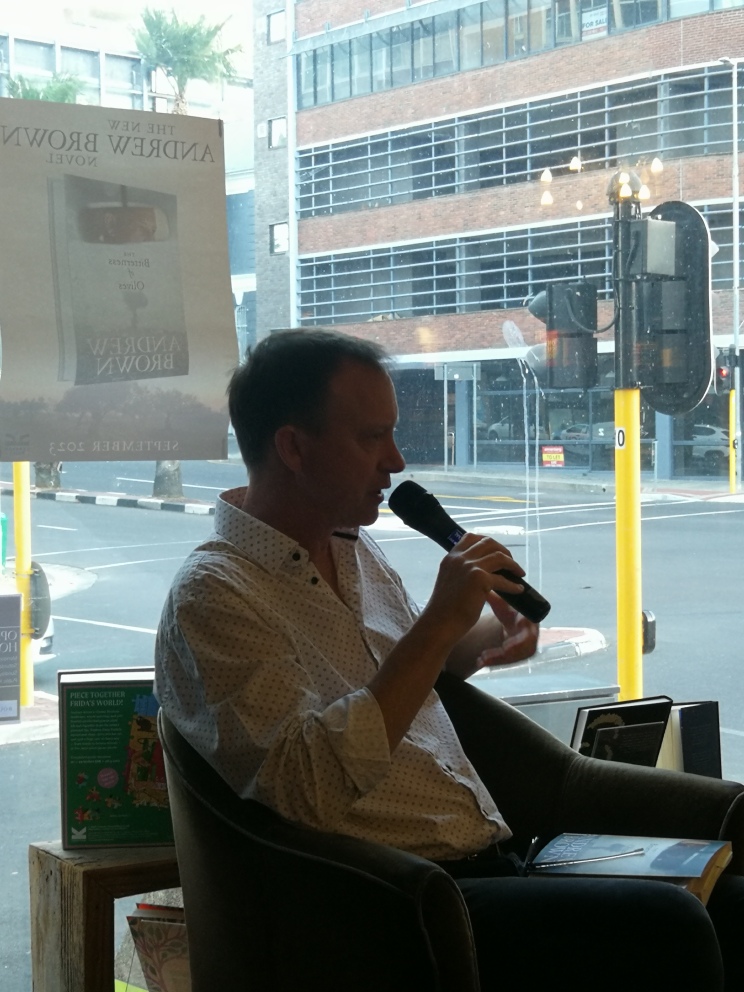
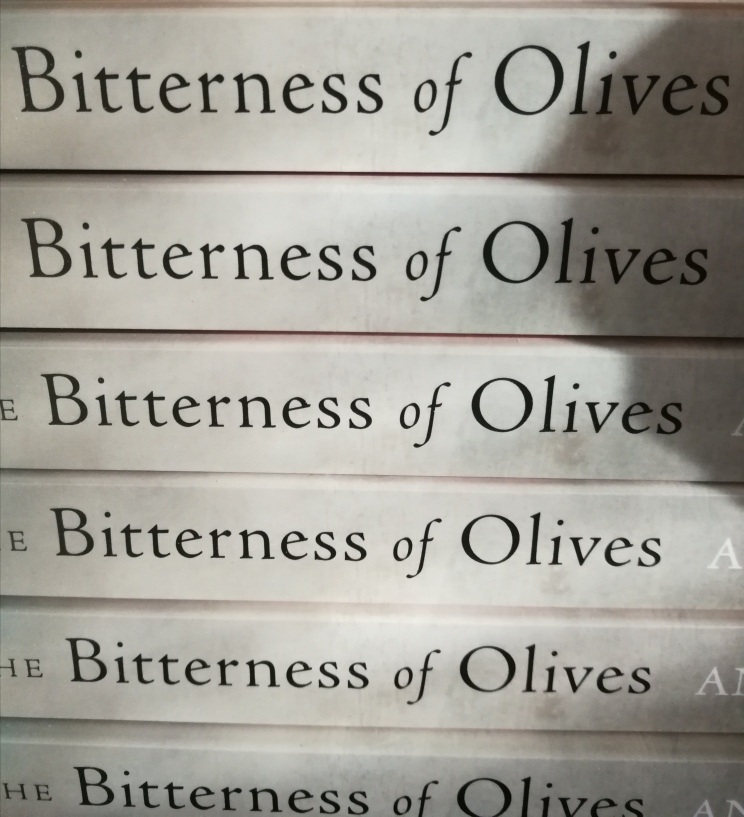
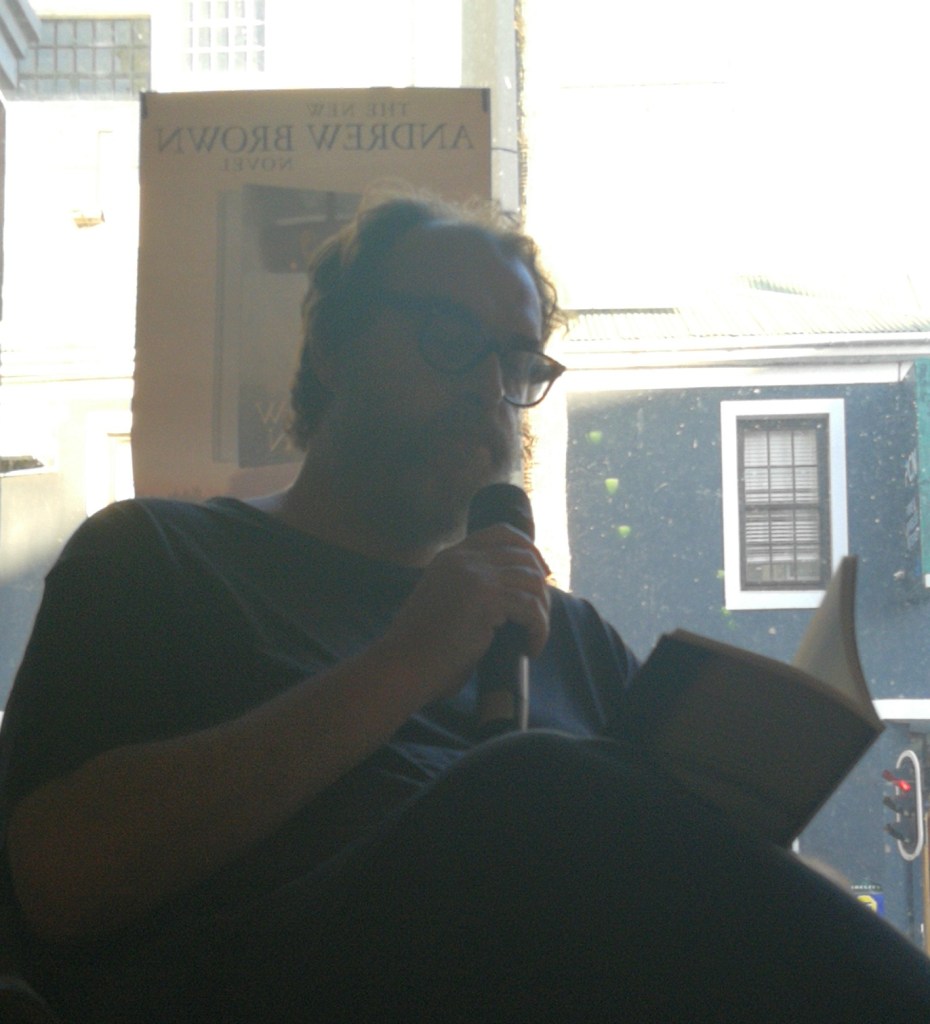
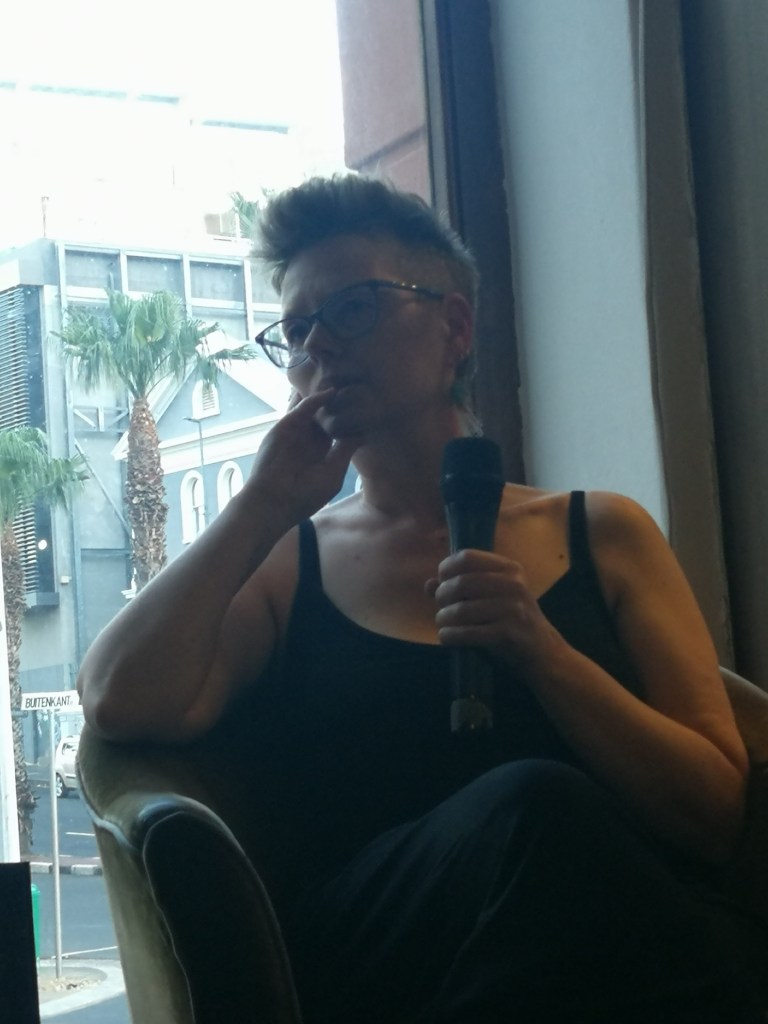
It feels impossible for me to capture in a few words what it meant to launch Andrew Brown’s The Bitterness of Olives at The Book Lounge last night during the present time when the world the novel is set in has been shattered and the consequences of that shattering are reverberating in the Middle East and around the globe. So I just want to express my gratitude: to Andrew, for writing this story and speaking about it with such integrity and compassion; to Mervyn, for bringing this extraordinary novel to my attention, helping us to prepare it for publication and leading the discussion last night; to all who attended, for listening with open minds and hearts; to the Karavan support network, for never underestimating the power of storytelling and -sharing; and to Adara, for trying to find the way …

Everyone Dies launched at The Book Lounge

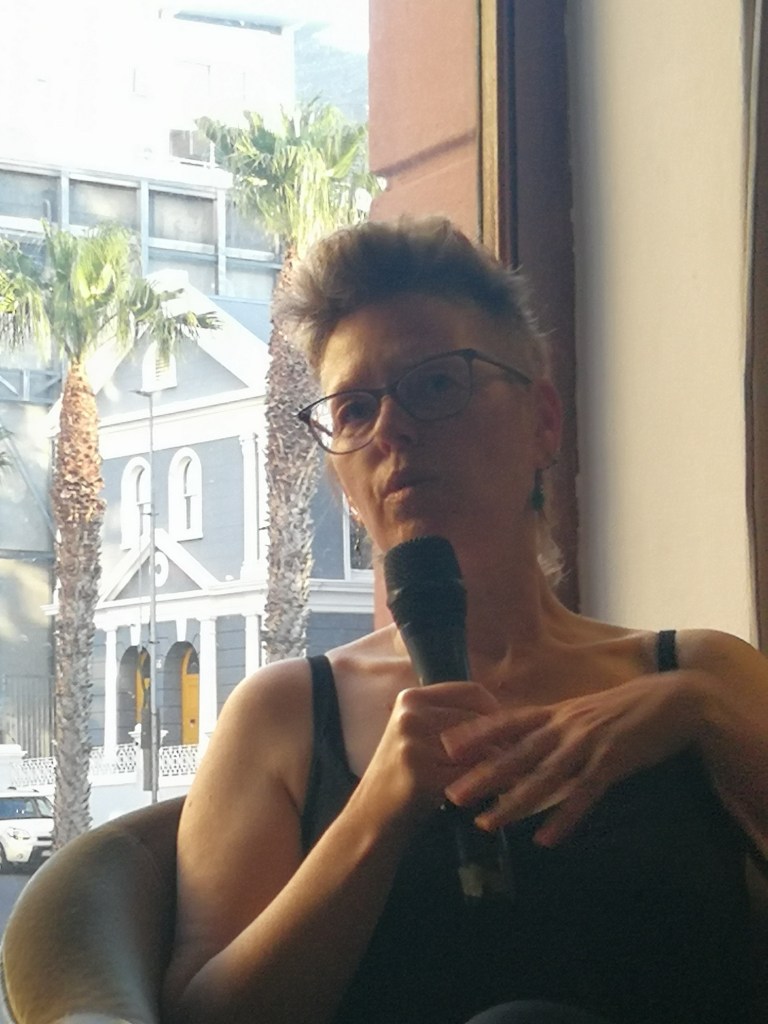
We officially welcomed Everyone Dies, the beautifully crafted, mesmerising debut collection of short fiction by Frankie Murrey, into the literary world at the Book Lounge launch last night. Frankie was in conversation with Mervyn Sloman. To hear her speak about her love for the written word was truly inspiring. It made me open my own notebook with a smile today.

Thank you to Frankie, Mervyn, The Book Lounge and all Readers and Writers who attended. A wonderful evening.

During the conversation, Frankie referred to the alphabet as “a gateway drug”. The way she uses letters and words in her exquisite writing will make your soul soar. No surprise, Everyone Dies was the bestselling book at The Book Lounge in September. Congratulations, Frankie!

And to all the Readers who are yet to discover her work: Happy reading!

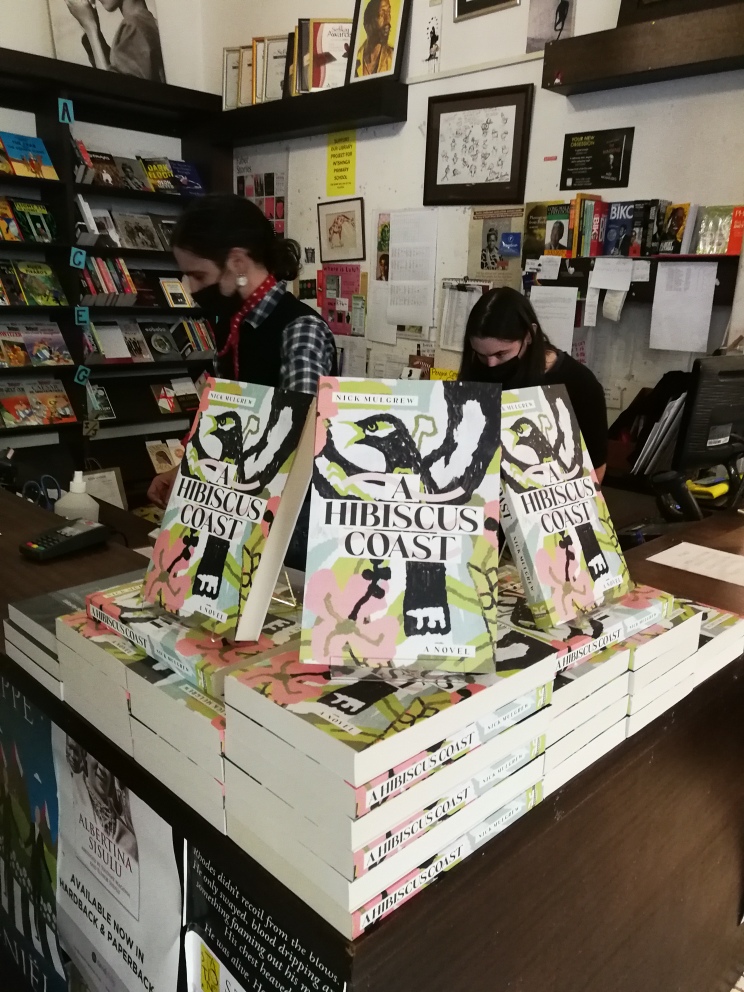
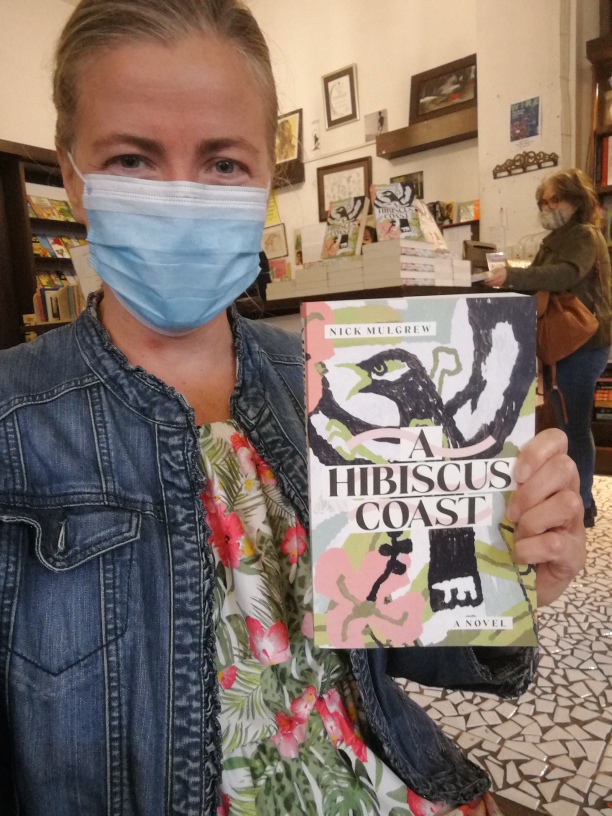
A HIBISCUS COAST by Nick Mulgrew launched at The Book Lounge

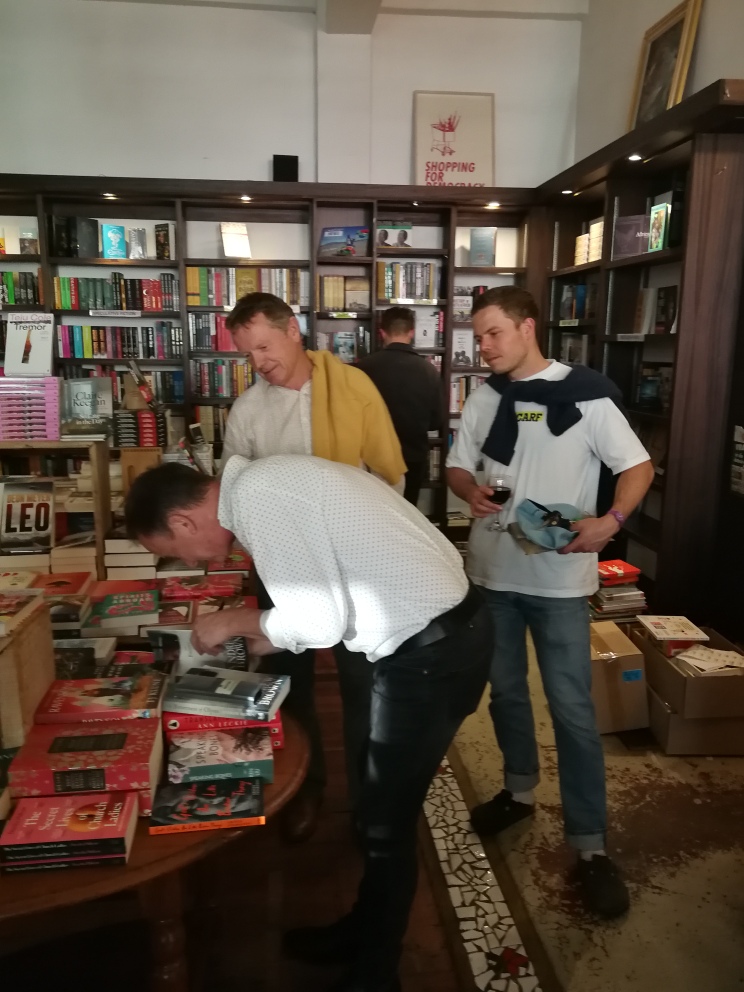
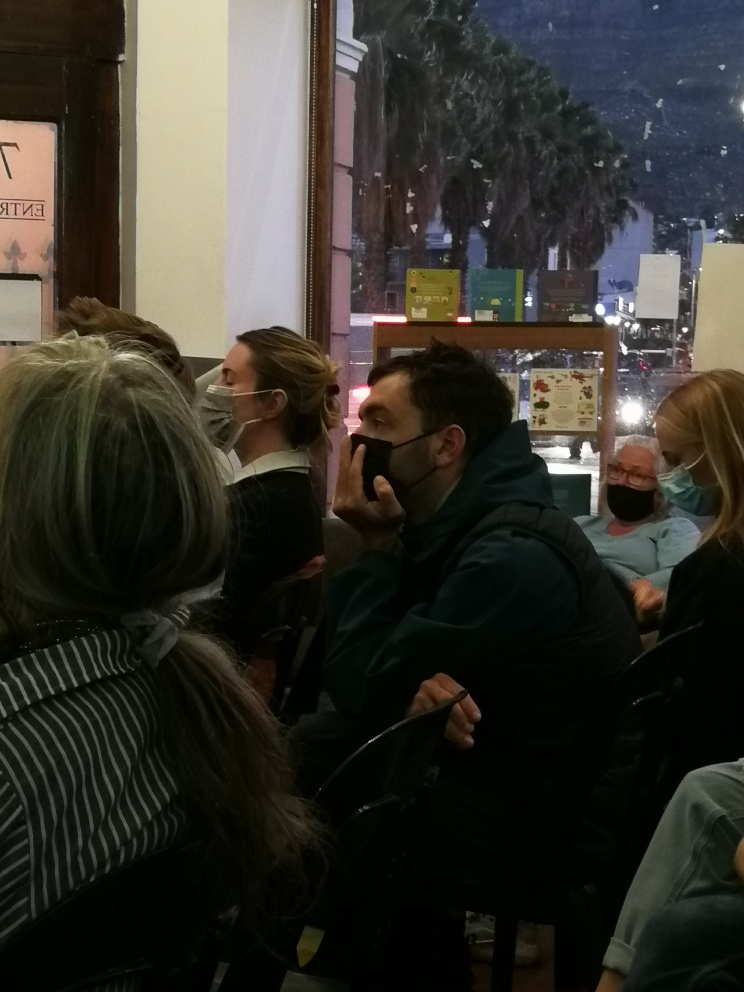
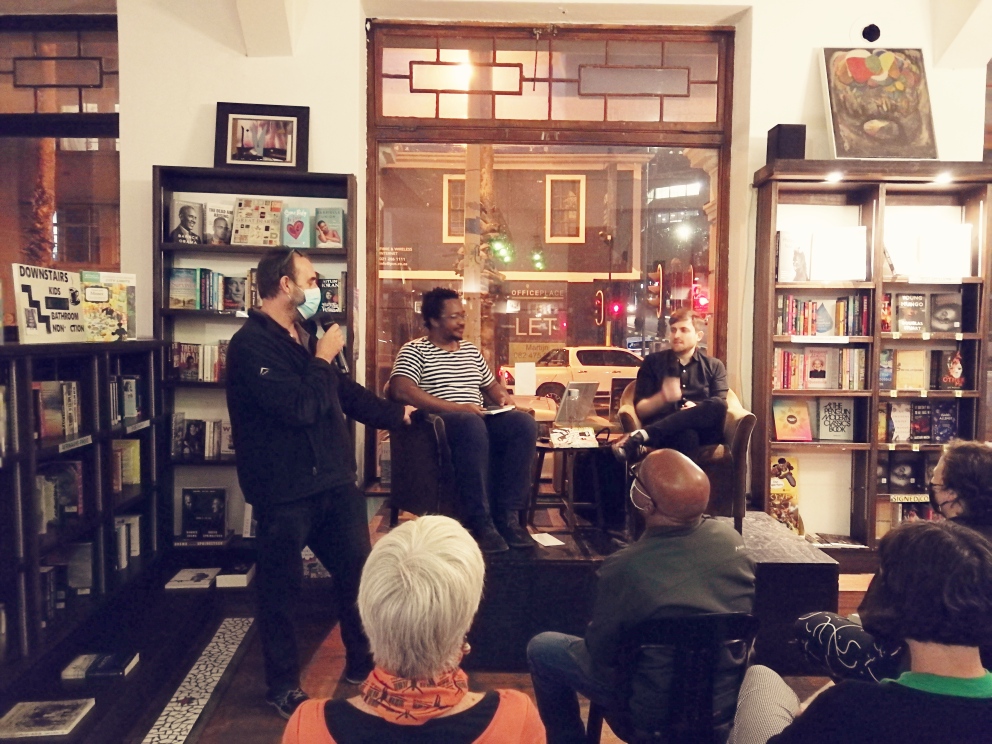
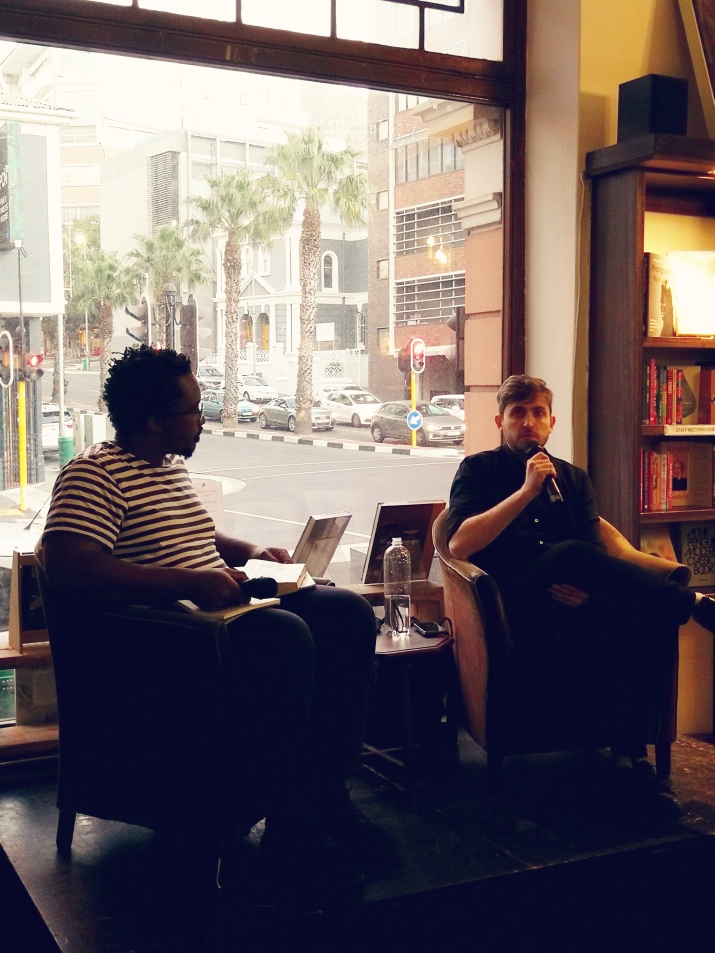
To say that I was moved would be the understatement of the last two years. Our first post-lockdown book launch at THE BOOK LOUNGE again – after more than seven hundred loss-filled days! Fittingly, it was of Nick Mulgrew’s debut novel A Hibiscus Coast, and he was interviewed by Bongani Kona. Nick is as much of a literary institutions in his own right as is The Book Lounge. So is Bongani. Between the three of them – Mervyn (and his Book Lounge team!), Bongani and Nick – they connect most of the local literary community around us in ways that are difficult to capture in a few words. I would just like to say that I do not want to imagine a world without them. They make what I do at Karavan Press possible. They give me hope when little else does. Thank you!

And thank you to all the writers and readers who showed up at The Book Lounge tonight – I cannot tell you what it meant to me to sit among you during this evening of celebration.

Nick, thank you! You are an inspiration.

Q&A: Nick Mulgrew on ‘A Hibiscus Coast’

Much of the novel takes place among a community of white South African expats in New Zealand. Was that the starting point of the story you wanted to tell and if so, what drew you to them as a subject?

I’ve always wanted to write about white South Africans living in New Zealand precisely because I was once a white South African who lived in New Zealand. It was as simple as that. I also loved the idea of writing something set in the late 90s. It was a terrifically strange time for South Africa and most South Africans; even as a young child I experienced a sort of cultural whiplash. Our media and politicians were telling us everything was New – as in New South Africa, you know – but if you peeled back the veneer, so much was still so old and rotten.

The importance (both symbolic and practical) of land is a key element of A Hibiscus Coast but the land under discussion in the novel is in New Zealand, not South Africa. Land ownership and the historical theft of land is obviously a huge issue in SA, but your novel encourages SA readers to remember that issues of access to land are pretty universal, albeit with very different politics and histories in different countries. Were you writing about land in New Zealand specifically with a SA readership in mind?

I was writing about land because land is our universal concern. For all their differences as modern nation states, It’s no co-incidence that South Africa and New Zealand both have significant populations of people who live in precarious and vulnerable situations: both countries have a history of dispossession by (predominantly) British settlers, and either imperfect or non-existent ways of addressing that dispossession today. As such, they’re countries in which colonialism isn’t historical; it’s a process that’s still very much in effect.

What gets lost in the “debate” about land — and I use scare quotes here because my belief is that many people who get involved in debates over land reform do so in bad faith — is that land is a predicate for human society, and for individuals’ security and comfort. And yet, the societies we live in continue to deny so many people access to land. What are the forces that continue to drive this ongoing dispossession, and why do societies continue to allow these forces to operate? It sounds very academic, but that question was something I kept on coming back to while I was writing this book — how do these forces act in our everyday lives, even in domestic settings?

Mary is a wonderful character at the heart of the novel. She’s not perfect – nobody is – but despite being sent from SA by her parents as a young almost-adult to join this community of expats in New Zealand, she manages to define herself to some extent outside of the group into which she’s been thrown. She is a very complex character, beautifully drawn, at the heart of the novel. She seems as a character to represent possibilities – the possibility to grow, to change and she adds a hopeful tone to the novel which would otherwise be missing. Tell us a little about the genesis of Mary and how difficult she was to write?

I wasn’t thinking about this while writing her, but Mary’s a bit like South Africa in the 1990s: full of potential, but too wracked by trauma to fully grasp the possibilities and opportunities in front of her. She was easy to write, though. Her world is the world I grew up in, and in such a world, growth and change is the only possibility of escape. Ultimately, privilege is a trap of ignorance, and I wanted to write about someone who wanted, and probably needed, to struggle free from it.

[…]

The Book Lounge: Something Special

Read the entire interview:

The Book Lounge’s Something Special – Q&A: Nick Mulgrew on A Hibiscus Coast