
‘Of course, the entirety of human history might be summed up in the two words – “Humans migrate” – but mine was not an experience I had ever encountered in literature. (A Hibiscus Coast isn’t autobiographical, but is based directly on experience, both mine and other people’s.)’
Africa in Dialogue
‘A Circle of Women’ by Tracey Randle
Tracey Randle kindly shared with us this beautiful poem she was challenged to write. See which Karavan Press title is woven into the fabric of her ode to bookclubs, women and reading:
A circle of women

A circle of women facing each other might look like:
An embroidered cloth found in a forgotten museum store
Their names pulled in and out in cotton
As fingers and minds met each week
To sew something of themselves into the
collective cloth

A circle of women facing each other might look like:
towers of books piled up like small mountains
the names of writers and poets pulled in and out
As fingers quietly turned pages
To read something of themselves in the
collective stories

A circle of women facing each other might look like:
all the hopes and dreams and fears they carry
of when breath becomes air
sewn into a cloth or told through another book’s story
As fingers and minds meet
Taking notes on grief
Daring greatly to speak something of their louding voices into the
collective space

A circle of women facing each other might look like:
A starless sea of stories filled with
empty champagne flutes and a stack of china plates smeared with crumbs
washing up on a hibiscus coast
A garden light flashing on and off in the night
As the oak leaves and nighttime birds catch their laughter
Recognising that on earth we are briefly gorgeous

A circle of women facing each other might look like:
All the embroidered cloths our grandmothers have ever made
All the towers of books women have discussed together
while thinking up a hurricane
A line of tears caught in thread
A seam of hope woven in a tapestry
A string of words that prevents the great alone
We are so much more than girl, women, other
Where the pull of the stars shows us
The wonder of acceptance
To read more about Tracey click here: Cape Herstorian
Thank you, Tracey, for reading and sharing ‘A circle of women’ with us.
Q&A: Nick Mulgrew on ‘A Hibiscus Coast’
Much of the novel takes place among a community of white South African expats in New Zealand. Was that the starting point of the story you wanted to tell and if so, what drew you to them as a subject?
I’ve always wanted to write about white South Africans living in New Zealand precisely because I was once a white South African who lived in New Zealand. It was as simple as that. I also loved the idea of writing something set in the late 90s. It was a terrifically strange time for South Africa and most South Africans; even as a young child I experienced a sort of cultural whiplash. Our media and politicians were telling us everything was New – as in New South Africa, you know – but if you peeled back the veneer, so much was still so old and rotten.
The importance (both symbolic and practical) of land is a key element of A Hibiscus Coast but the land under discussion in the novel is in New Zealand, not South Africa. Land ownership and the historical theft of land is obviously a huge issue in SA, but your novel encourages SA readers to remember that issues of access to land are pretty universal, albeit with very different politics and histories in different countries. Were you writing about land in New Zealand specifically with a SA readership in mind?
I was writing about land because land is our universal concern. For all their differences as modern nation states, It’s no co-incidence that South Africa and New Zealand both have significant populations of people who live in precarious and vulnerable situations: both countries have a history of dispossession by (predominantly) British settlers, and either imperfect or non-existent ways of addressing that dispossession today. As such, they’re countries in which colonialism isn’t historical; it’s a process that’s still very much in effect.
What gets lost in the “debate” about land — and I use scare quotes here because my belief is that many people who get involved in debates over land reform do so in bad faith — is that land is a predicate for human society, and for individuals’ security and comfort. And yet, the societies we live in continue to deny so many people access to land. What are the forces that continue to drive this ongoing dispossession, and why do societies continue to allow these forces to operate? It sounds very academic, but that question was something I kept on coming back to while I was writing this book — how do these forces act in our everyday lives, even in domestic settings?
Mary is a wonderful character at the heart of the novel. She’s not perfect – nobody is – but despite being sent from SA by her parents as a young almost-adult to join this community of expats in New Zealand, she manages to define herself to some extent outside of the group into which she’s been thrown. She is a very complex character, beautifully drawn, at the heart of the novel. She seems as a character to represent possibilities – the possibility to grow, to change and she adds a hopeful tone to the novel which would otherwise be missing. Tell us a little about the genesis of Mary and how difficult she was to write?
I wasn’t thinking about this while writing her, but Mary’s a bit like South Africa in the 1990s: full of potential, but too wracked by trauma to fully grasp the possibilities and opportunities in front of her. She was easy to write, though. Her world is the world I grew up in, and in such a world, growth and change is the only possibility of escape. Ultimately, privilege is a trap of ignorance, and I wanted to write about someone who wanted, and probably needed, to struggle free from it.
[…]
The Book Lounge: Something Special
Read the entire interview:
The Book Lounge’s Something Special – Q&A: Nick Mulgrew on A Hibiscus Coast
Diane Awerbuck reviews A Hibiscus Coast by Nick Mulgrew for the Sunday Times
Longing and the Promised Land

But A Hibiscus Coast is not all satire. Mulgrew is a sensitive man, and he invokes and then banishes the wishes, regrets, dreams and frustrations that plague us. How difficult it is to write powerfully and meaningfully about feelings; our personal revelations are mostly boring to others. But Mulgrew’s technique is persuasive, at once chattily vernacular and then so lyrical he could name new palettes for Plascon.
This self-interrupting search is linked to his favourite theme, and one which he explores to its fullest in A Hibiscus Coast: the human responsibility to know ourselves in order to know others, and our obligation to tell the truth. We must face our old selves or be consigned to further continental drift.
Sunday Times

‘Book of the Week’ at The Book Lounge (15% discount until 19 May): A HIBISCUS COAST by NICK MULGREW
A Hibiscus Coast retails for R290, but purchase the book at The Book Lounge before Wednesday 19th of May and receive a 15% discount – pay only R246.50! The Book Lounge is also offering free delivery on this, within 20km of the shop.
Click on the above image to purchase A Hibiscus Coast through their online store, or request an invoice (booklounge@gmail.com) for EFT. Please include your delivery address and contact number if you would prefer delivery.
You can even get a ‘signed’ copy. Nick signed and sent us a few signature stickers from Edinburgh. Get them while stock lasts …


The Book Lounge Staff Recommendation
It takes so much skill to write a novel like A Hibiscus Coast that deals with so much trauma and grief, whilst still being warm, light-hearted, and at times even hilarious. Nick has woven these two vastly different places – Hibiscus Coast in KZN, and The Hibiscus Coast in New Zealand – together in such interesting ways, with metaphors around land, ownership, and dislocation. This novel does a beautiful job of illustrating how things can be both difficult and full of joy at the same time.
~ Jess
Happy Mother’s Day to all the mothers, real and fictional
My mother’s garments
never seemed to grow old.
Slack suits and twin sets
from the seventies,
woven from some synthetic
substance that did not wear
or tear, unlike the natural fibre
of her skin. My aged mother’s
delicate covering bled
every time she stumbled.
Worn out; worn to shreds.

— "Going home", Disturbance, Dawn Garisch


It has just gone six a.m. I walk my son down the road to the corner where we wait for his lift. The sun is rising, the light streaking the horizon gold. I comment on the morning buzz, the company we keep, power-walkers, the dog walkers, workers and school kids heading for the train. ‘The day carries on.’
Without you, the day must carry on.
Al says, ‘Of course, but let me remind you that you’re wearing pyjamas.’

— Death and the After Parties, Joanne Hichens


They fled with nothing, never stopping. Not even when his mother tripped, his sister, tied to her back, knocking her head so hard that a bump rose immediately. She had been crying, now she screamed. Yet still they ran, amid their own blood and spittle, as the black cloud of the burning valley hunted them, chasing them forward, forward, towards the blue sky.

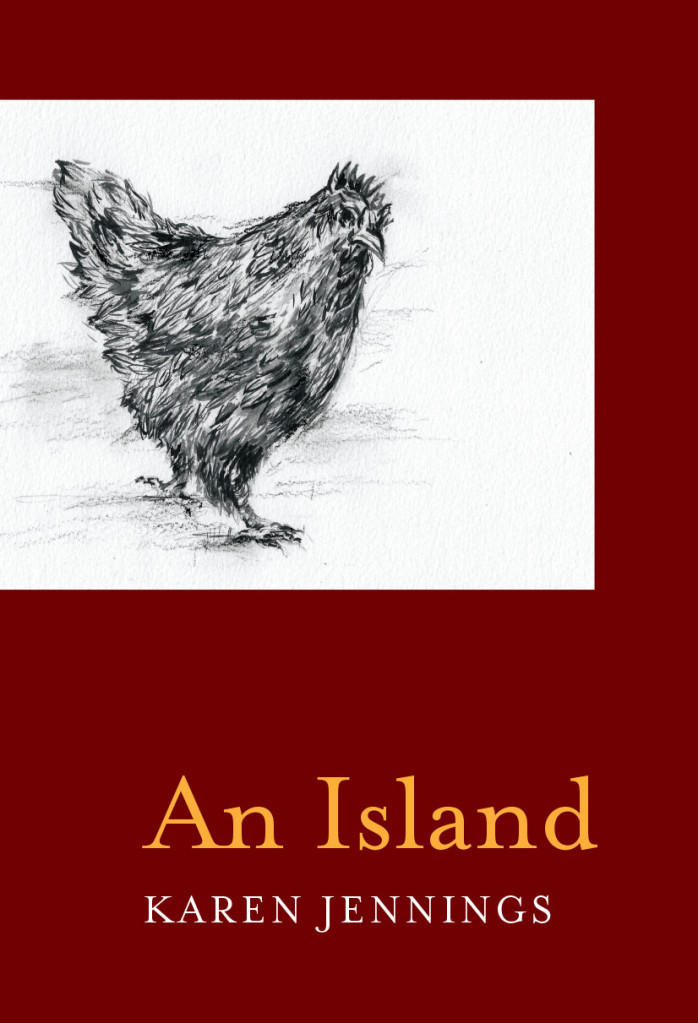
— An Island, Karen Jennings


Now Shirley, you know, became a mother quite young – sixteen or something like that. She ran away from home with newborn Jason; his naeltjie at his belly hadn’t even fallen off yet. Came to Cape Town where she thought no one would find her. The Northern Cape was far.

— "Homeful", Let It Fall Where It Will, Lester Walbrugh


Lexi shrugged off her coat. She heard the rustle of beads as her mother, Sandra, came through the hippie curtain from the kitchen at the end of the long hallway. Like the town was bisected by a highway, so was their house by the passage.
‘I thought you would be asleep by now.’ Lexi feigned surprise.
‘I waited up. You’re my responsibility now.’ Her mother was in a kaftan, her hair long and loose. She looked like she’d escaped from the Mamas and the Papas.
‘Yay.’ The joys of being dumped and fleeced by her husband never ceased.

— A Fractured Land, Melissa A. Volker


I still remember my mother’s words when we got in the car to go to mass. ‘It’s Christmas, Mary, not a funeral.’ But I’ve always worn black. I would have said she was tempting providence, if that wasn’t exactly the sort of thing she would say. I should have, though. When we got home, a bunch of armed response cars were blocking the gates to the complex. The police were there. Men in bulletproof vests. Guns.

— A Hibiscus Coast, Nick Mulgrew


Not a word was exchanged between us as my mother and I made our way home. She must have seen how disappointed I was for, as soon as we walked into the house, she turned to me, demanding – ‘Where is the form?’
Puzzled, I looked at her. What use was that form now? What would she do with it? Only my father could sign it; and he had flatly refused, hadn’t he?
‘Give me the form, Thembi.’
‘Why, Mama?’
‘Letha, bo!’
My mother forged Baba’s signature.
I applied for a passport, astounded by my mother’s actions. She had shown me a side of her I didn’t suspect existed.

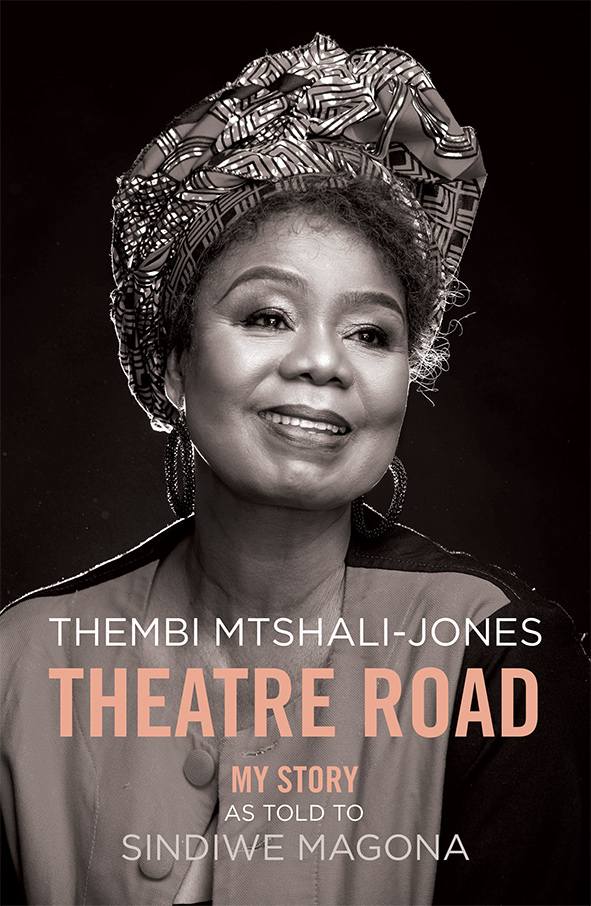
— Theatre Road, Sindiwe Magona


The lagoon has
forgotten us
like a son
sometimes
forgets his father

but never his mother

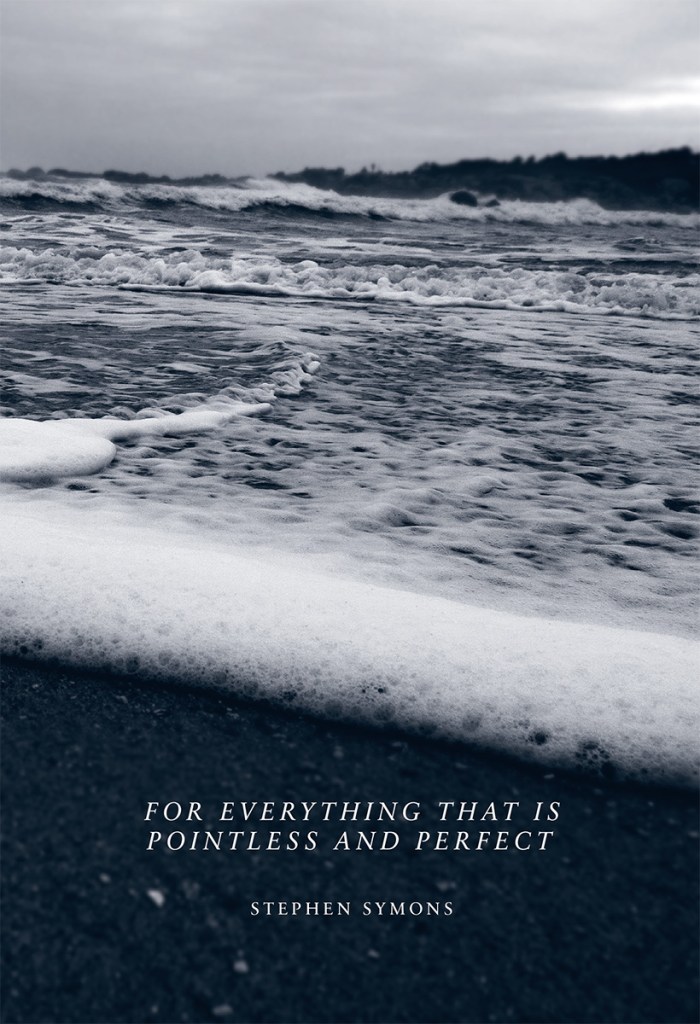
— "Port is red and starboard green", For Everything That Is Pointless and Perfect, Stephen Symons


But tell me this: where is his irrepressible, eternal soul? Because that is what interests me more. Where is his spirit, free of the gritty, grey residue of his body, which I have felt with my own hands? Because I, with the five senses of a woman, and undeniable sixth one 16 of a mother, cannot fathom the dimension within which my child now exists.

— "Lost", Earth to Mom, Sue Brown





Karavan Press title: A Hibiscus Coast by Nick Mulgrew

“Her eyes had adjusted, and the light was that of another country.”
Durban North, 1997. Following two shocking and insidious incidents of violence, nineteen-year-old Mary Da Costa is flying to Auckland ahead of her parents to make a new start. She is riddled with reservations – New Zealand is where her late brother was supposed to move – and all she really wants to do is keep to herself and work on her art.
On arrival, Mary comes under the wings of the South African ex-pat community, struggling with its own tensions between homesickness and belonging. Finding work at a local dairy, she meets self-appointed Māori leader Nepukaneha Cooper – Buck, as he’s better known. He and his family have some history with these rugby-mad lovers of apartheid, even more now that they’re encroaching on his turf. If only he had the means to fight them off and realise his life-long dream of establishing a marae on the beautiful strip of coast he has always called home.
Meanwhile, adrift between past and present, Mary is forced to dig deep in order to find her own truths and place in the world.
Nick Mulgrew’s long-awaited debut novel – of grand metaphors, silences, absences, and two cities and countries in flux – is a delightfully innovative, surprising, and warm-hearted meditation on family, loss, and home, as well as a deft examination of dislocation, dispossession, and the cultural blind spots of two very different (and in some ways similar) communities.
ISBN: 978-1-990992-58-2
Publication date: May 2021
About the author:

by Adam Mays
NICK MULGREW was born in Durban in 1990. He is a Mandela Rhodes Scholar, the recipient of the 2016 Thomas Pringle and 2018 Nadine Gordimer Awards, and the director of the award-winning poetry press, uHlanga.
Raised in Durban North and Orewa, he currently lives in Edinburgh, and is a PhD candidate at the University of Dundee. A Hibiscus Coast is his fourth book, and first novel.
Cover reveal: A HIBISCUS COAST by Nick Mulgrew
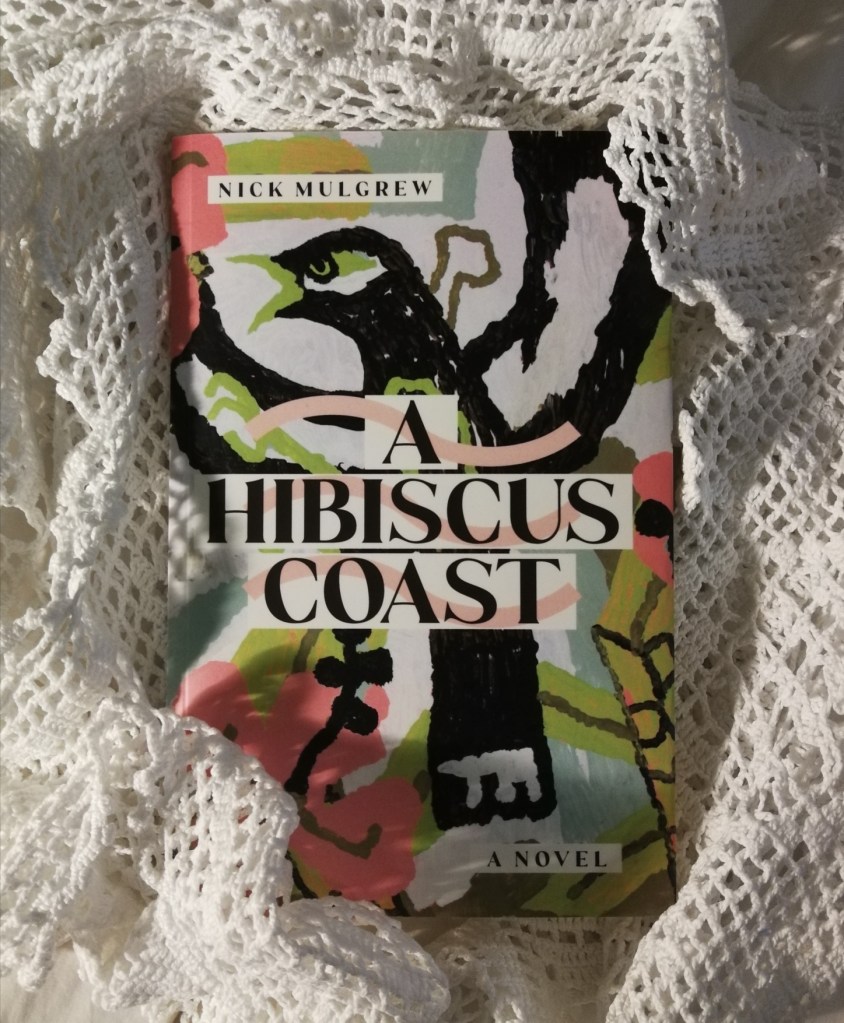
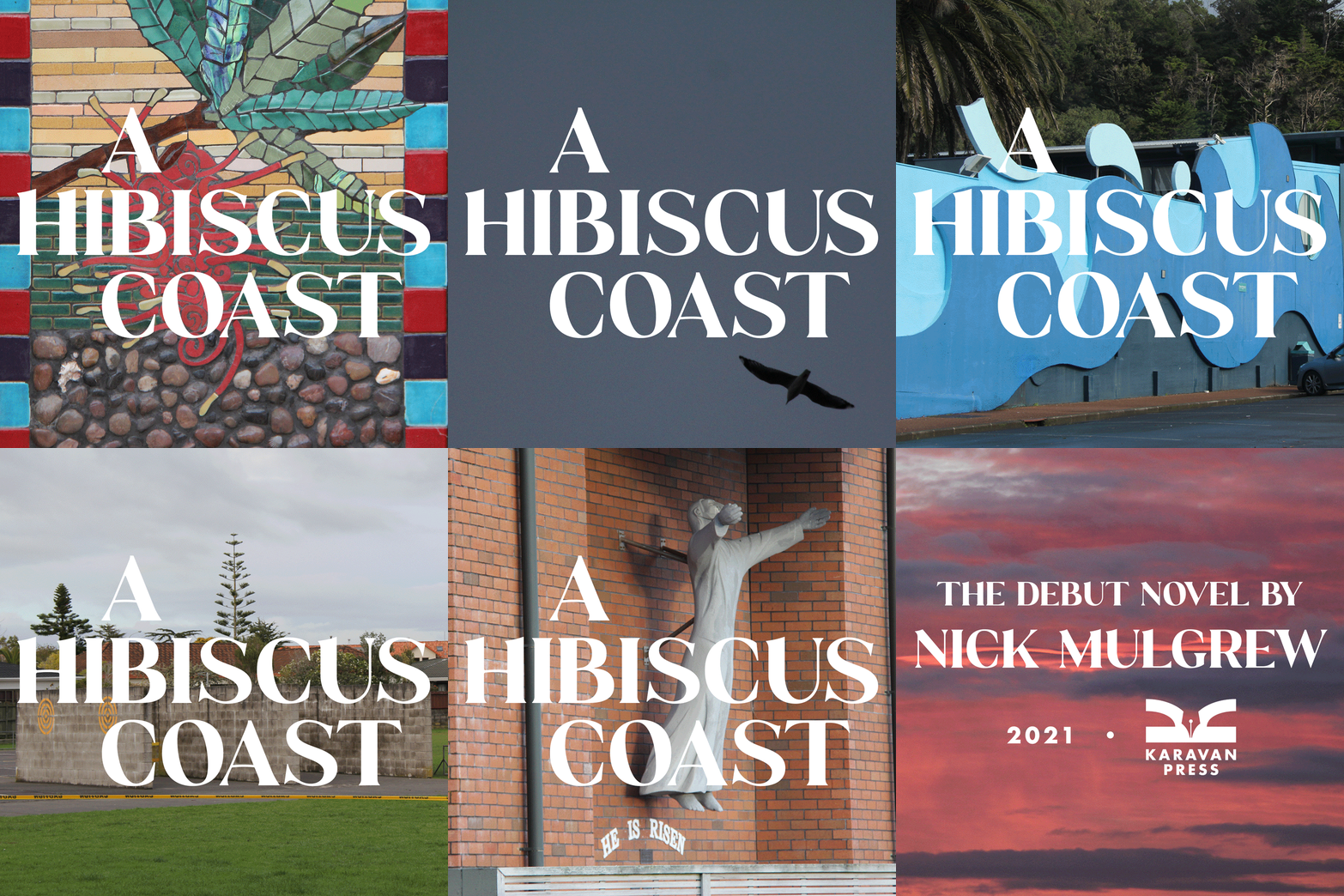
We are thrilled to present the cover of our first novel of 2021: A Hibiscus Coast by Nick Mulgrew!

Nick is the award-winning author of the myth of this is that we’re all in this together (2015), a poetry collection, and two volumes of short fiction, Stations (2016) and The First Law of Sadness (2017). A Hibiscus Coast is his debut novel.

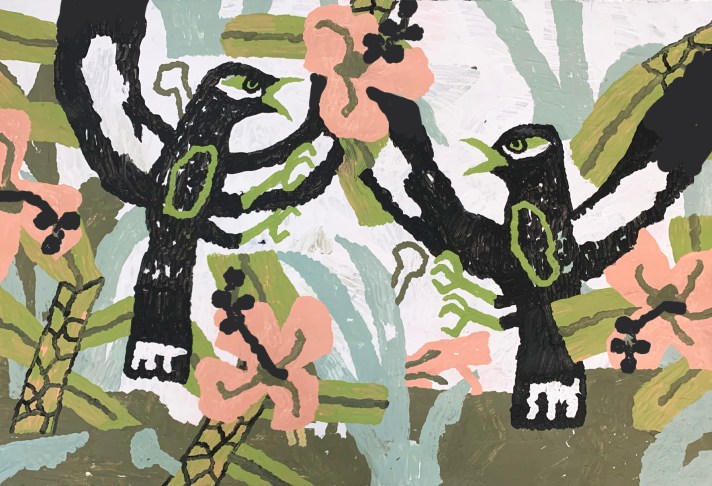
Cover artwork by Kylie Wentzel
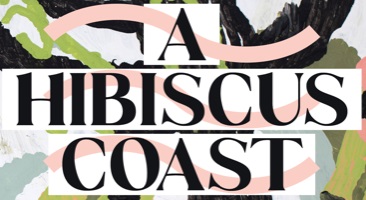
Cover typeface by Graham Paterson

Cover design by Nick Mulgrew
Author: Nick Mulgrew

NICK MULGREW was born in Durban in 1990. He writes novels, short fiction and poetry.
Among his accolades are the 2016 Thomas Pringle Prize, the 2018 Nadine Gordimer Award, and a Mandela Rhodes Scholarship. His debut novel, A Hibiscus Coast (Karavan Press), won the 2022 K. Sello Duiker Memorial Award. Since 2014 he has directed uHlanga, an acclaimed poetry press. He currently lives in Scotland, where he studies at the University of Dundee.
In 2023, Karavan Press published new editions of his short story collections, Stations (2016) and The First Law of Sadness (2017), and his latest novel, Tunnel.
Author photography by Adam Mays.
Karavan Press to publish Nick Mulgrew’s debut novel in 2021!
Nick Mulgrew was born in Durban in 1990. He is a Mandela Rhodes Scholar, the recipient of the 2016 Thomas Pringle and 2018 Nadine Gordimer Awards, and the director of the award-winning poetry press uHlanga. He currently lives in Edinburgh, where he is a PhD candidate at the University of Dundee. A Hibiscus Coast is his first novel.
 karavanpress.com