
Please join us for the Durban launch of our latest poetry collection, River Fugue by Sarah Frost. Sarah will be in conversation with Kirsty Miller.
Wordsworth Books Oceans Mall, 2 July 2025, 5.30 for 6PM
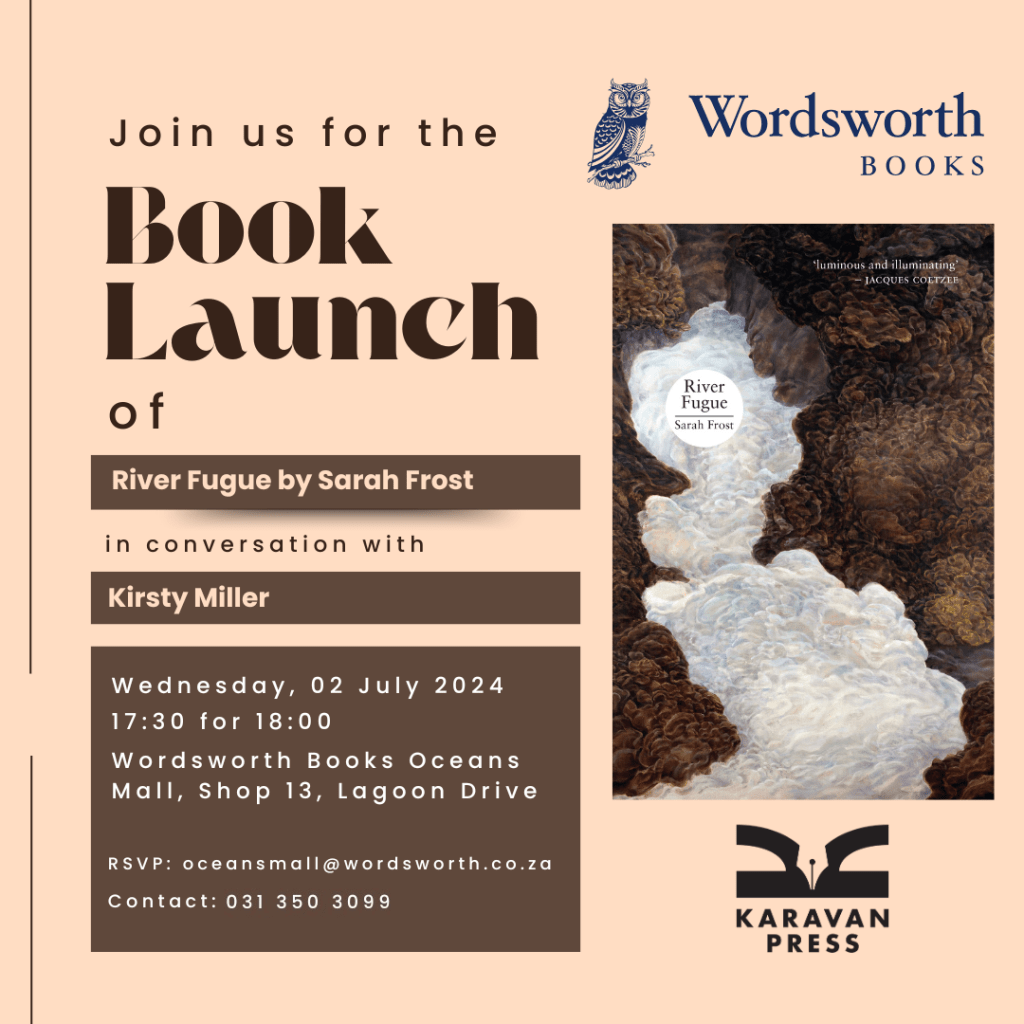
Please join us for the Durban launch of our latest poetry collection, River Fugue by Sarah Frost. Sarah will be in conversation with Kirsty Miller.
Wordsworth Books Oceans Mall, 2 July 2025, 5.30 for 6PM
Please join us for this special event, a joint launch of The Fourth Boy by Andrew Robert Wilson and Salt Water Pool Boy by Peter-Adrian Altini at Wordsworth Books Garden Route Mall on Tuesday, 20 May 2025, 17:30 for 18:00. The authors will be in conversation with Karina M. Szczurek.

Please join us for the launch of Of Salt, Dust and Love, the first collection of stories by Stephen Symons. Stephen will be in conversation with Glen Thompson. An evening of storytelling not to be missed! See you at Wordsworth Books Gardens on 23 April 2025 – World Book Day – the perfect to celebrate this beautiful book!
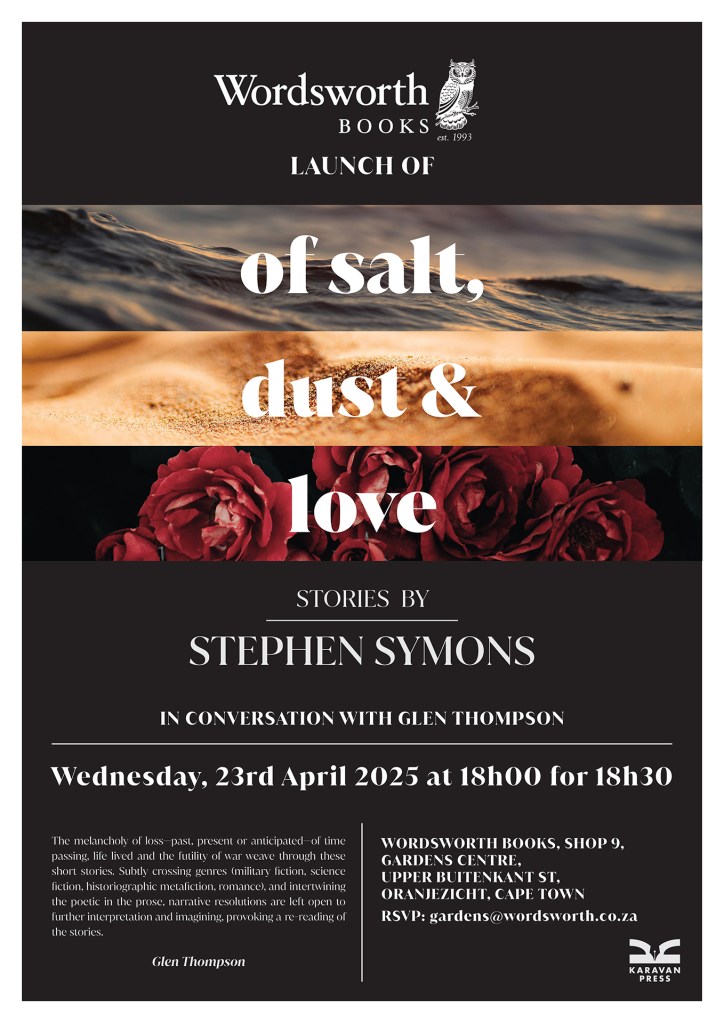
Please join Nick Clelland for the Durban launch of his Good Hope. Nick will be in conversation with Greg Ardé. Wordsworth Books Ocean Mall is hosting on Thursday, 10 October. Not to be missed!
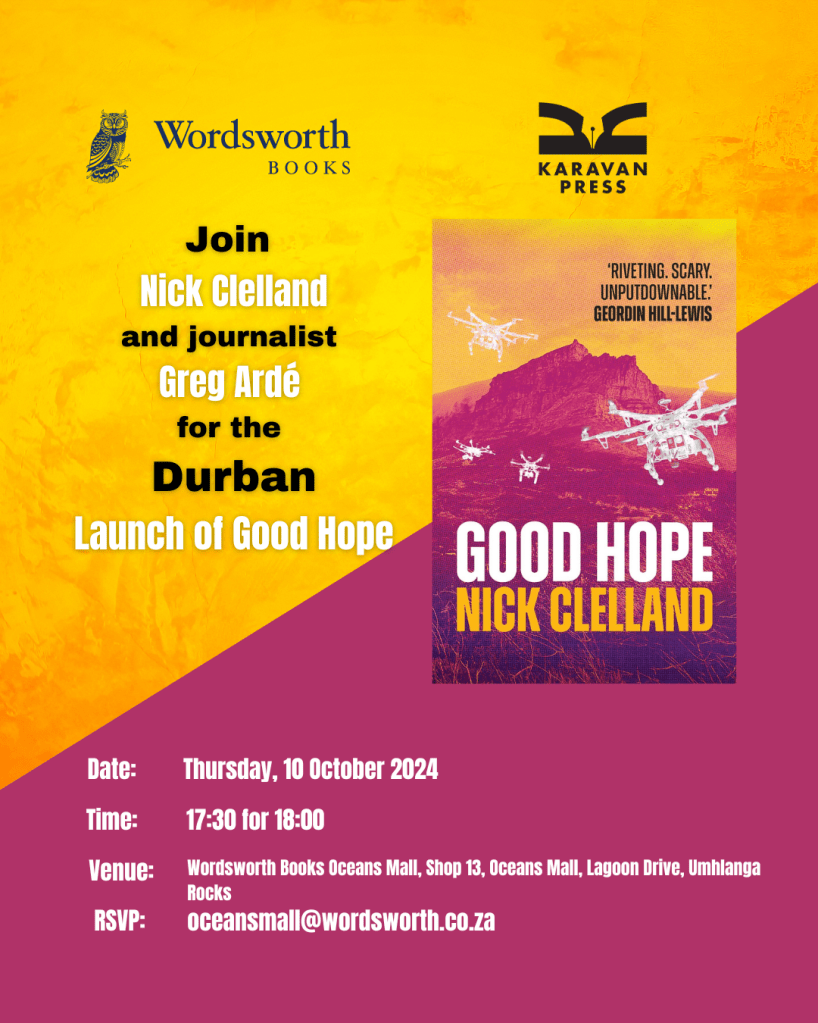

Being in a bookshop always makes me happy. Being in a bookshop while a poet is reading his work and discussing it with insight and care makes me extra happy. So when we gathered at Wordsworth Books Gardens at the end of a long, windy day to celebrate the launch of The Algebra of Insignificance by Stephen Symons the world immediately felt like a better place.

Stephen is one of the finest poets I know, and it is a great joy to work with him and to share his writing with other readers. He was in conversation with John Maytham, who asked all the right questions to allow the audience to get a real taste of what lies at the heart of Stephen’s creative process.


An audience member shared how he always marvels at Stephen’s ability to not only remain accessible, but to allow nearly each line of his poems to shine as a poetic gem in its own right. And so it is …
Half the city is drunk on the black liquor of February heat.
A wad of forgotten letters from which a type of longing germinates.
Two lovers inhale the scene
and unfurl their white flags of surrender
over each other’s salt-sticky flesh.
Day will eventually
beat its wings and become flight …


Thank you to Wordsworth Books Gardens for hosting the evening and for being so supportive of Stephen’s work and of so many other local writers! Thank you to Stephen and John for the conversation. And thank you to all who attended!


Far beyond the rummage of whitewater
the sail of a yacht argues with the wind,
rolling and pitching in hesitancy
as if about to make
a life-changing decision.
Happy poetry reading, Everyone!
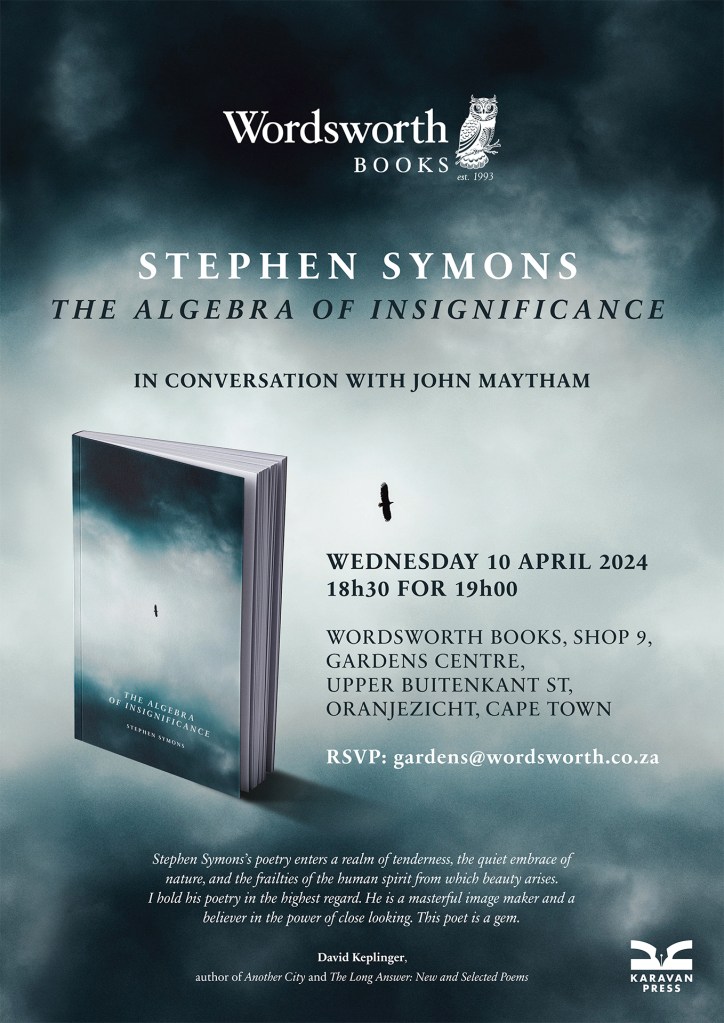
“This poet is a gem,” says David Keplinger, and anyone who has ever encountered Stephen Symons’s poetry will understand the sentiment. The Algebra of Insignificance is as beautiful and intriguing as its title. Don’t miss this special launch at Wordsworth Books Gardens. Stephen will be in conversation with John Maytham. We look forward to seeing you all there!
Please join us for either, or both, of these two special launches of Andrew Brown’s The Bitterness of Olives.

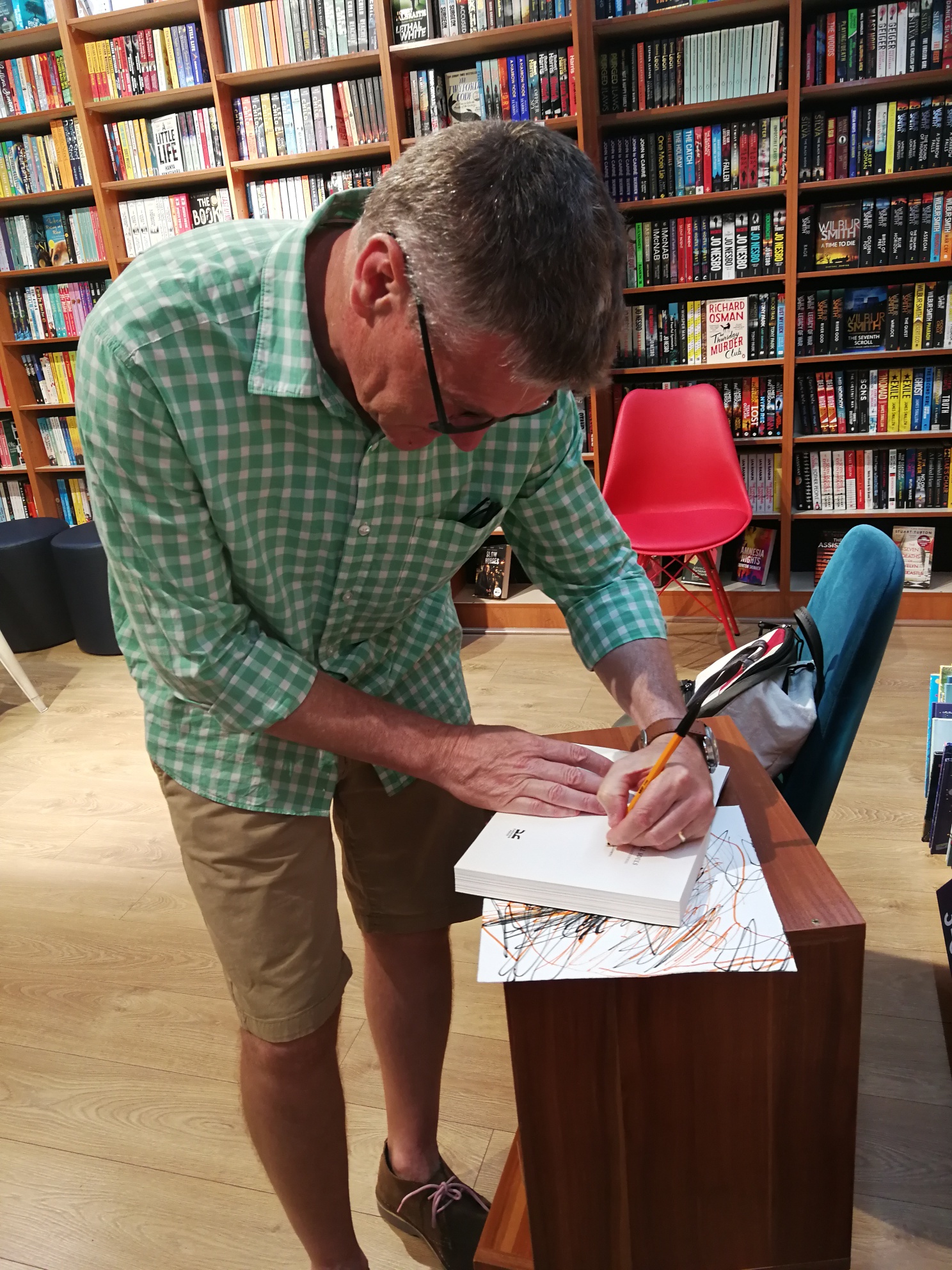
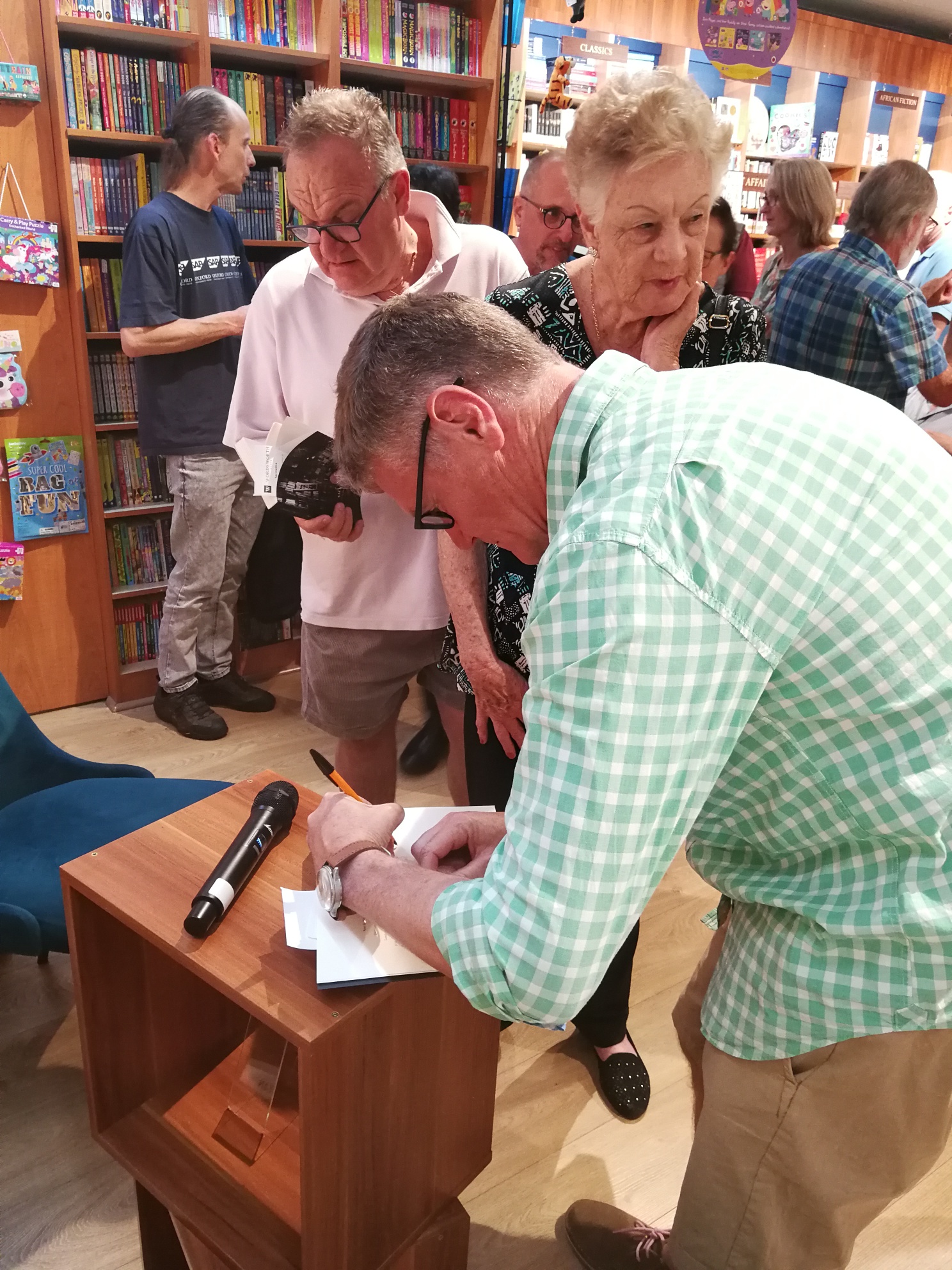
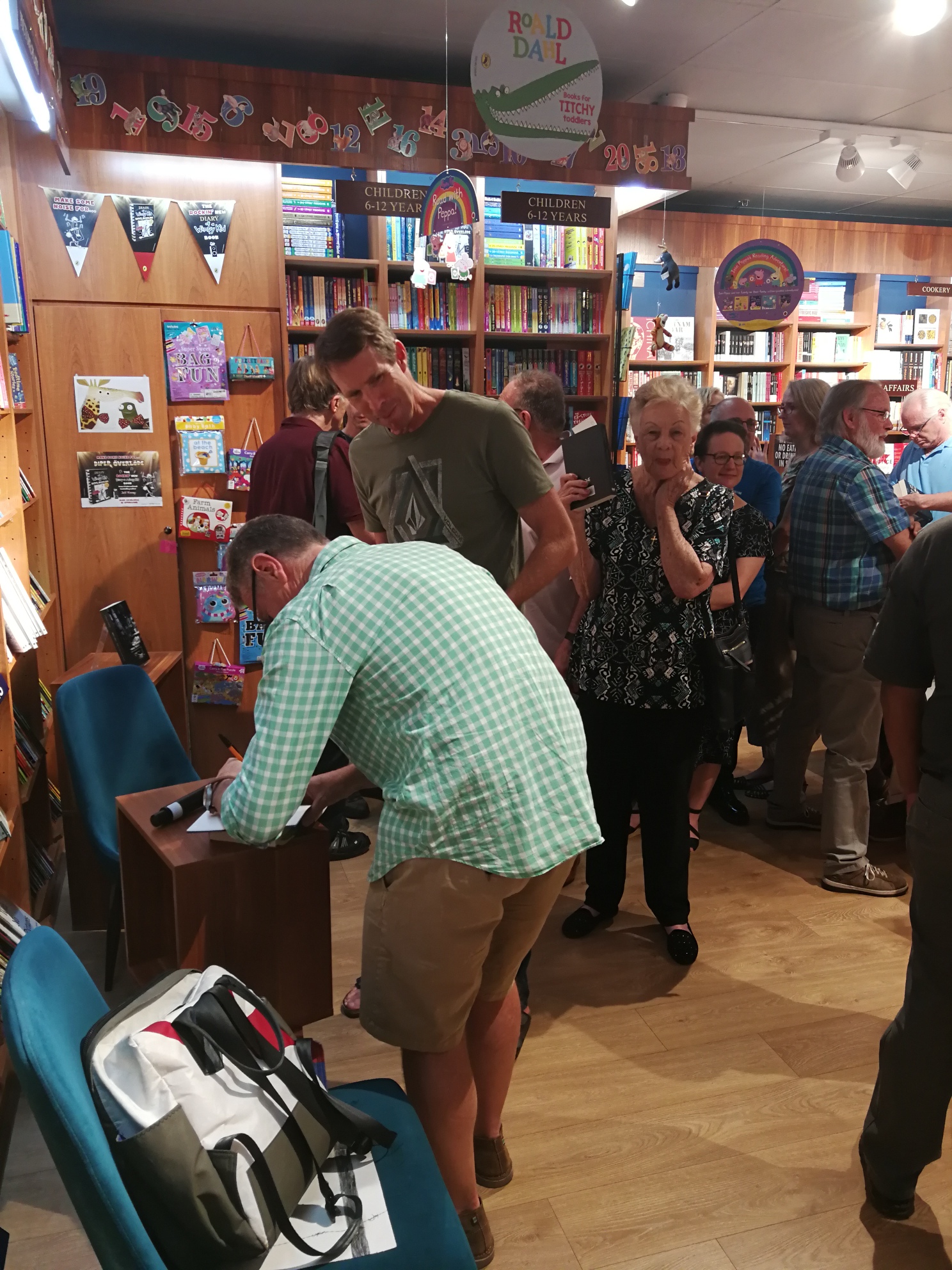
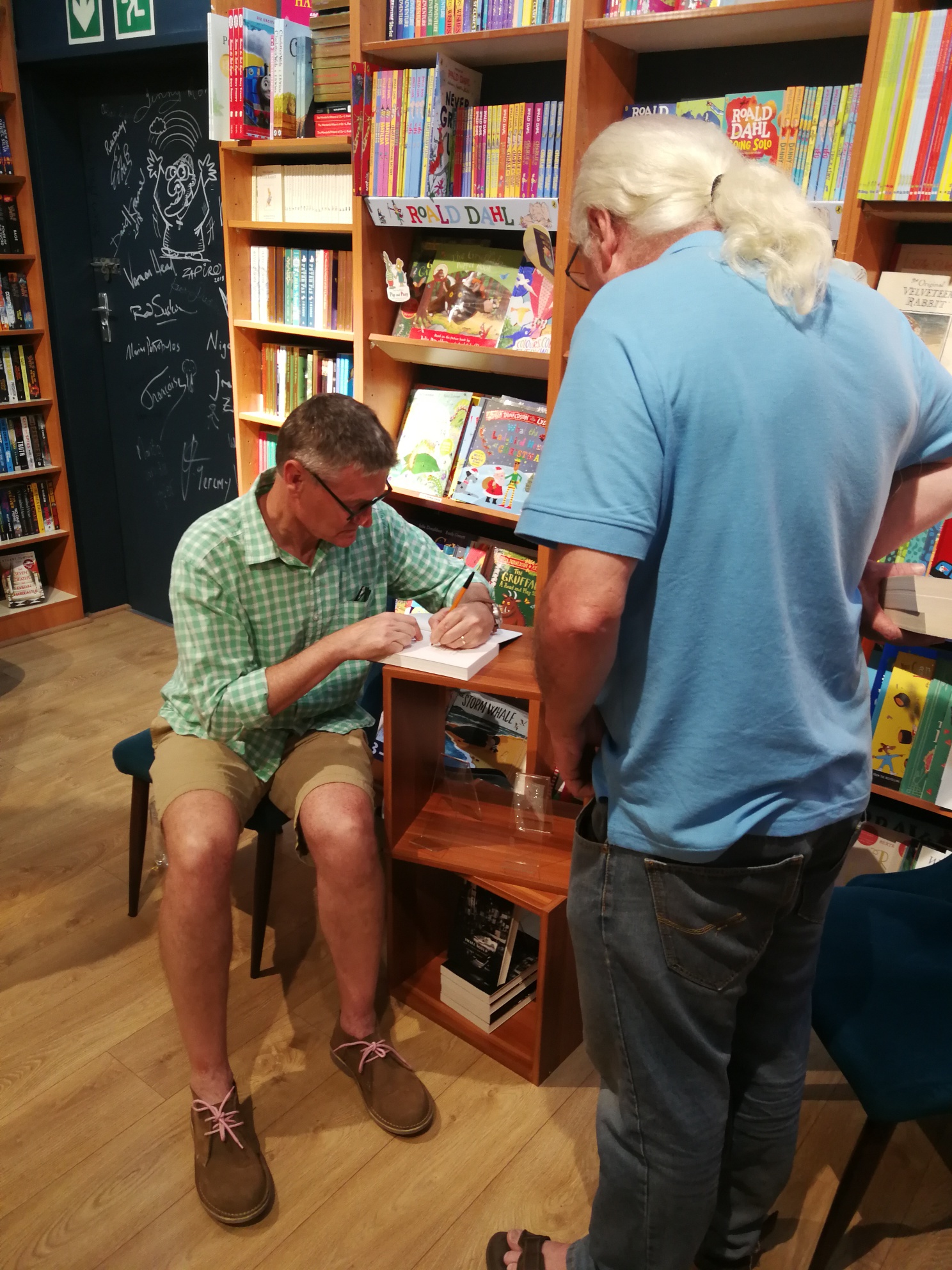
Poetry galore! Family, friends and poetry lovers filled Wordsworth Books Gardens to the brim to celebrate the publication of Small Souls: New and Collected Poems by Stephen Symons.
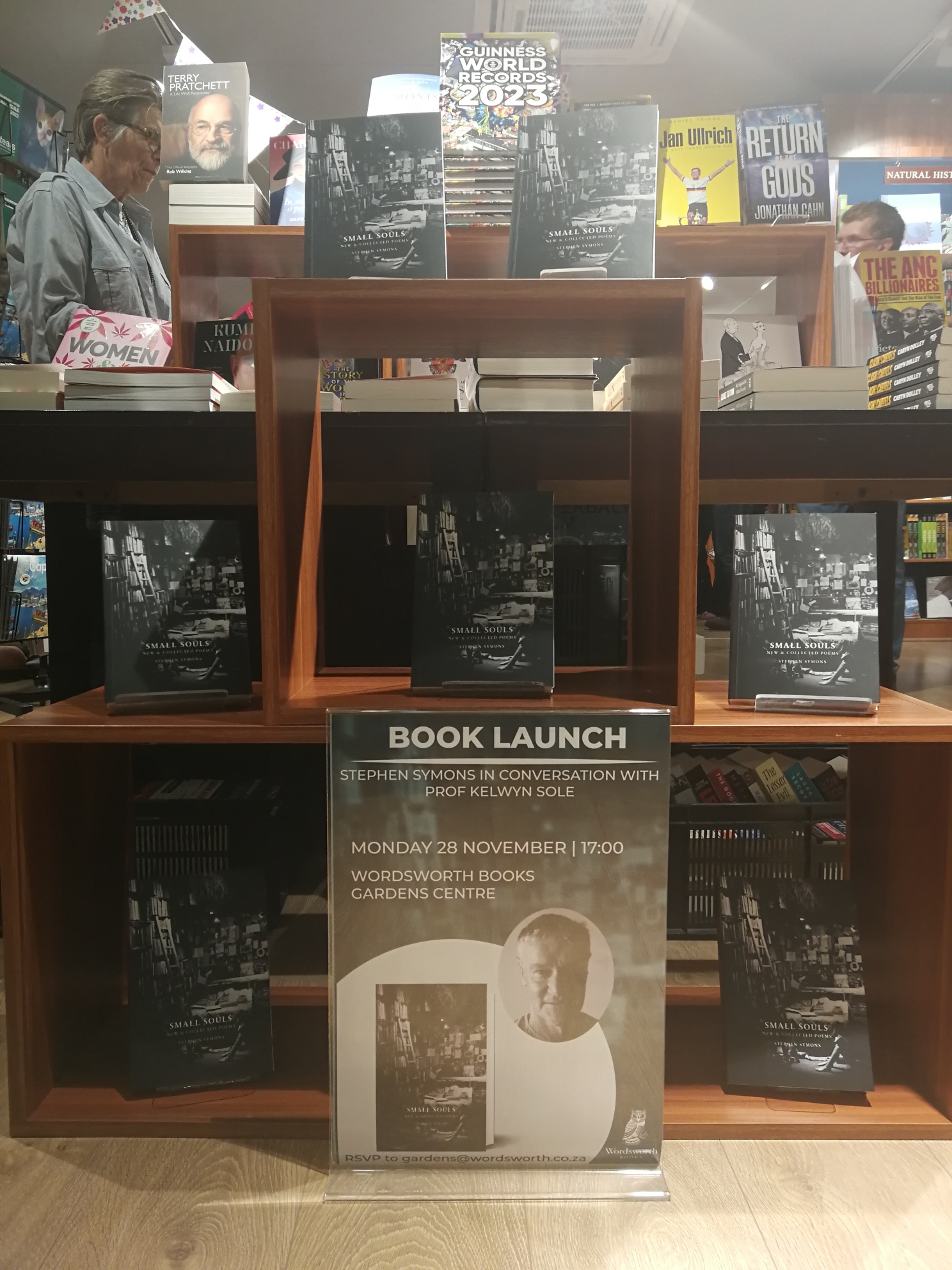

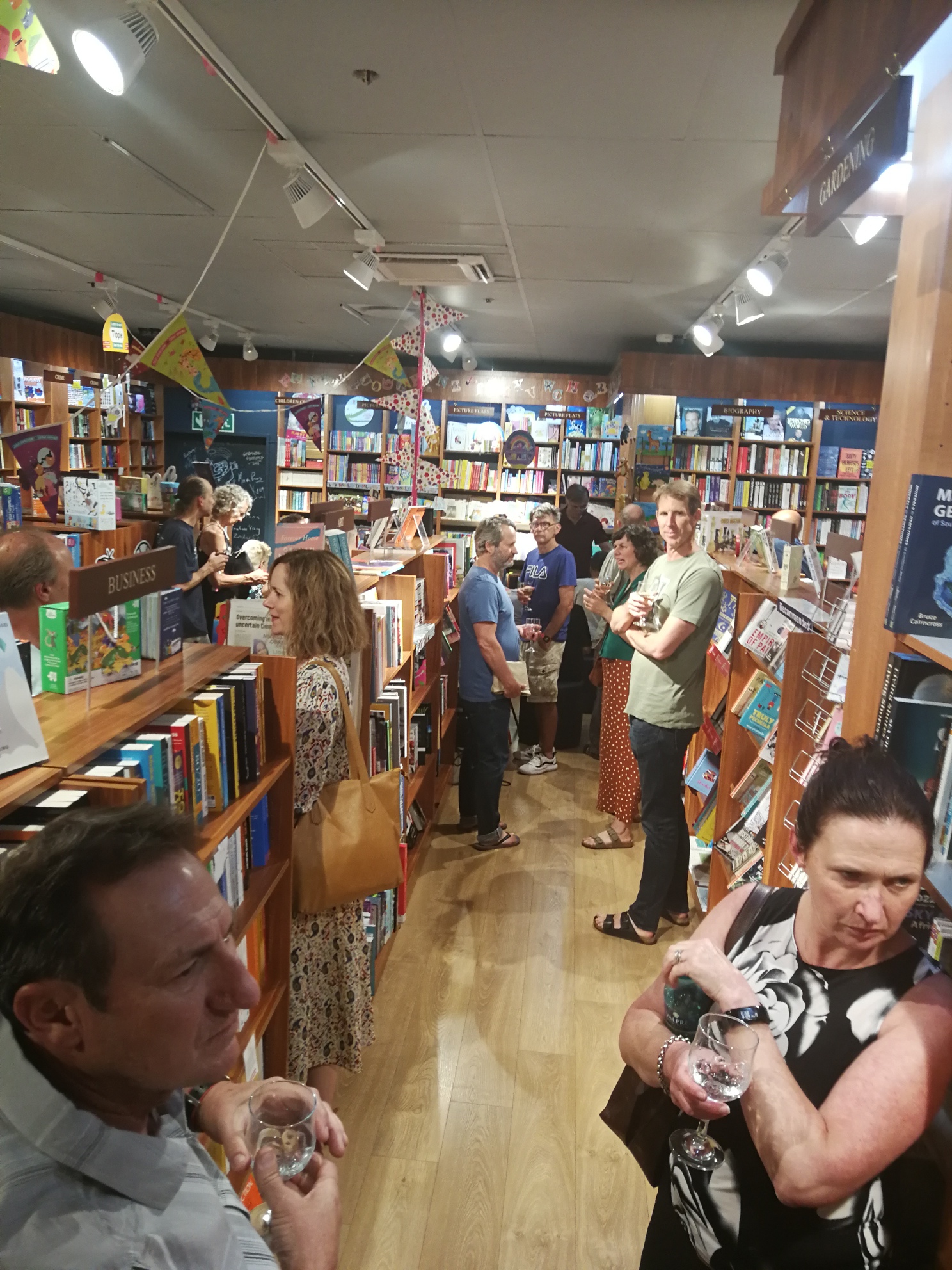
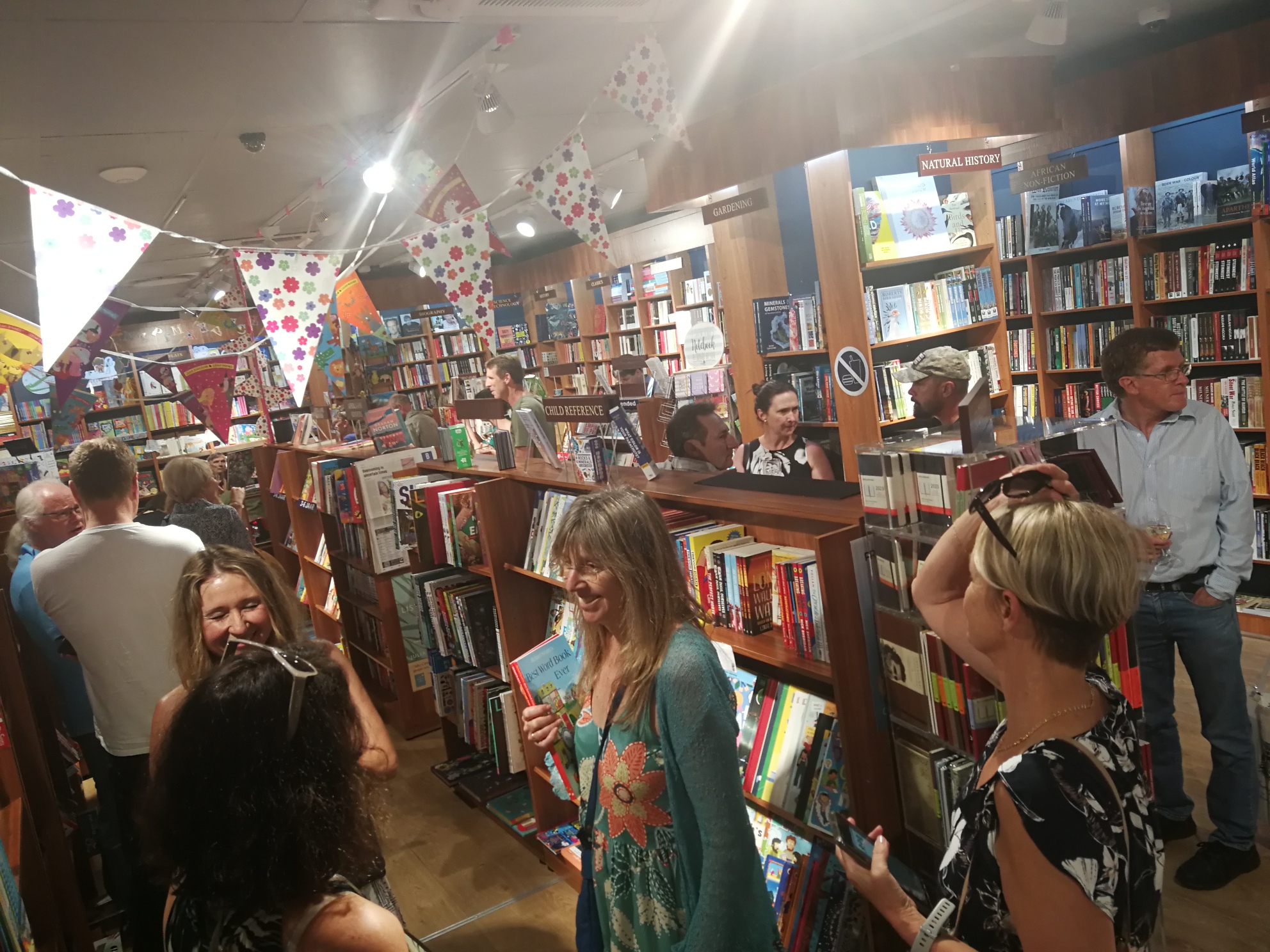
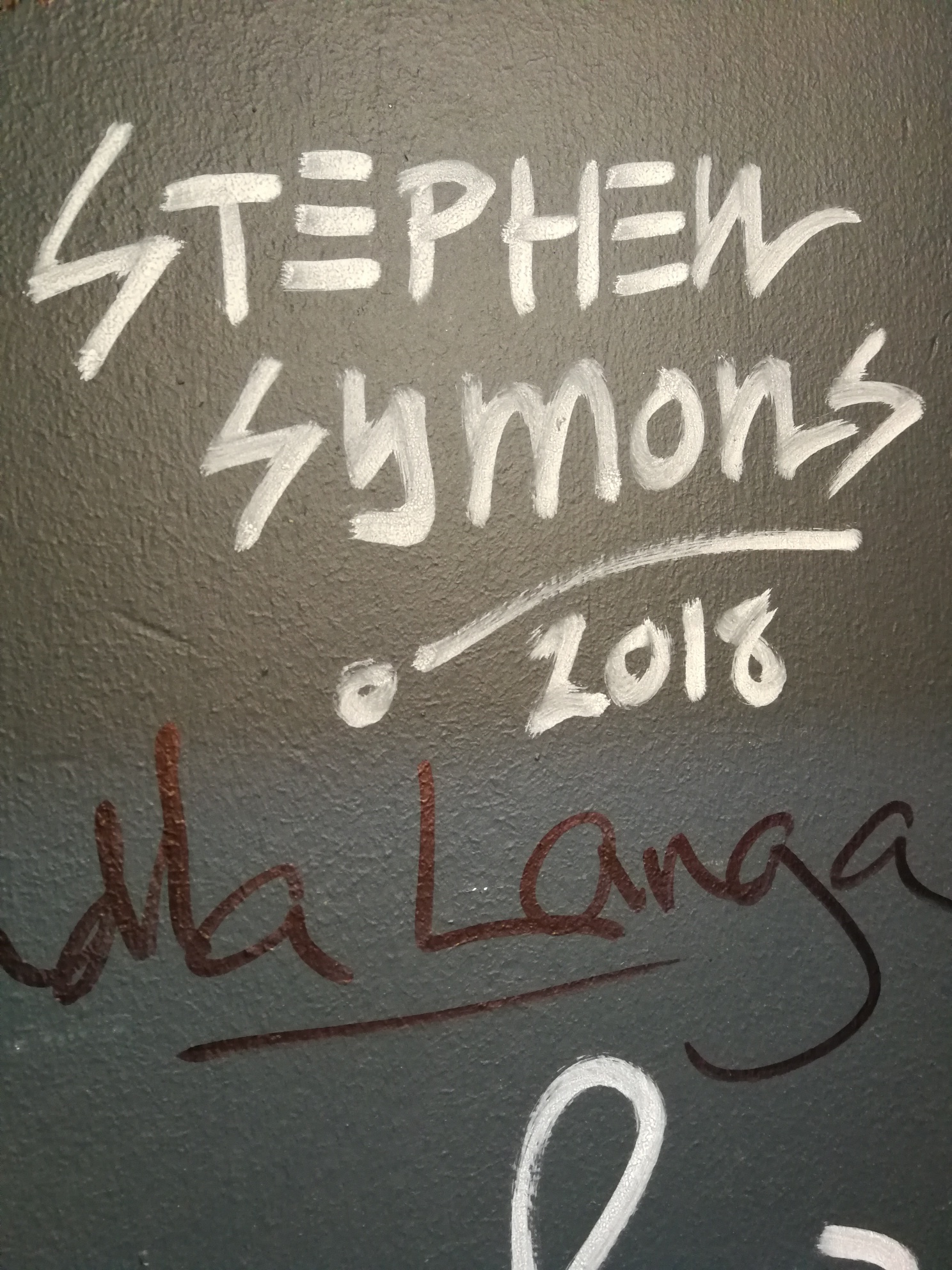

Stephen was in conversation with Kelwyn Sole, who has been a mentor and friend to Stephen for many years. Here are his notes for the introduction of the event:
Introduction to the launch of Small Souls (Karavan Press) by Stephen Symons | 28th November 2022
I first met Stephen Symons as a Masters student in the English Creative Writing programme at UCT a decade ago.
To quote Neruda, he is an unusual poet, ‘like the poets of our age, in light clothes and walking shoes’ (Pablo Neruda). I haven’t previously met a poet who is not only a sportsman but also someone who could weld, fly a plane, in addition to being a prodigious reader, Stephen is a knowledgeable lover of classical music and fine arts, and an excellent photographer.
In our interactions as his supervisor, I very soon realised that Stephen was already skilled in the lyric form and its formal devices (metaphor, image, extended tropes)
But equally quickly, I realised this designation of ‘lyric poet’ did not give the full story of what he was and is trying to do, nor what his poetry was increasingly to morph into.
He has kept the mastery of the traditional lyric, yes, and – like all good poetry – a 2nd and 3rd reading in these terms reveals gems the reader will have missed the first time around. However, what struck me also was his inquisitiveness and willingness to experiment and extend the lyric form in other directions.
I now understand that his knowledge of music and sensitivity to sound gives him a deftness with rhythm and rhythmic changes. Moreover, as a graphic designer, he is fascinated by the use that can be made of the page as an arena for spatial experiment (how a poem looks) and has worked on several poems which reflect this. Furthermore, he quickly ventured into the prose poem, a realm which abounds in lyrical and narrative possibilities; but a realm where few lyric poets venture, especially in SA.
I think these exciting formal directions he has followed reflect the openness of his own personality. When we worked together, he was prepared to follow, examine and think about every reading or individual poet I suggested to him. At the same time – of course – he was reading and thinking prodigiously on his own. He has an openness to the influence of the new, not from any desire to imitate but rather to see whether anything or anyone he comes across can teach him what may be useful for the further development of his style.
This openness to influence encompasses not only SA poets but also the poets of metropolitan modernism and postmodernism, and those further afield, like modern Arabic poetry.
In summary, for me, the effectivity and reach of his poetry lies not only in his usage of form but also in the number of recurring interests – themes and perspectives – which make his poetry unique.
The titles of his books are instructive here: Questions for the Sea; Small Souls; Landscapes of Light and Loss; and my special favourite, For Everything That is Pointless and Perfect, indicate some of his abiding major interests and perspectives.
Many of his poems revolve around acute observations and musings on the everyday (the quotidian), sometimes little noticed, details of family interaction, suburban experience and life. Poems about marriage, family, children and friends are recurrent and resonate particularly strongly. Among the weight of practicalities as a householder, there is a compelling awareness of the fragility and lightness of being alive on this planet at this time; and the particular anxieties and uncertainties of living in a strife-ridden country, itself part of an increasingly precarious world order.
It is also a poetry stippled with memory and immanence. There are poems filled with the memory of loves, youth, and his fraught time in the military.
As a result, there is a grounding of Stephen’s lyrics in our lives and our contradictions. Our past and present repressions and oppressions in SA leave their trace. I can think of no better concise example of this than a poem which notes how the shadows in a garden ‘leopard-crawl over mossed brick.’ (‘The intricacy of a body in the dark’) – the image has an immediacy but, simultaneously, a reference to the recent military past of this country, which is unforgettable. He writes within a country which, in the words of another poem, “simply wraps bandages” (‘Night drive’) around everything; a country where – to quote another particularly memorable longer poem, fences appear to “give chase” to human movement (‘The fence’). The threat of enclosure, violence, or peer or personal psychological repression and suppression are still with us and tinge his lyrics with their presence, giving them a greater resonance and accuracy.
Stephen’s poems resist restrictions of subject matter and style. He is superb at interweaving the social world of his poems with a more expansive natural world and the lives of the other creatures with which we share the planet. These intrude in poem after poem to advise and admonish us. The non-human is there and interacts willy-nilly with the behaviour (and, one should add, follies) of human beings.
I find references to the sea, and astronomy, in his poems especially powerful and healing.
For me, I find Stephen’s poetry, as a whole, moves exhilaratingly between stillness and flux; the numinous and the prosaic; between the concrete and the abstract; between family gardens and an expanded vision of the sky at nighttime; between the small details and compulsions of our surroundings and the large, philosophical and ontological questions always contained in these. (His poetry aids a reader’s understanding of their interconnectedness). For instance, a poem watches a dying butterfly, ‘paying life’s inevitable invoice / for a weekend / in paradise.” (‘Last afternoon’) Or, elsewhere, a rising wind reminds a banished angel, huddled beneath a streetlight, of flight. (’Beneath a streetlight’)
But even among the strictures we face, as he points out in several poems, “no loss is a perfect amputation/ … / the ghost of the limb lives on’ (‘Nervelines’).
Thus Stephen’s poems are always replete with possibility, with potential, with our human impulses that promote love and life in the midst of everything that besets us. As one poem says:
every outcome is possible –
infinite fractions
of happiness and hopelessness
intent on manufacturing wonder.
(‘A vast undecipherable stillness’)
Those of us who know Stephen are acutely aware “he never takes poetry, or the subject matter he writes about, for granted.” He never adopts the narcissistic self-regard that appears so often these days; instead, in his demeanour and work, he demonstrates the questing humility of serious talent, of a practitioner of the art of the poem: a stance which will, I know, result in much more to emerge from his pen subsequent to this wonderful, life-affirming and skillful collection we have before us tonight.
Professor Kelwyn Sole, Emeritus Professor of English Literature (UCT)

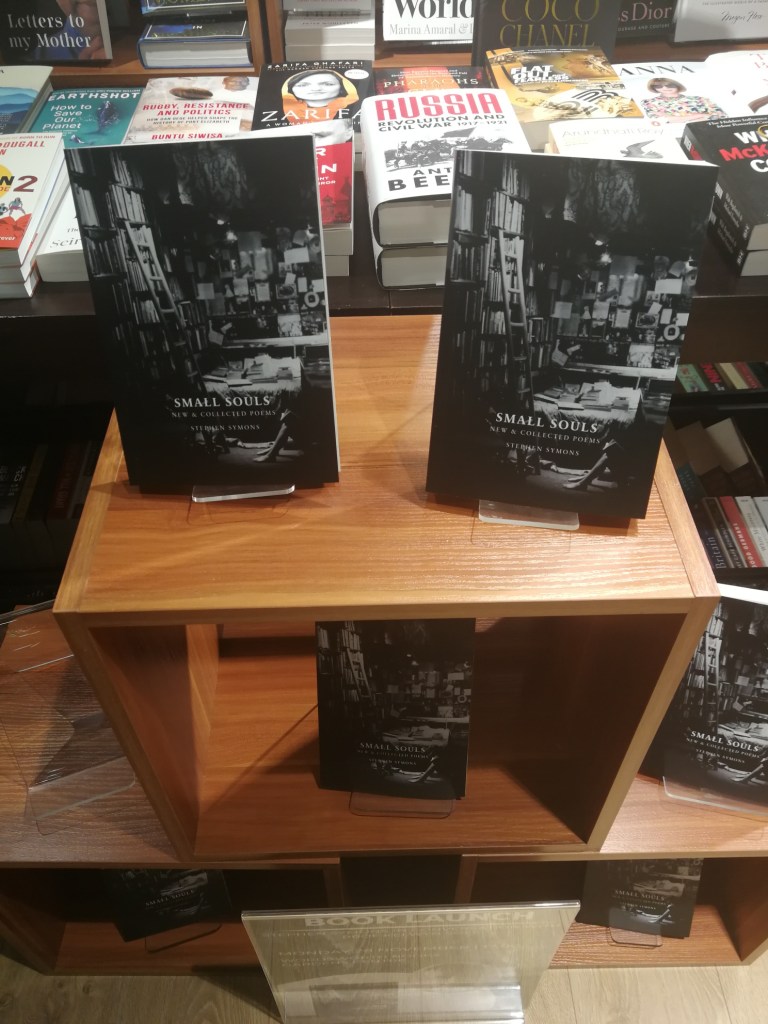
Thank you to Wordsworth Books Gardens, Stephen, Kelwyn and all who were there to welcome this beautiful book into the world!





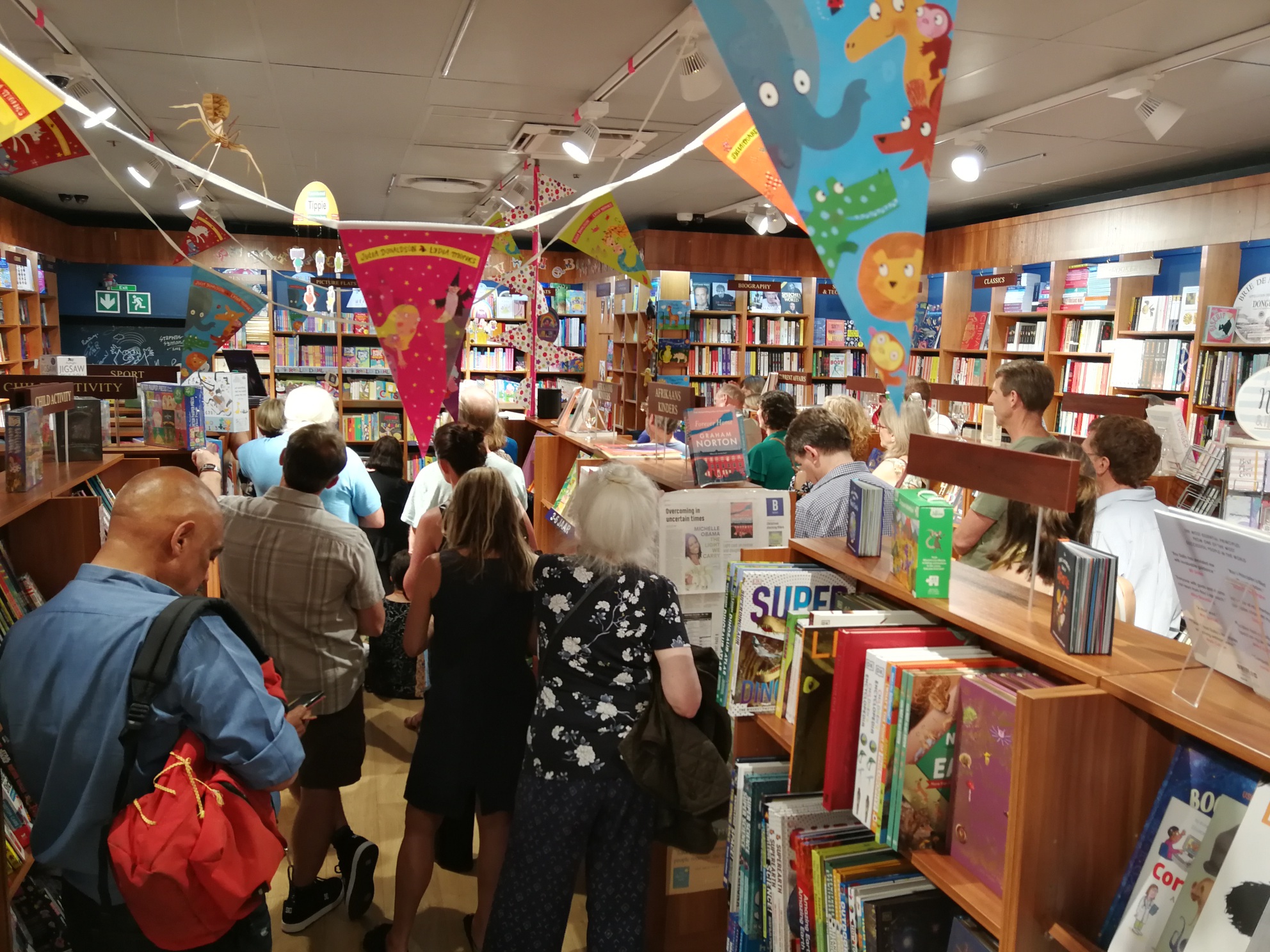

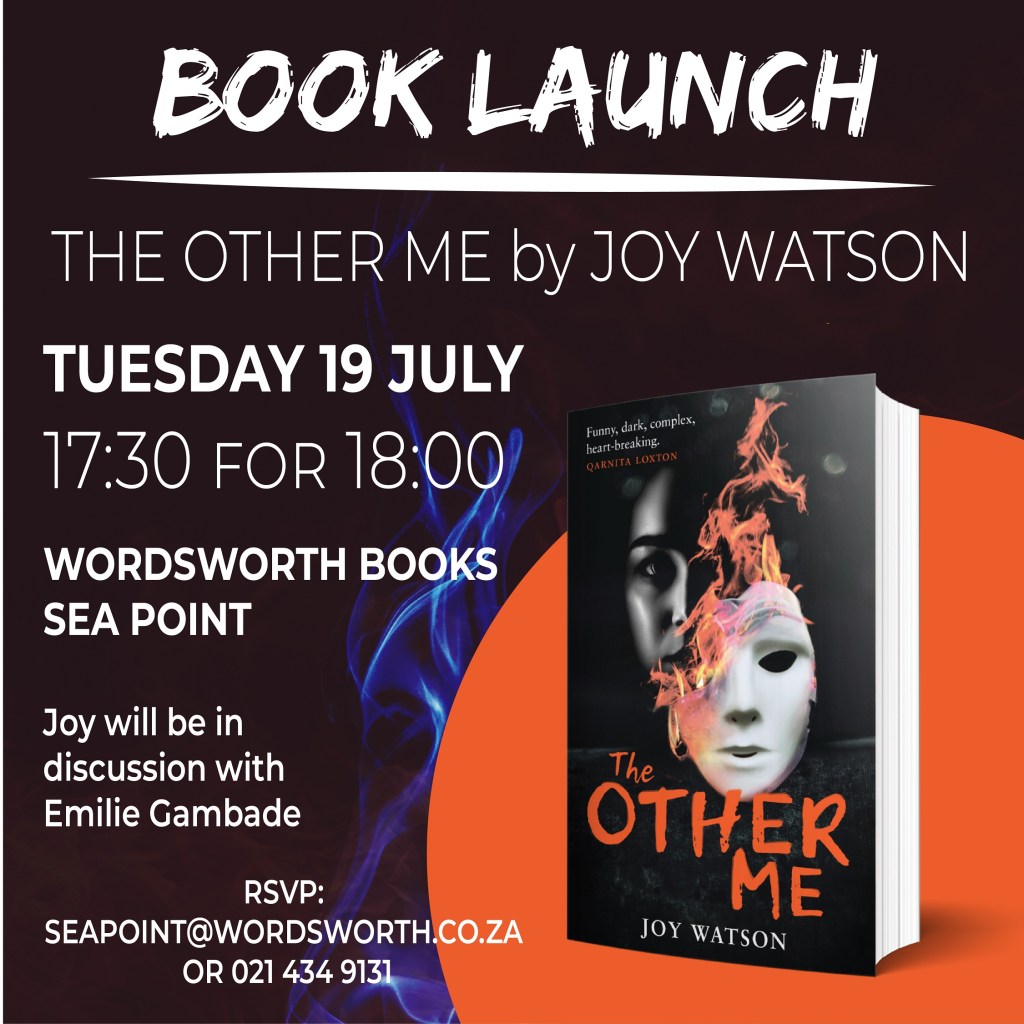
Joy Watson will be launching The Other Me in Sea Point next week! She will be in conversation with Emilie Gambade, Editor of Maverick Life (Daily Maverick).

 karavanpress.com