
Words are never sufficient, there comes a time when the body naturally takes over, so to speak. (73)

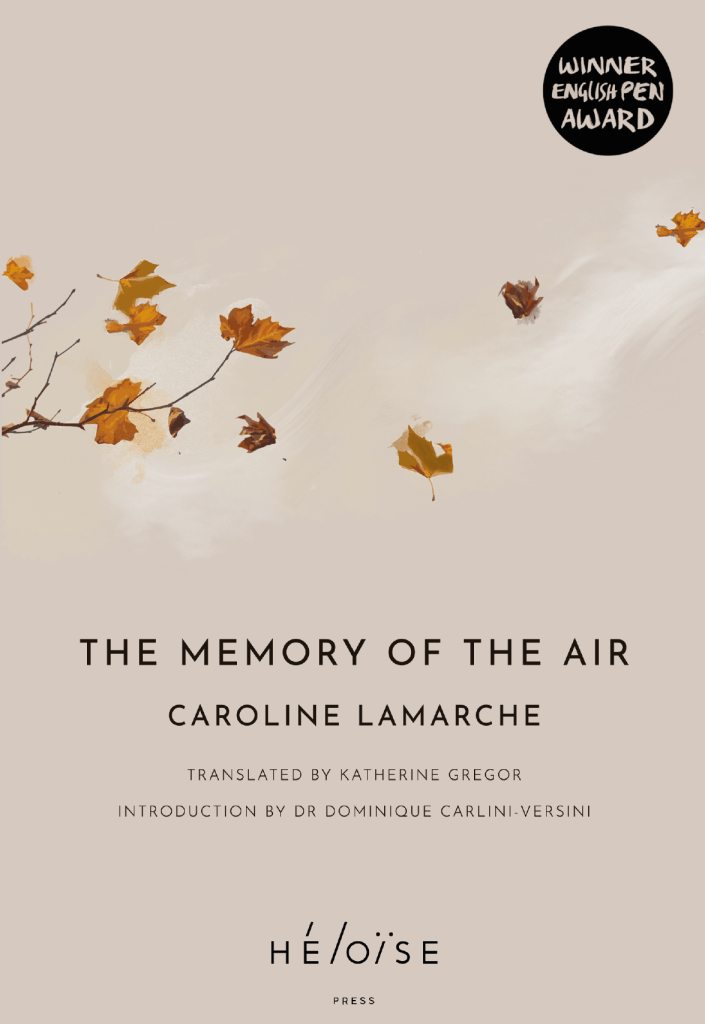
In the introduction, British academic Dr Dominique Versini describes Belgian author Caroline Lamarche’s book as semi-autobiographical. She alerts us that the text concerns rape, and commends Lamarche for her contribution to the subject.
So we enter the story knowing that this specific form of violence will be / has been committed. By whom? Where? How? This replicates the chronic uncertainty many women experience, aware of the prevalence of rape, and that it is frequently committed by someone familiar.
In the opening chapter, the protagonist dreams of a dead woman lying in a gully. This dream body compels the author, in tandem with the reader, to make the regular and dangerous descent, visiting her and what she stands for in order to care for her and to understand her. She is both dead and alive, both old and young, she is dead yet no longer disempowered.
The rest of the book is the slow uncovering of the story within the story.
Early on, we meet the last man she loved, whom she calls Man-fore (man before what? is a question that haunts the reading); much of the book dwells on the complexities of this relationship as the story spirals in towards several disparate yet related events and their aftermath. This exploration includes how one might recount the story of trauma, and to whom; how that story is received, interpreted, and then used for or against the person describing what happened. Both the police and someone close to her use details of her narrative against her; the reader might also find themselves weighing up the contributing factors in her account − even as the protagonist makes herself extremely vulnerable in the telling − thereby deciding how and where our empathy might land.
Writing is a form of witnessing; through this practice, the writer might uncover the depths of their own experience, thus supporting her quest for meaning and for finding some resolution. A reader, following the author’s process, could also come to a new understanding.
Lamarche’s book did that for me. Her skill in using understatement and stream of consciousness, together with evocative images, has left me with much to ponder after a powerful emotive experience, despite her relatively unemotive language. I am reminded of Annie Ernaux’s work.
The final scene in the book makes an analogy that is shocking and perceptive, expanding our understanding of the author’s narrative. As a writer, reader, and woman, I found this book original, compelling and thought-provoking.
 karavanpress.com