
“We don’t need to wait for people from other countries to tell us which African author is worth reading,” she said. “No one would wait for a Zimbabwean writer to decide who is the best Irish writer.”
New Frame

Jennifer Malec interviews Karen Jennings for the JRB
“I do like Samuel, because he is incredibly human. He is an ordinary man. He has made mistakes; terrible ones. But he is a man trying to find a place for himself in the world, just as we all are. No one is all good or all bad. We are all only trying as best we can to make a home for ourselves in which we feel safe and where we feel we belong. But, of course, this is not determined by ourselves alone. The past plays a role in our identity, as do our economic, social, cultural, political circumstances. All of these things have an influence on us, whether we like to admit it or not.”
JRB

Karavan Press to publish Lester Walbrugh’s chilling debut novel in 2022

Earlier today, I met with Lester at Liberty Books and Peregrine Farmstall in Grabouw to discuss the publication of his debut novel. We plan to release it in early 2022. The novel is a stunningly written, chilling page-turner set in the Grabouw area. It explores the lethal consequences of shame and silence. A book that will have you reeling long after the last page is turned.
Catherine Taylor reviews AN ISLAND by Karen Jennings for the Guardian
“… A lighthouse keeper in self-imposed exile on a tiny island off the mainland, 70-year-old Samuel is disciplined in his daily habits and unchanging in his means of self-sufficiency. He carefully tends his vegetable patch, his only companions a clutch of chickens, with the favourite – an old, vulnerable, red hen – kept away from the vicious larger group. The ultimate fate of the hen and its part in the book’s sudden and violent conclusion lies in the future, but it’s clear that all is not serene on this island …”
Guardian
Julian Richfield reviews The Skipper’s Daughter by Nancy Richards for the Cape Times


Karavan Press and Protea Distribution become local distribution partners for Penny Haw’s books NICKO and THE WILDERNESS BETWEEN US


We are delighted to announce that, together with Protea Distribution, Karavan Press is the South African distribution partner for Penny Haw’s novels, Nicko and The Wilderness Between Us.
Long-time journalist and columnist, and latter-day author, PENNY HAW has written for many South African publications including Business Day, Financial Mail and Sunday Times. Her children’s book, Nicko, was first published in 2017. It was followed by her debut novel for adults, The Wilderness Between Us, which again expounds her interest in strong women and her love for animals and nature. Penny’s two works of historical fiction will be published by Sourcebooks in 2022 and 2023. She lives in Hout Bay and, when not writing, Penny can be found hiking in the mountains or to the beach with her husband and three dogs.
NICKO
Based on the true story of Alice Kirk and Nicko, the baby vervet monkey who was abandoned near Alice’s farm in the KwaZulu-Natal Midlands, Nicko tells the remarkable tale of inter-species friendships between humans and animals, both domestic and wild.
Author Penny Haw is Alice’s granddaughter. Here, in Alice’s voice, Penny retells the story of Nicko and his antics, adventures and misadventures with his many friends, as she recalls hearing it throughout her childhood.
It is a heart-warming and humorous story about the love and playfulness of animals and their human friends, which will delight children and animal lovers of all ages.
Praise for the book
“The perfect antidote to modern life with all its stresses, Nicko is on my bookshelf next to Jock of the Bushveld. It’s that kind of a special heart-warming African animal tale. Nicko and his friends will worm their way into your heart and never leave.” Consuelo Roland, author of The Good Cemetery Guide and Lady Limbo
“Oh, what a pleasure! Full of common sense and understanding, and adorned by soft pencil drawings, which catch character and expression deliciously. A gentle delight to read in this modern world.” Jay Heale, reviewer of youth literature for Bookchat, the Children’s Book Network and Book Choice on Fine Music Radio
“A great read because it’s a book for all ages and it is written seemingly effortlessly. I found myself completely invested in the characters while glued to the edge of my seat. Nicko’s playful, mischievous personality leads him into many adventures with his hilarious friends. I greatly recommend this book to anyone.” Mia de Klerk, Grade 5, St Cyprian’s School
Publisher: PMH Publications
Publication date: 2020
ISBN: 978-1-990996-92-4
THE WILDERNESS BETWEEN US
Faye and her friends’ anorexic daughter Clare are thrown together when a flood separates them from their hiking group in the remote, mountainous Tsitsikamma region of South Africa. With Clare critically injured, Faye is compelled to overcome her self-doubt and fears to take care of the younger woman, who opens her heart to Faye.
As their new friendship takes the women on an unexpected journey of discovery, the rest of the group wrestles with the harrowing aftermath of their own near tragedy. When the hiking party is reunited, their number is reduced by one.
Juxtaposing physical and psychological intrigue, The Wilderness Between Us is a tale of two fragile women who unexpectedly find clarity, independence and renewed purpose as they fight to survive. It is a fast-moving story about family, friendship, adventure and the healing power of nature and compassion.
Praise for the book
“A thrilling read fraught with the tension of unravelling relationships, betrayal, broken bones and callously revealed secrets.” Tracy Going, television anchor, and author of Brutal Legacy
“Fans of Cheryl Strayed’s Wild should definitely add Haw’s book to their TBR list.” Diane Barnes, author of More Than
“I expected a tale of family, friendship and adventure, but the added layers of emotional angst and deep heart-searching of the main players took it to a whole new level.” Karen Byrom, The People’s Friend and National Federation of Occupational Pensioners Members’ Magazine, Scotland
Publisher: Köehler Books
Publication date: July 2021
ISBN: 978-1-64663-414-9
If you are a bookseller, please contact Protea Distribution to order copies of Penny Haw’s books. If you are a reader, please ask your local bookshop to order the books for you via Protea Distribution.
Christine Coates reviews AN ISLAND by Karen Jennings
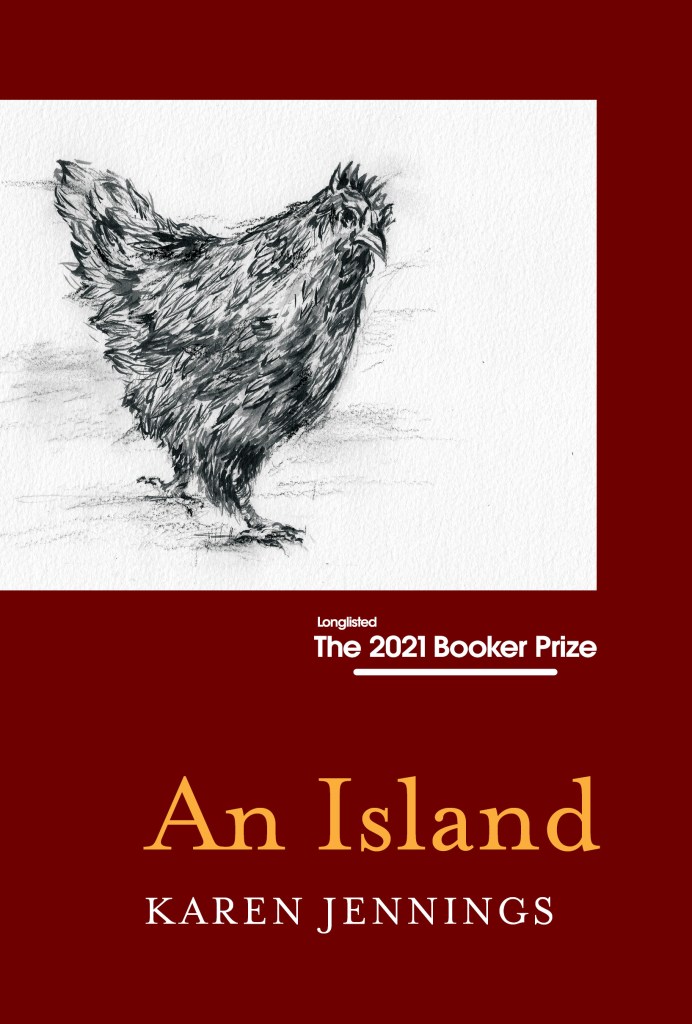
An Island by Karen Jennings — everyone is talking about this book. There are other reviews but had to add mine!
Goodreads
It’s a small gem but also a great masterpiece. Very Coetzeesque. It reminded me of Disgrace. Just brilliant and by one so young. Her observation of human life and behavior is acute. I can’t get it out of my mind.
The author wanted to explore certain complexities relating to the history of the African continent and how that history continues to influence the lives of individuals to this day but the island could be anywhere — off Africa, off South or Central America, off the US, off Australia.
Karin Schimke writes about AN ISLAND by Karen Jennings
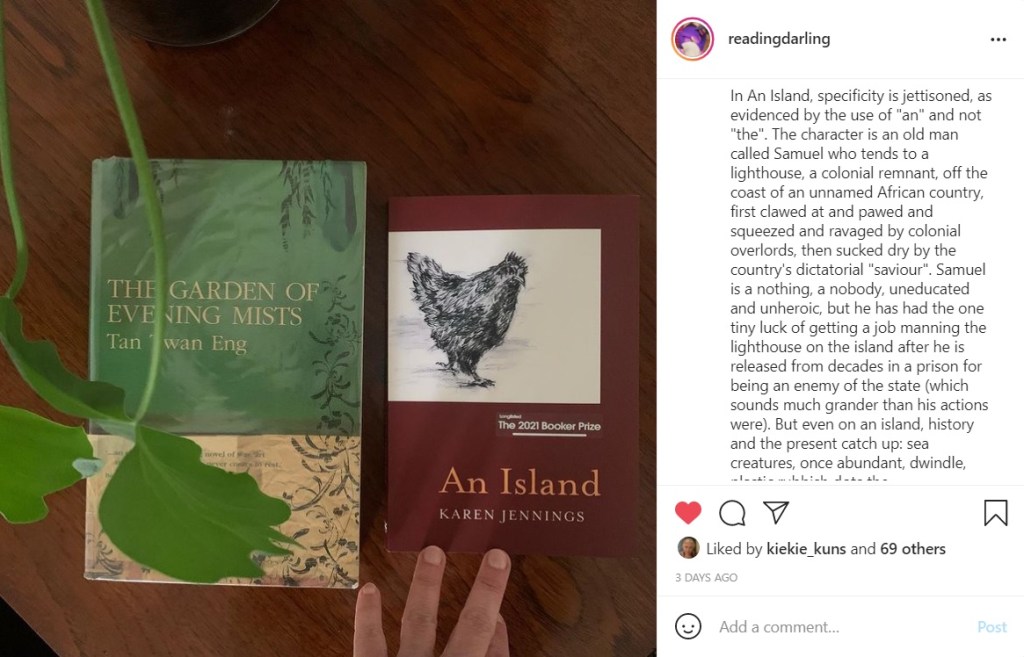
… In An Island, specificity is jettisoned, as evidenced by the use of “an” and not “the”. The character is an old man called Samuel who tends to a lighthouse, a colonial remnant, off the coast of an unnamed African country, first clawed at and pawed and squeezed and ravaged by colonial overlords, then sucked dry by the country’s dictatorial “saviour”. Samuel is a nothing, a nobody, uneducated and unheroic, but he has had the one tiny luck of getting a job manning the lighthouse on the island after he is released from decades in a prison for being an enemy of the state (which sounds much grander than his actions were). But even on an island, history and the present catch up: sea creatures, once abundant, dwindle, plastic rubbish dots the landscape…and bodies of refugees wash ashore. There is no escaping the world’s violence, malice, greed and selfishness. And there is no protection from what those do to the self. No man is an island. […]
An Island is bleak and stark, and Jennings writes in plain sentences. I read An Island in what would have been one sitting, had it not been for the interruption of night.
Karin Schimke Instagram
 karavanpress.com