
Sindiwe Magona at the Time of the Writer 2021
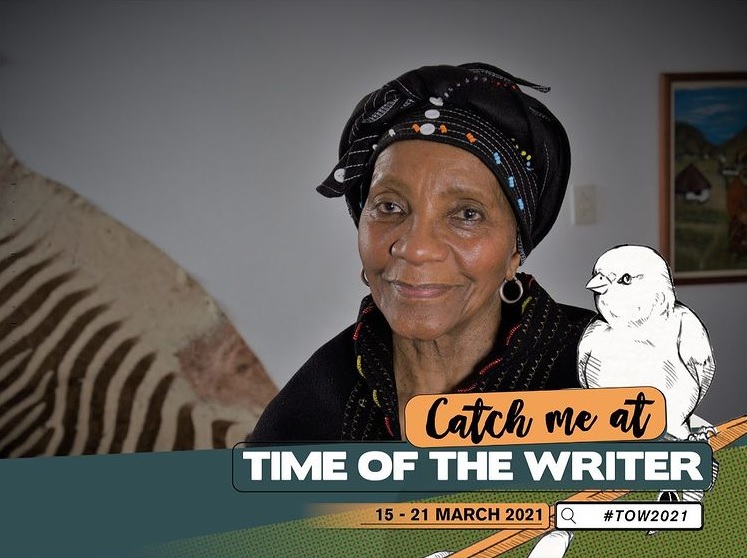
Time of the Writer 2021 will be streamed live on Facebook, Twitter and Youtube. For more information visit tow.ukzn.ac.za!

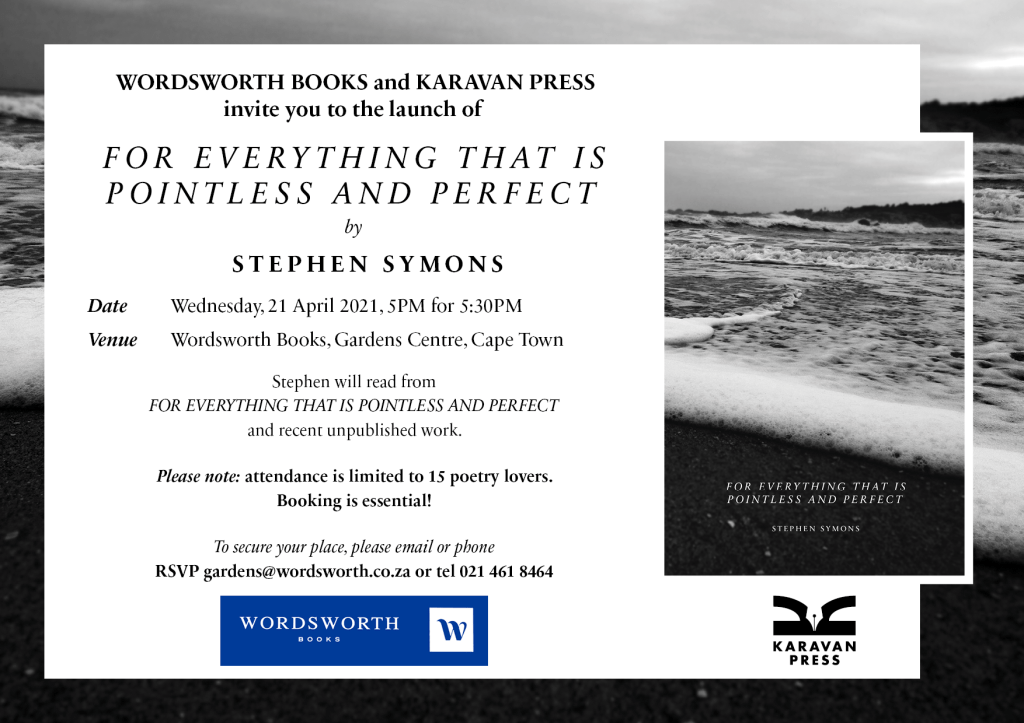
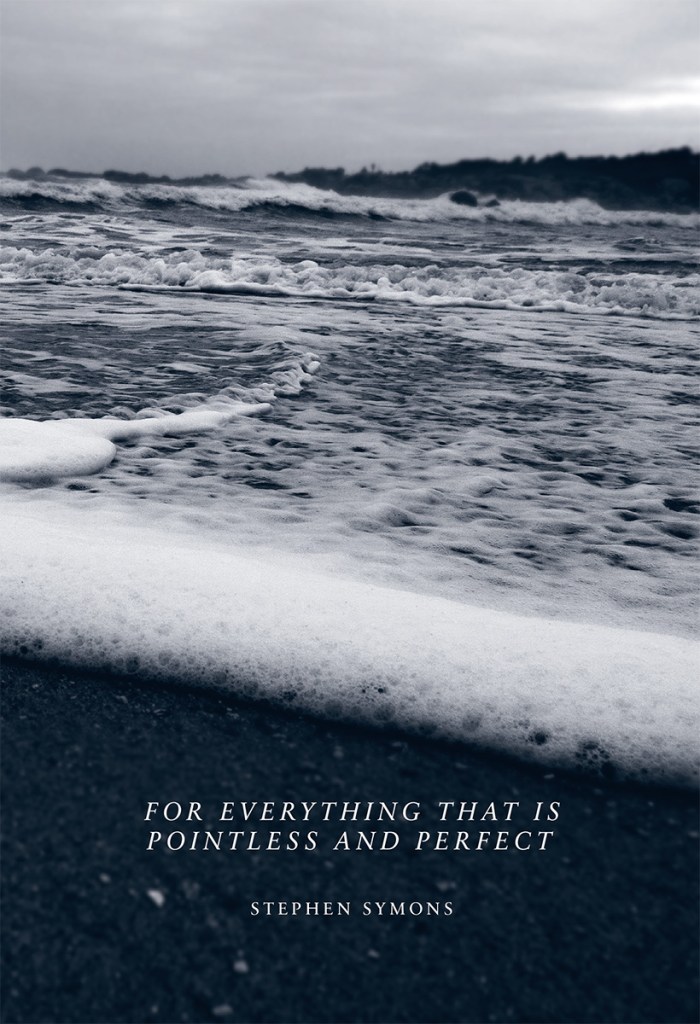
“The intricacy of a body in the dark” – a new poem by Stephen Symons
The intricacy of a body in the dark

These are the days of the clouds
and colours of his childhood,
of the secrets of forgotten garages
with unwilling doors
and small-paned windows,
of the mysteries of broken glass, rust
and enigmas of dust,

And of the sides of houses too,
of shadows leopard-crawling over mossed brick,
and cool green thoughts and concrete
crumbling to nothingness at the edge
of tired swimming pools
spun with holiday light.

The intricacy of a body in the dark,
how it reminds him of a life
lived a lifetime away, where memory
tastes of salted skin
after a day at a beach,
part sunlight, part ocean,
and at the tip of its tongue
the bitterness of its end.

He stands, looking out at the waves
and last scraps of surfers,
imagining someone else watching him
flared against sky leaking into cobalt.

He has been turning
a perfectly good key in a lock
over and over his whole life
but the door remains locked.

He imagines she stands behind the door
brushing the years between them from her hair.

Now everything is silent and made of first light,
except for the sound of that key turning helplessly
and the distant keening of gulls.

— Stephen Symons
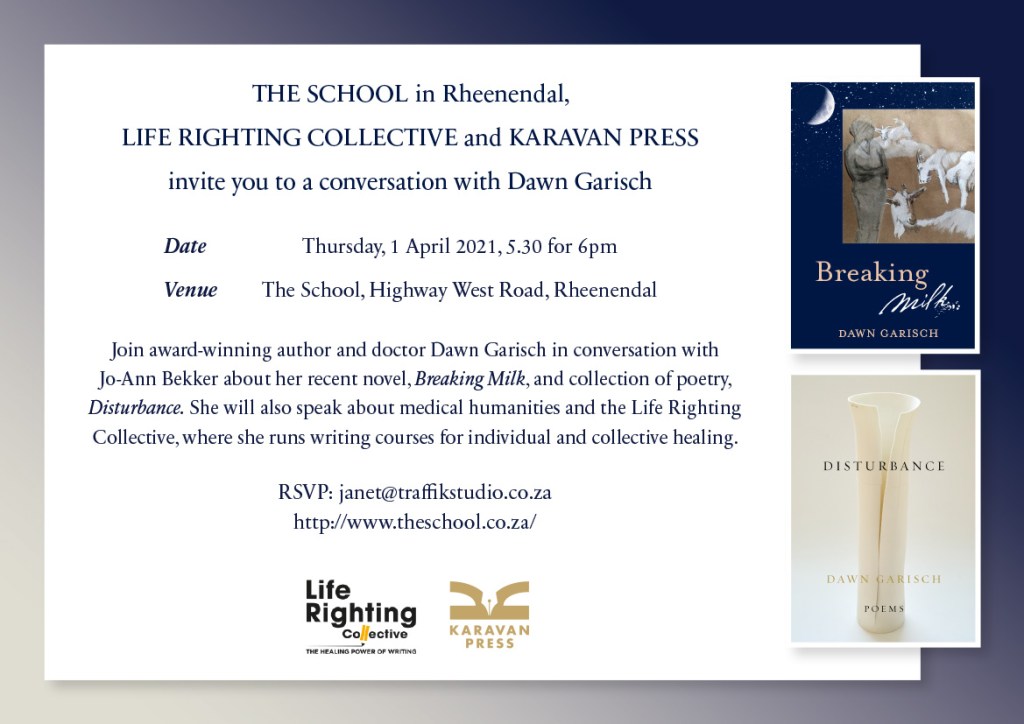
Dawn Garisch will be reading at The Red Wheelbarrow on Thursday, 4 March, 19:30



Next week’s featured poet is Dawn Garisch.
As always, the reading by the featured poet will be followed by an open mic session for poets from the audience. Poets are welcome to read from their own work as well as from the work of a favourite poet.
Join Zoom Meeting:
https://us02web.zoom.us/j/9529041131?pwd=M2VUL3RNWGMvMFZCU1Zuemt6QnU3Zz09
Date: 4 March 2021
Time: 19:30
Meeting ID: 952 904 1131
Passcode: 12345
LitNet: Joanne Hichens interviews Karen Jennings about AN ISLAND

“I didn’t set out to write a fable – or, rather, I did not think about it explicitly in those terms – yet I believe that the description is an apt one, to a certain extent. I wanted to explore certain complexities relating to the history of the African continent and how that history continues to influence the lives of individuals to this day. Because that history is such a multifaceted one that is shared, to varying degrees, by numerous African countries, I wanted to reduce the narrative to a small location, with few characters, and by those means amplify the key concerns.
One of those concerns is examining the life of an ordinary individual. There is nothing special about Samuel. He is not heroic, intelligent, skilled or wealthy. He is very much an everyman – an everyman who has experienced aspects of colonisation, of being made to flee his home, of poverty, of the fight for independence, of torture and imprisonment under a dictatorship, and of trying to find his place in all of that chaos and horror. What does a man like Samuel have? How does he feel? What will he do in order to protect his home?“
AN ISLAND by KAREN JENNINGS: AN INTERVIEW
Beginnings by Sue Brown

At the start of 2021, I am surprised again by the freshness that a new year inspires. Struck by the arbitrariness of the ten … nine … eight … countdown of the second hand to one particular midnight, yet the naive hopefulness that insists on rising with the ensuing dawn.
Despite the tsunami second wave of Covid-19 that swept us in, our fearful concerns about vaccine procurement, and the violent storming of the US Congress by right-wing mobsters, one dressed bizarrely like a Davy Crocket Viking. Despite humanity’s collective horrors, and my internal echoes from this day a decade ago when my son became a paediatric brain tumour patient, there is a quickening.
Perhaps it is like Jonathan Livingston’s seagull trying to master flight, and catching an unexpected updraft.
Or Emily Dickinson’s ‘hope’, ‘the thing with feathers – / That perches in the soul – / And sings the song without the words –’.
That liberating of the soul that I observed in my son, and those around him, when our physical surety is stripped away.
My internal little bird chirps at the sight of clear spaces in my diary, gaps which I despaired of ever conserving myself. This pandemic has pruned weeks and months that had become overgrown with obligations. Pared back a self-inflicted schedule that was like the tick-tock clock in the stomach of the crocodile that ominously pursued Captain Hook.
Yet my relief stands with a guilty conscience alongside the concurrent, living hell of healthcare workers, people struggling to breathe, or to support their families.
In his memoir A Grace Disguised, Jerry Sittser emerges from unimaginable personal tragedy to observe that he preferred the person he had become as a result of such loss. A paradoxical title that offended me, having felt the ugly underbelly of grief heave and repeat itself painfully in the wake of my son’s death. Until I read Sittser’s qualification that he would never in a million years have chosen this route to personal growth, would have chosen – if only one could – to remain his ignorant self with his mother, wife and daughter still alive.
‘Happy New Year’ we still messaged to others in 2021, although more soberly due to the alcohol prohibitions, the curfew, and the sobriety invoked by mounting Covid numbers and names.
My friend, a nursing sister, remembers the theory of pandemics from nursing college in the 80’s. To me it was an outdated word relegated to dusty, foxed hardcovers with blurry black and white photographs which never sell in charity bookshops.
This pandemic feels like humanity slithering down the longest snake, which I for one did not see coming on the snakes and ladders game of human history.
I punctuate my WhatsApp wishes (for now at least, before accepting, or not, the new T&C’s) with little illustrations. And suddenly remember P. B. Bear’s Birthday Party by Lee Davis. A charming children’s book from twenty years ago in which sentences were dotted with pictures – his striped pyjama top, a picnic basket, a slice of cake – instead of their corresponding words.
Who could possibly forget Ant and Bee thoughtfully organising a surprise birthday party for their friend Kind Dog, in which Angela Banner used the rebus form in the 50’s to teach her young son to read. The excitement of Ant and Bee’s invitations and preparations, the dog biscuit and pink frosting cake, Kind Dog in his new hat and kennel are happy images and feelings that have lived with me into my own middle age.
Into 2021, where we wrestle with social media privacy issues. Yet who remembers with me the old party line telephones and switchboard operators? Who watched ‘Nommer asseblief’ on SABC TV in the 70’s in which the switchboard operator doubled up as the small-town gossip?
My junior school prize-giving evenings featured, year upon year, our nicotine infused headmaster – in his mustard polo neck for the Hilton Village mist, reading from Ecclesiastes:
‘There is a time to reap, and a time to sow’, etc. That same thousands-of-years-old book that asks whether there is indeed anything new under the sun.
I find myself now, mid-late in my own story, truth be told, before a neglected sewing machine. Finding comfort in the crinkly rustle of unfolding and smoothing out pattern piece papers. The faint adrenalin rush that accompanies the no-turning-back-now snip of scissors through fabric. Those time honoured rituals of pinning and tacking. The hiss and spit of a steam iron and the singed smell of neatly pressed seams. The hum that is the vibration of the machine. And the soporific, train-like, tick tick, tick tick, tick tick of the needle as it falls and rises, falls and rises, falls and rises again.
~ ~ ~
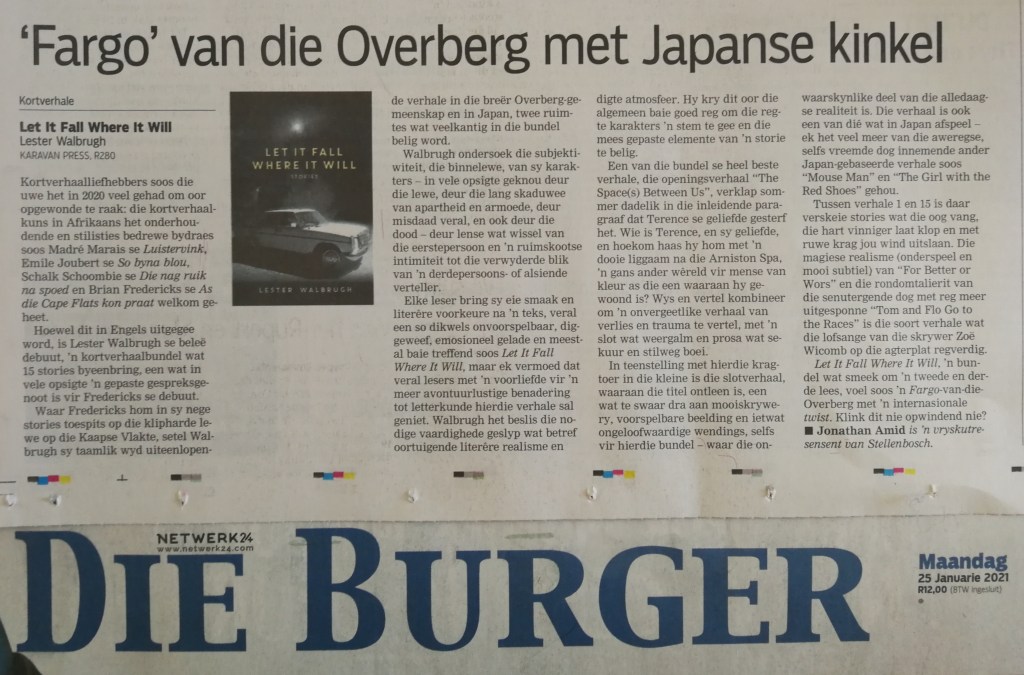
Sue Brown is the author of The Twinkling of an Eye: A Mother’s Journey and Earth to Mom: Personal Essays on Loss & Love (published by Karavan Press in 2020).

You can buy Earth to Mom from all good bookshops (RRP R230) or online at Loot.co.za (R219).
Cover reveal: A HIBISCUS COAST by Nick Mulgrew
We are thrilled to present the cover of our first novel of 2021: A Hibiscus Coast by Nick Mulgrew!

Nick is the award-winning author of the myth of this is that we’re all in this together (2015), a poetry collection, and two volumes of short fiction, Stations (2016) and The First Law of Sadness (2017). A Hibiscus Coast is his debut novel.

Cover artwork by Kylie Wentzel
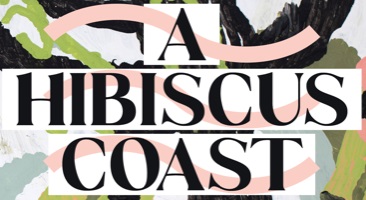
Cover typeface by Graham Paterson

Cover design by Nick Mulgrew
Life, in a Garden: a conversation with Joanne Hichens
Tune in on 27 January 2021, at 7PM, to listen to Joanne Hichens speak about her memoir, Death and the After Parties.

To find out more: “Life, in a Garden”.
 karavanpress.com