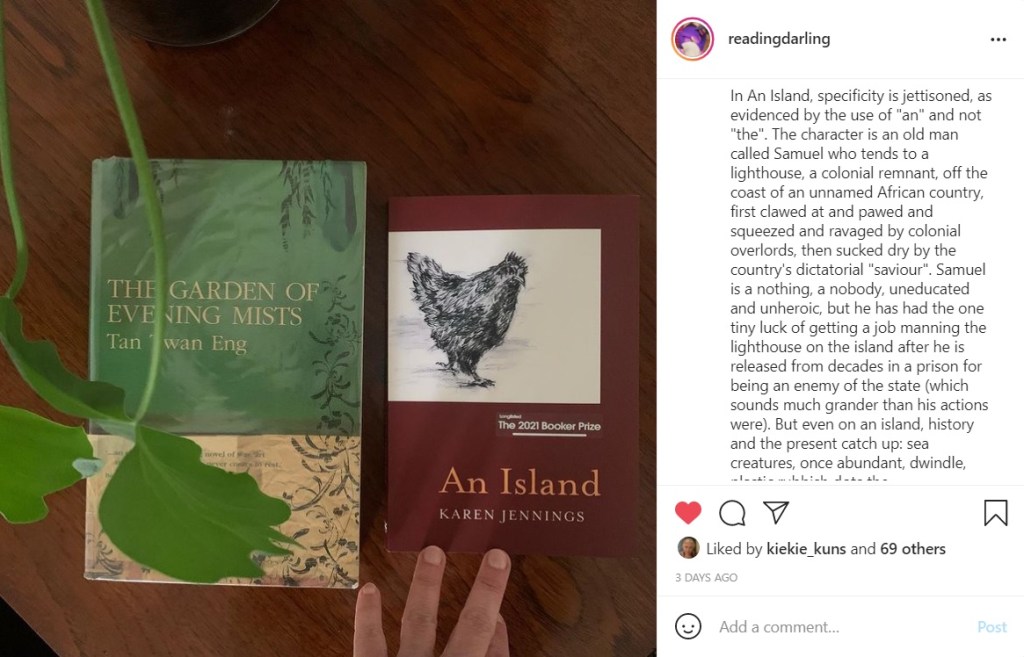
… In An Island, specificity is jettisoned, as evidenced by the use of “an” and not “the”. The character is an old man called Samuel who tends to a lighthouse, a colonial remnant, off the coast of an unnamed African country, first clawed at and pawed and squeezed and ravaged by colonial overlords, then sucked dry by the country’s dictatorial “saviour”. Samuel is a nothing, a nobody, uneducated and unheroic, but he has had the one tiny luck of getting a job manning the lighthouse on the island after he is released from decades in a prison for being an enemy of the state (which sounds much grander than his actions were). But even on an island, history and the present catch up: sea creatures, once abundant, dwindle, plastic rubbish dots the landscape…and bodies of refugees wash ashore. There is no escaping the world’s violence, malice, greed and selfishness. And there is no protection from what those do to the self. No man is an island. […]
An Island is bleak and stark, and Jennings writes in plain sentences. I read An Island in what would have been one sitting, had it not been for the interruption of night.
“… Unlike many authors who measure the success of a book based on sales figures, Jennings believes it’s all about how you feel about your work.
‘For me, it depends on how I feel about any manuscript once I have finally finished writing the various drafts. If I get to the end and feel a thrill pass through me, then I am satisfied,’ she said.
‘I enjoy that feeling because it doesn’t last very long. I think many writers, or artists in general, have this sense that their work is never good enough,’ Jennings added.”
“… But having cracked open the slender spine, I found it to be even more unassuming and quiet – no prologue, no fanfare, no arcane dedication, hand-picked lines of poetry – even the acknowledgements are a mere eight grateful lines – but exquisite in its simplicity. ‘The First Day’ announces the opening chapter – and with that you step ashore. Onto Samuel’s island. Where he’s been lighthouse keeper for over two decades. Washing up with you is a body – one of many that have found their way onto the pebbly and unwelcoming beach. You come to know well, if not its exact whereabouts off Africa, the lie of the island, its nooks, crannies, secret spots. As well as Samuel’s sparse, isolated cottage where everything has its place. But you don’t stay there. Because as his memory is jolted by the arrival of this body, this man, Samuel’s reflections take us back into the dark, sometimes troubled past he was marked by on the mainland. Again, Jennings doesn’t pinpoint the exact times and places of this not so long ago time but if you live towards the tip of Africa, you can feel it in your southern bones. Smell it in her carefully chosen words. By ‘The Fourth Day’, I was all but holding my breath. I’m ashamed to have taken so long, but richer for reading such a thoughtful book, with a punch way above its weight.”
This is a book that gives us faith that the Booker prize judges are doing their job, for two reasons. The first is that this is the dark horse of the longlist, released quietly by a micro-publisher, unreviewed in the press until now, so it shows the judges aren’t just guided by big names.
An Island is the third novel by Karen Jennings, a South African novelist living in Brazil. It throws us into the world of Samuel, a lighthouse keeper who has withdrawn from the world and whose main concerns are looking after his chickens and maintaining his toenails. Oh, and occasionally he harvests corpses — refugees, others — who wash up on his shores. Unfortunately for Samuel, the 33rd dead body to arrive in his 23 years on the island turns out, despite his hopes, not to be dead after all.
The South African author struggled to find a publisher for her Booker-nominated novel An Island, which only had a print-run of 500 copies. She talks about rejection, her country and believing in herself
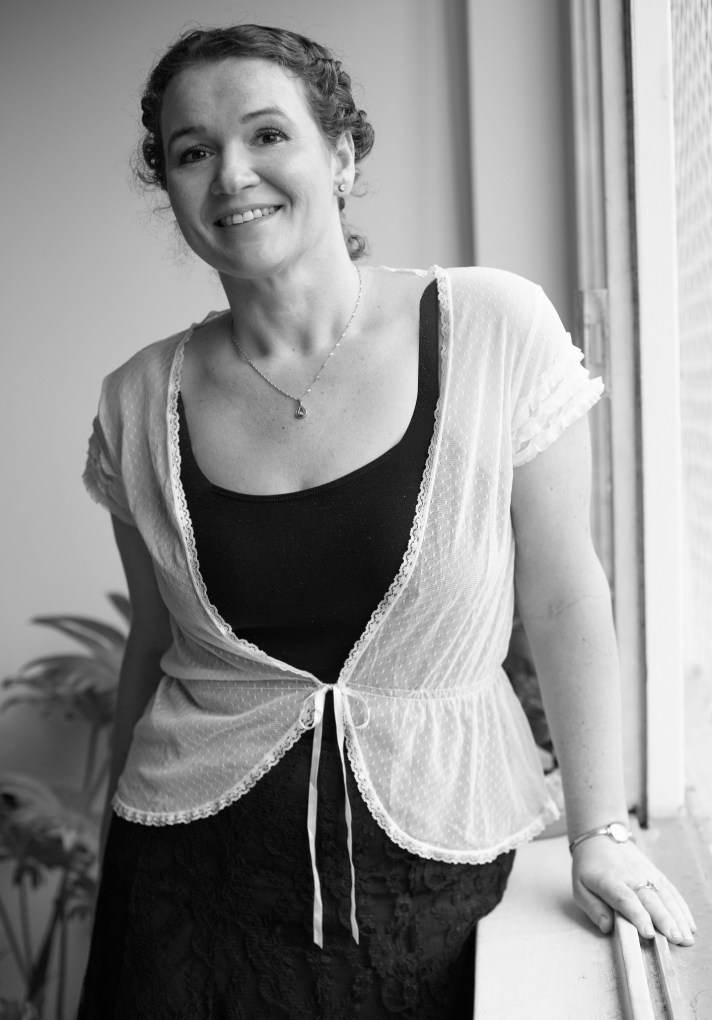
Karen Jennings is still in shock. It has been a few days since the announcement that her novel, An Island, has been longlisted for the Booker prize, and the 38-year-old South African author looks as though she’s reeling. Considering the novel’s difficult route to publication, you can understand why. She doesn’t even have an agent.
“It was incredibly difficult to find a publisher,” she says, via video chat from Brazil, where she has spent the pandemic alongside her Brazilian husband, a scientist. Due to being essentially stranded there, she has yet to hold an actual physical copy of the book in her hands. “I finished the novel in 2017. And no one was interested. When I did finally get a small publisher in the UK and a small publisher in South Africa to co-publish, they couldn’t get anyone to review the book. We couldn’t get people to write endorsement quotes, or blurbs.”
‘Earlier this week, we heard that two South Africans, both of them University of Cape Town graduates, have been long-listed for the prestigious Booker Prize – Karen Jennings and Damon Galgut. Well today, we speak to Karen, who made it onto the prestigious list for her book, “An Island”, which follows the tale of an old lighthouse keeper who finds the unconscious body of a refugee on his beach.’
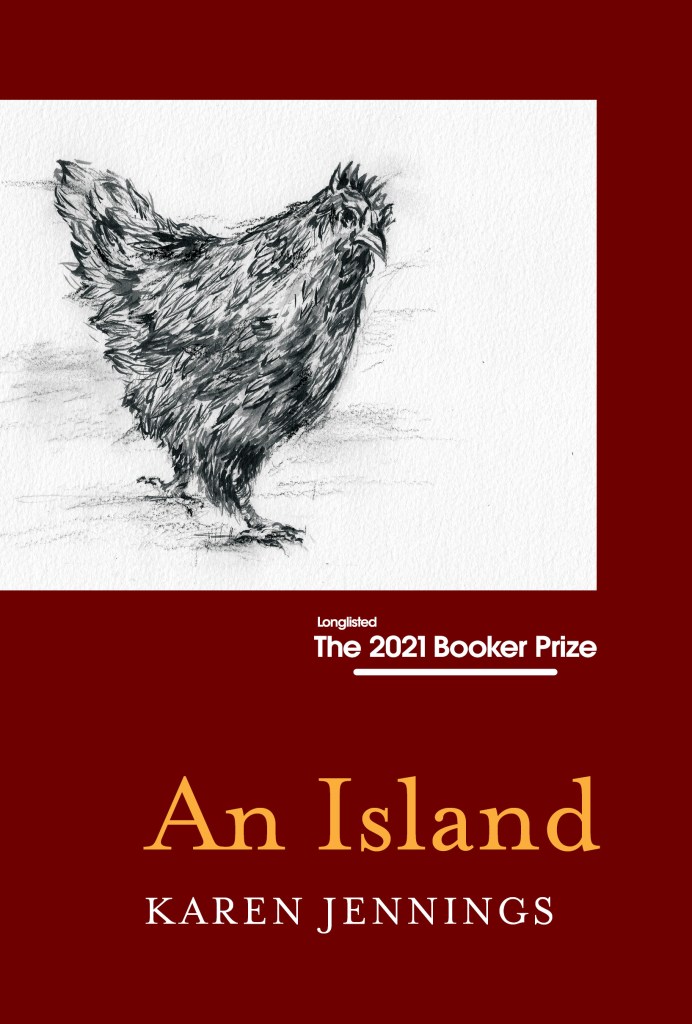
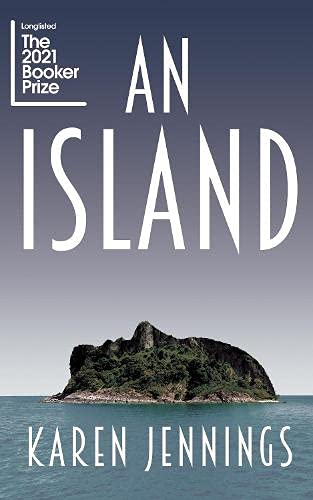
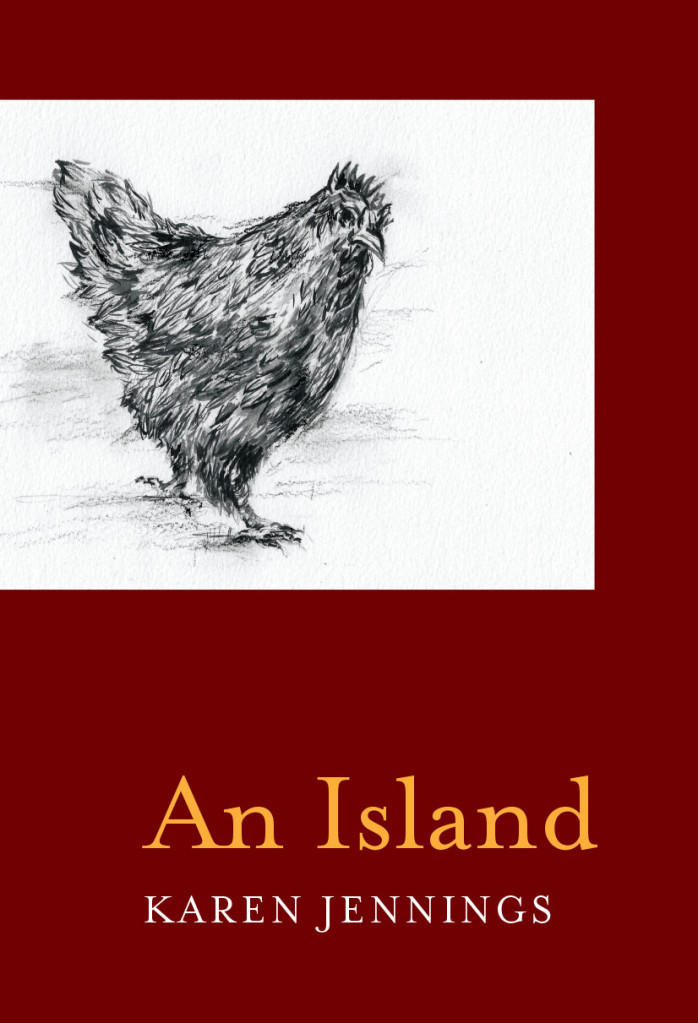
Karavan Press is thrilled and deeply honoured to announce that An Island by Karen Jennings has been longlisted for the 2021 Booker Prize. Co-published with UK publisher, Holland House Books, An Island tells the story of Samuel, a lighthouse keeper.
Samuel has lived alone for a long time; one morning he finds the sea has brought someone to offer companionship and to threaten his solitude …
A young refugee washes up unconscious on the beach of a small island inhabited by no one but Samuel, an old lighthouse keeper. Unsettled, Samuel is soon swept up in memories of his former life on the mainland: a life that saw his country suffer under colonisers, then fight for independence, only to fall under the rule of a cruel dictator; and he recalls his own part in its history. In this new man’s presence he begins to consider, as he did in his youth, what is meant by land and to whom it should belong. To what lengths will a person go in order to ensure that what is theirs will not be taken from them?
A novel about guilt and fear, friendship and rejection; about the meaning of home.
“The far southern extremities of our planet produce remarkable, distilled, and ravaged tales. An Island has to be counted as among the most remarkable of these. Karen Jennings offers a chilling, immersive portrait of Samuel, a lighthouse keeper on a remote island off the African continent. He is a man at the edge of history, until the arrival of a refugee stranger returns him to everything he most needs to forget. A gripping, terrifying and unforgettable story.” — Elleke Boehmer
My mother’s garments
never seemed to grow old.
Slack suits and twin sets
from the seventies,
woven from some synthetic
substance that did not wear
or tear, unlike the natural fibre
of her skin. My aged mother’s
delicate covering bled
every time she stumbled.
Worn out; worn to shreds.

— "Going home", Disturbance, Dawn Garisch


It has just gone six a.m. I walk my son down the road to the corner where we wait for his lift. The sun is rising, the light streaking the horizon gold. I comment on the morning buzz, the company we keep, power-walkers, the dog walkers, workers and school kids heading for the train. ‘The day carries on.’
Without you, the day must carry on.
Al says, ‘Of course, but let me remind you that you’re wearing pyjamas.’

— Death and the After Parties, Joanne Hichens


They fled with nothing, never stopping. Not even when his mother tripped, his sister, tied to her back, knocking her head so hard that a bump rose immediately. She had been crying, now she screamed. Yet still they ran, amid their own blood and spittle, as the black cloud of the burning valley hunted them, chasing them forward, forward, towards the blue sky.

— An Island, Karen Jennings


Now Shirley, you know, became a mother quite young – sixteen or something like that. She ran away from home with newborn Jason; his naeltjie at his belly hadn’t even fallen off yet. Came to Cape Town where she thought no one would find her. The Northern Cape was far.

— "Homeful", Let It Fall Where It Will, Lester Walbrugh


Lexi shrugged off her coat. She heard the rustle of beads as her mother, Sandra, came through the hippie curtain from the kitchen at the end of the long hallway. Like the town was bisected by a highway, so was their house by the passage.
‘I thought you would be asleep by now.’ Lexi feigned surprise.
‘I waited up. You’re my responsibility now.’ Her mother was in a kaftan, her hair long and loose. She looked like she’d escaped from the Mamas and the Papas.
‘Yay.’ The joys of being dumped and fleeced by her husband never ceased.

— A Fractured Land, Melissa A. Volker


I still remember my mother’s words when we got in the car to go to mass. ‘It’s Christmas, Mary, not a funeral.’ But I’ve always worn black. I would have said she was tempting providence, if that wasn’t exactly the sort of thing she would say. I should have, though. When we got home, a bunch of armed response cars were blocking the gates to the complex. The police were there. Men in bulletproof vests. Guns.

— A Hibiscus Coast, Nick Mulgrew


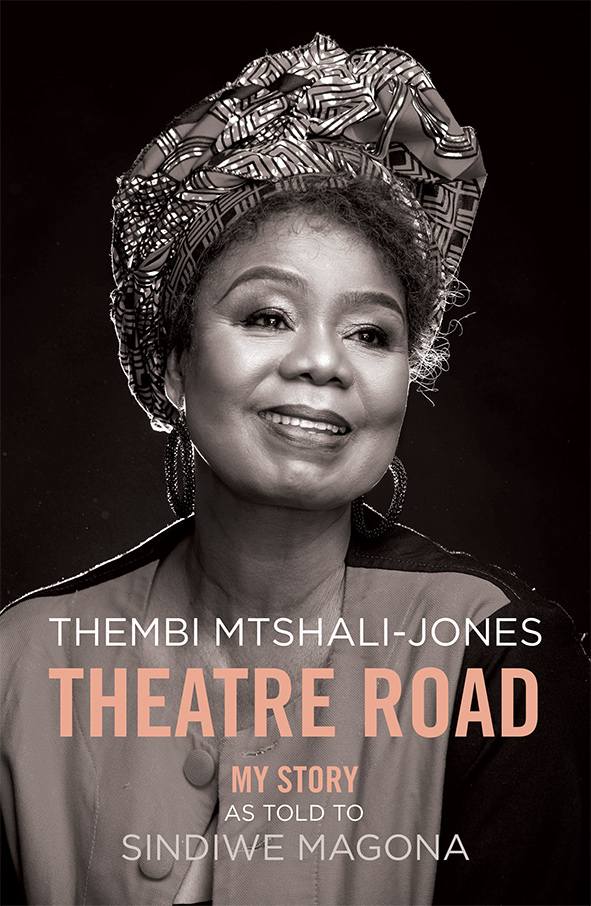
Not a word was exchanged between us as my mother and I made our way home. She must have seen how disappointed I was for, as soon as we walked into the house, she turned to me, demanding – ‘Where is the form?’
Puzzled, I looked at her. What use was that form now? What would she do with it? Only my father could sign it; and he had flatly refused, hadn’t he?
‘Give me the form, Thembi.’
‘Why, Mama?’
‘Letha, bo!’
My mother forged Baba’s signature.
I applied for a passport, astounded by my mother’s actions. She had shown me a side of her I didn’t suspect existed.

— Theatre Road, Sindiwe Magona


The lagoon has
forgotten us
like a son
sometimes
forgets his father

but never his mother

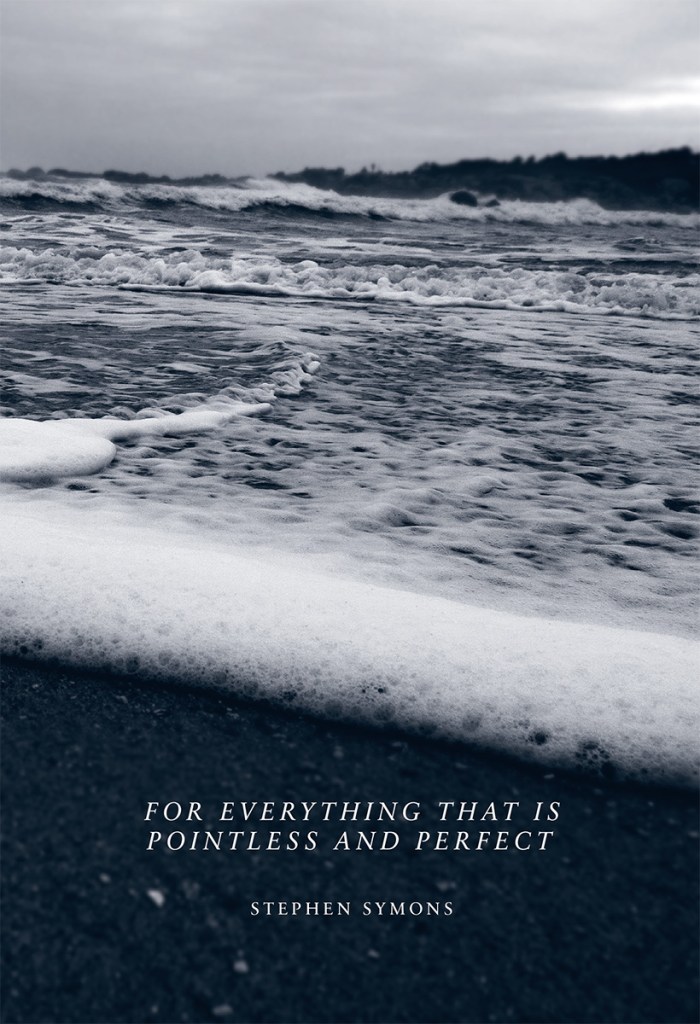
— "Port is red and starboard green", For Everything That Is Pointless and Perfect, Stephen Symons


But tell me this: where is his irrepressible, eternal soul? Because that is what interests me more. Where is his spirit, free of the gritty, grey residue of his body, which I have felt with my own hands? Because I, with the five senses of a woman, and undeniable sixth one 16 of a mother, cannot fathom the dimension within which my child now exists.

— "Lost", Earth to Mom, Sue Brown






 karavanpress.com