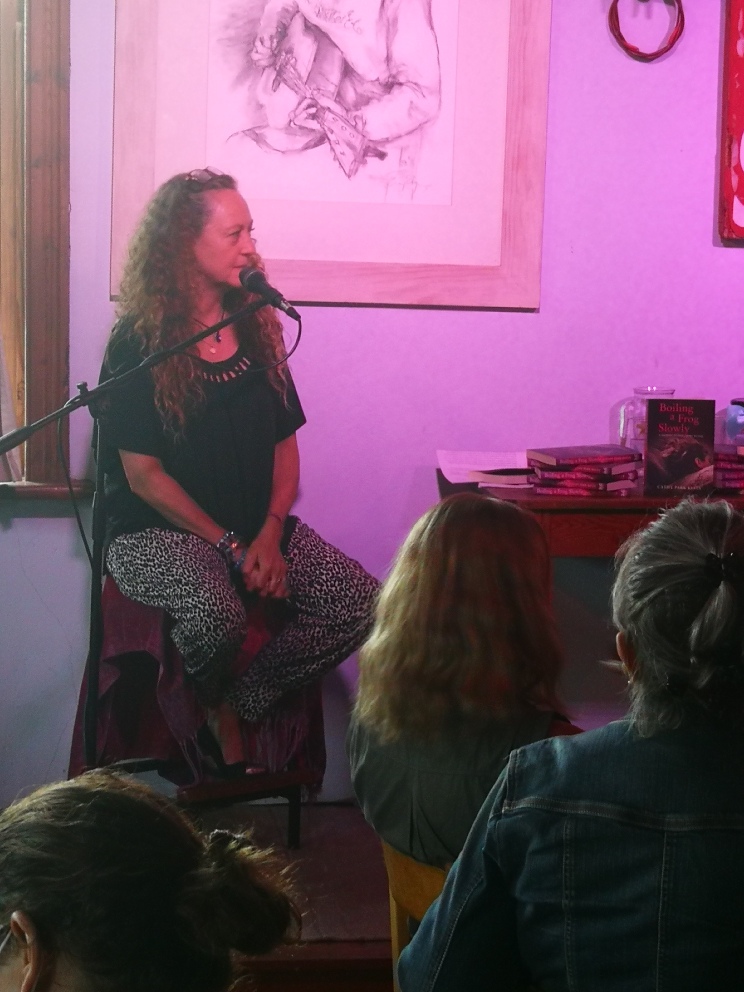
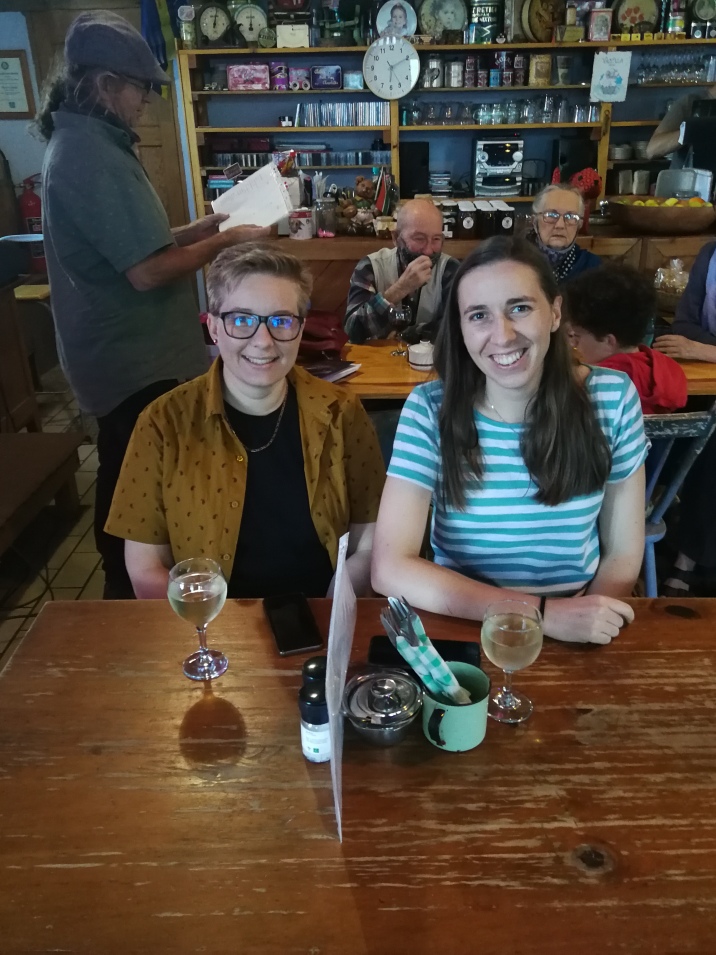
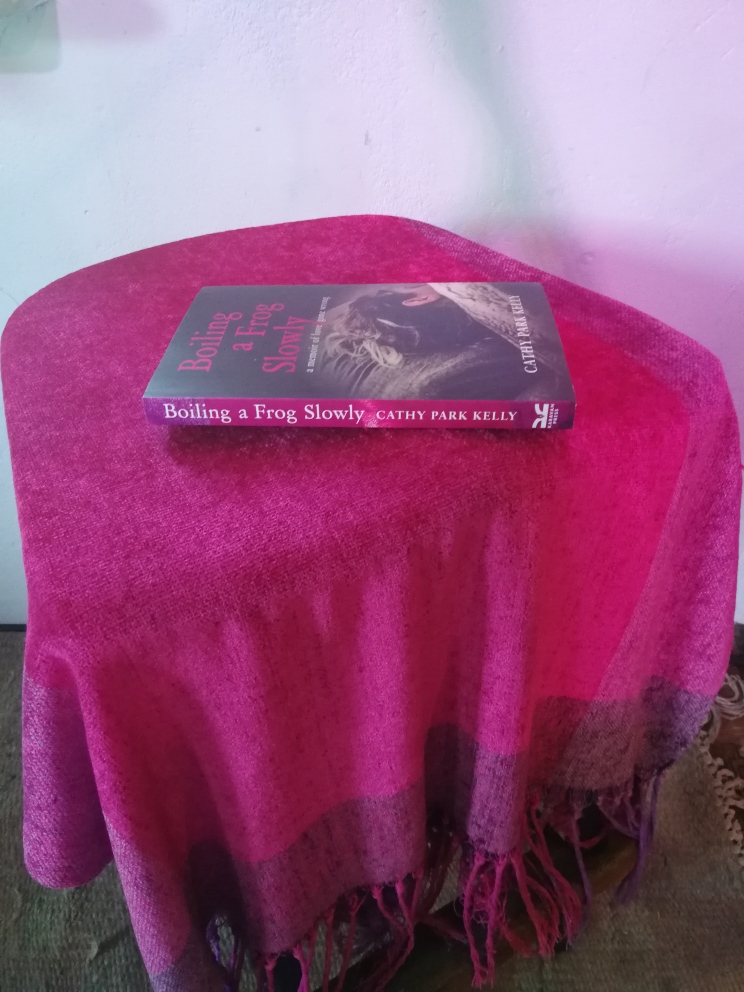
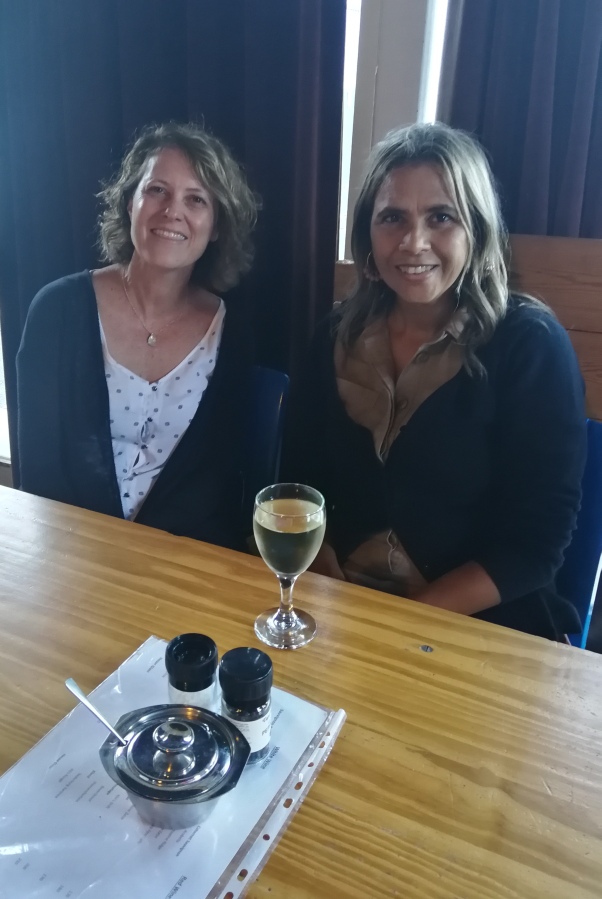
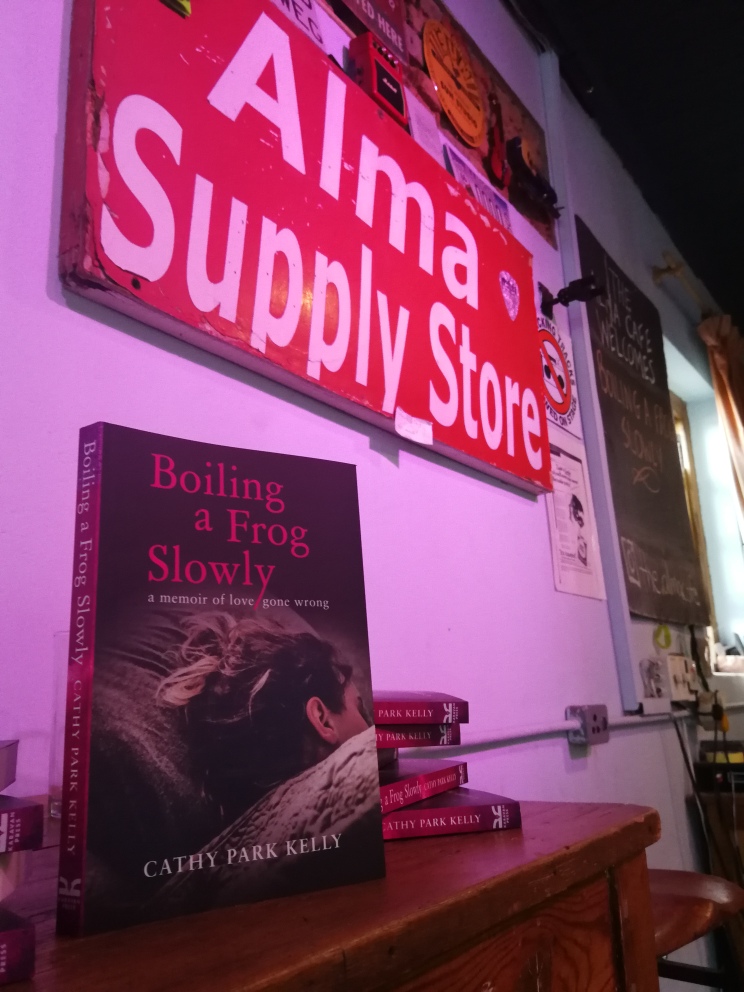
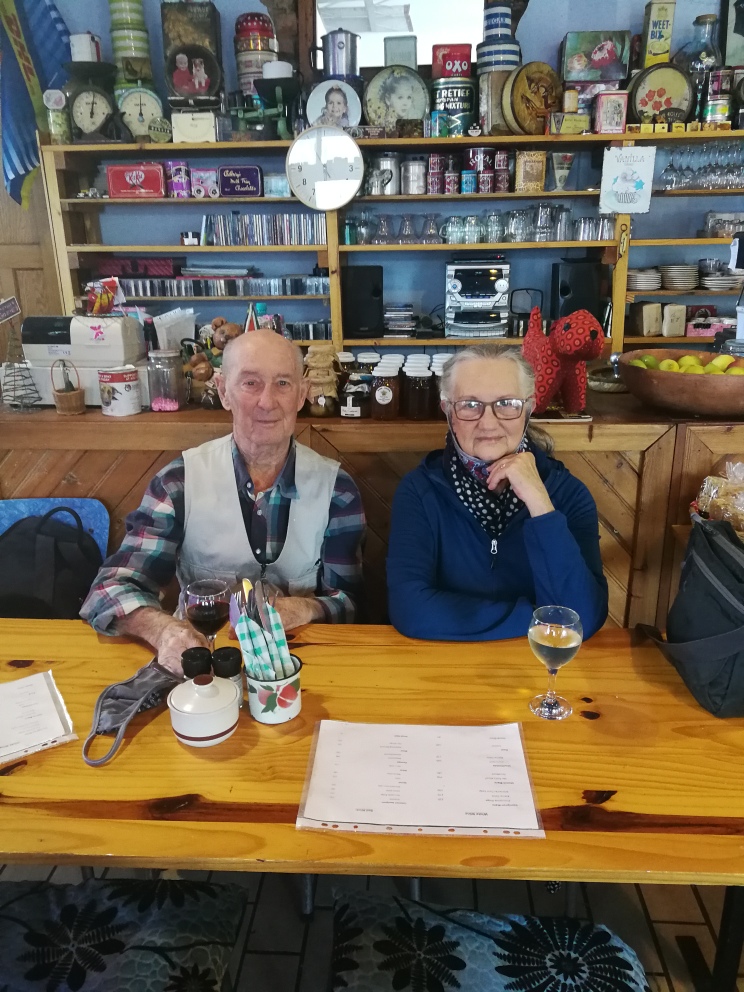
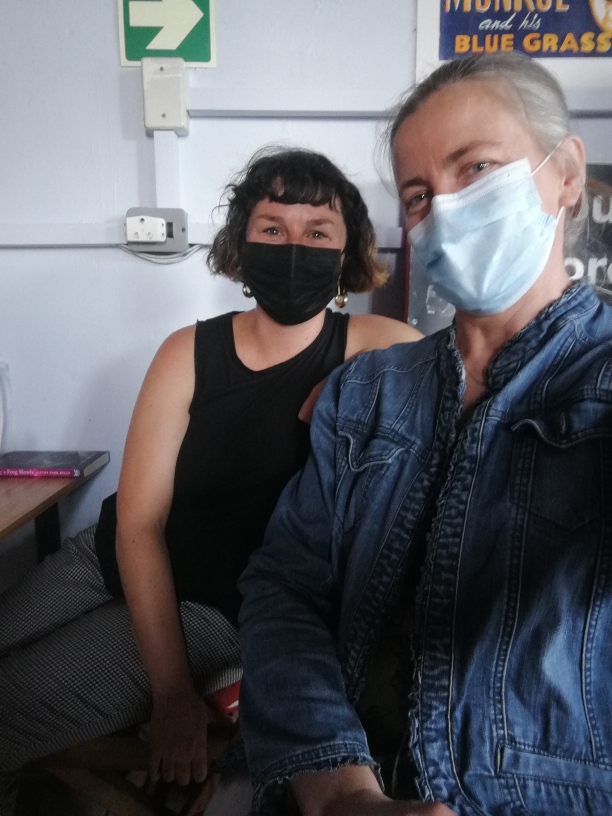
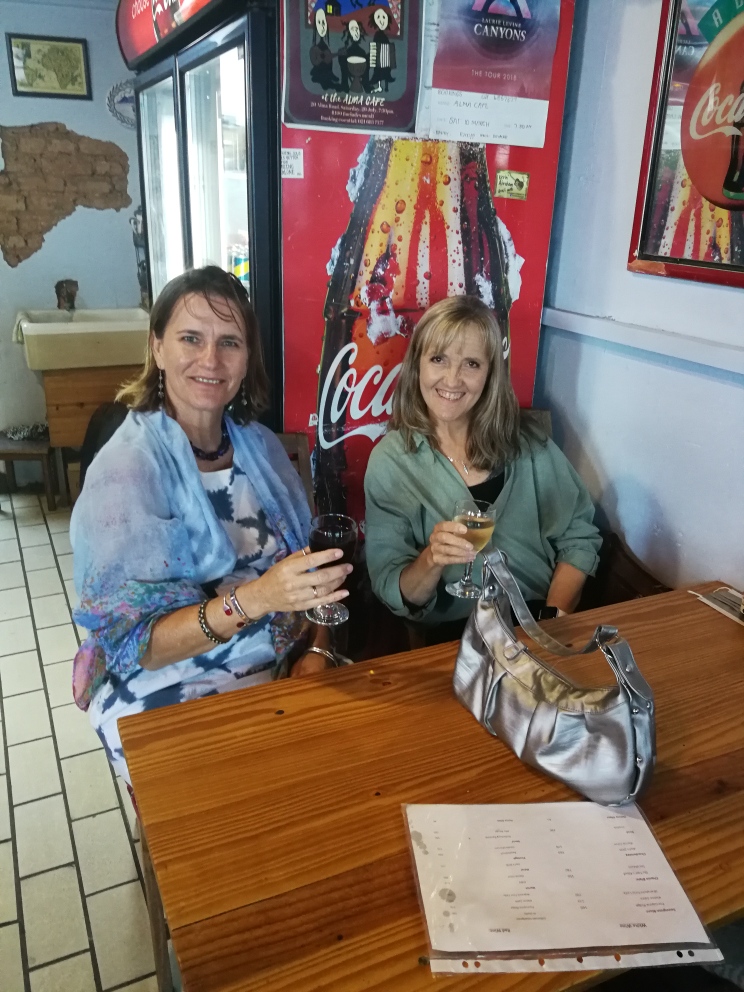
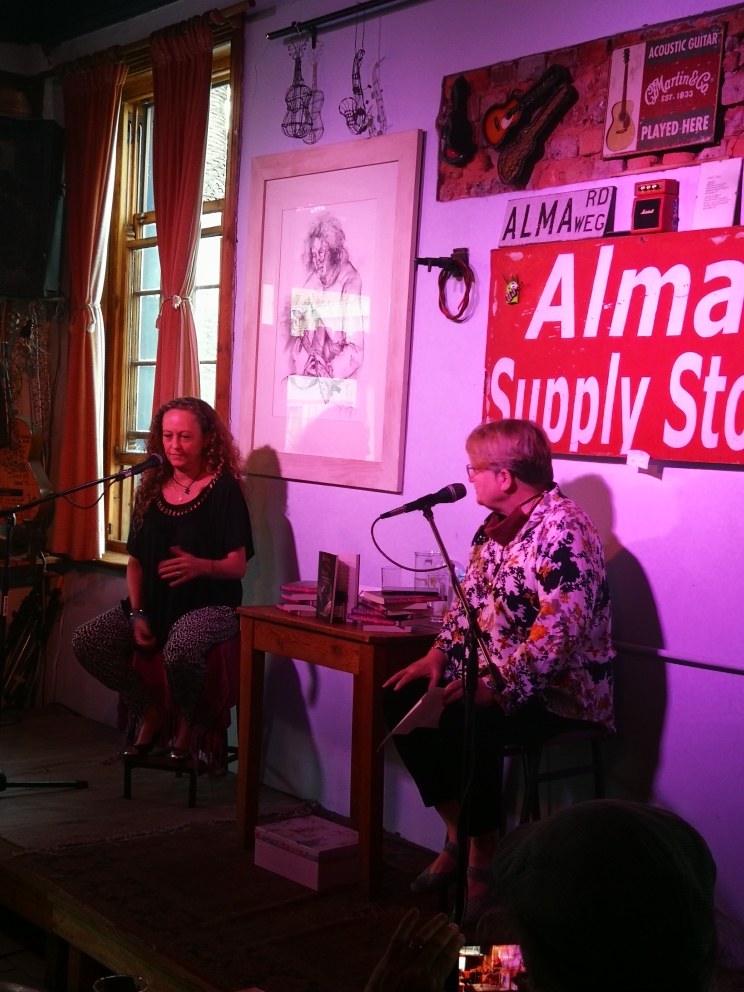
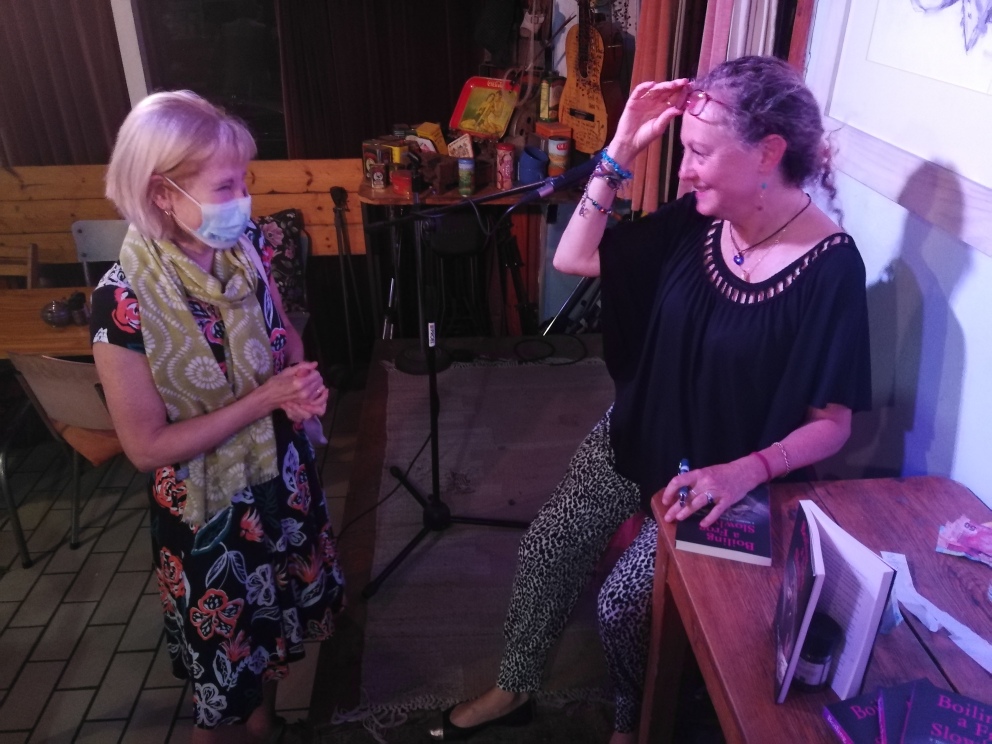
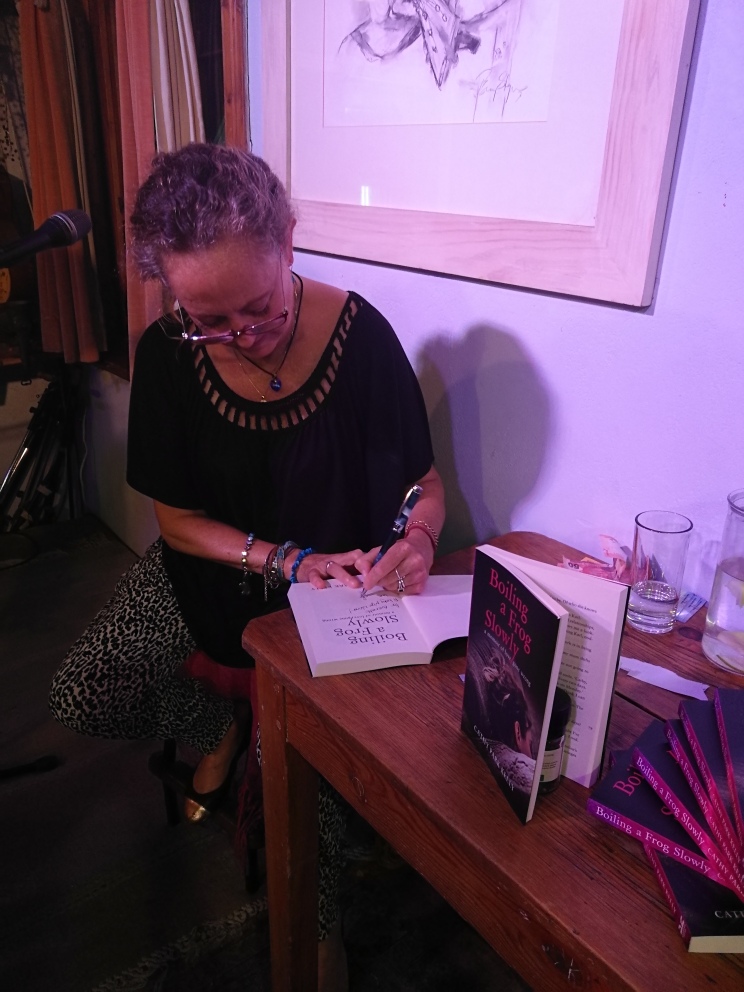
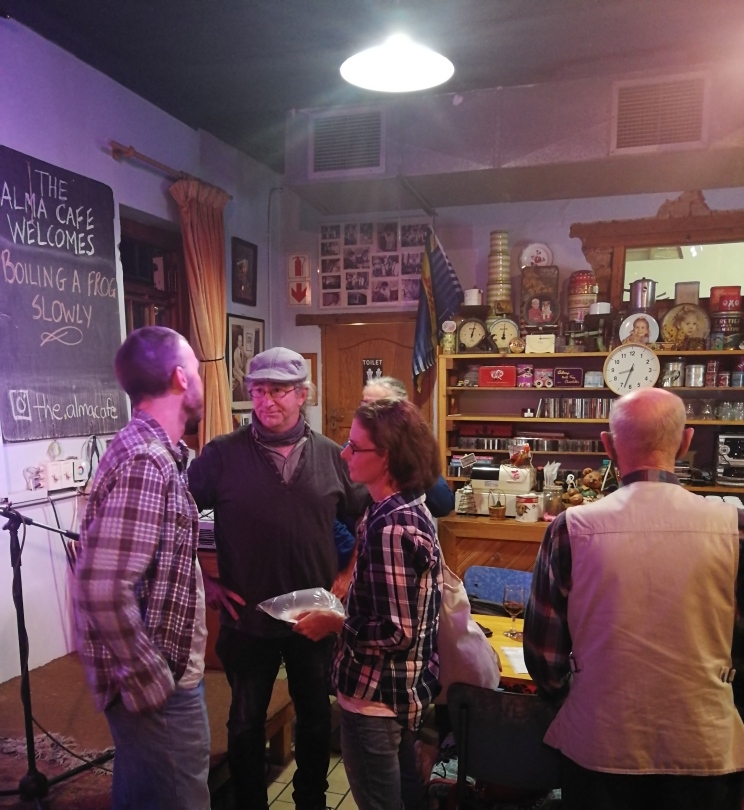
There are certain books one wishes would never have to be written, but because our reality is what it is, we can only be grateful to authors like Cathy Park Kelly for facing the darkest corners of our existence and exposing them to the light of understanding and healing. Cathy’s wrenchingly honest and powerful memoir about the abuse she suffered at the hands of a partner, Boiling a Frog Slowly, was launched at The Alma Café last night. The launch was postponed in December because of the fourth wave, but it could finally happen. Family, friends, authors, readers and the resident cat gather at the wonderful venue and celebrated Cathy and her empowering book with Alma’s legendary Cornish pasties and lemon meringue pies. Cathy was in conversation with local writer and editor, Máire Fisher. It was a beautiful evening and once again I applaud Cathy’s courage in bringing this book into the world.
Thank you to everyone who attended, and mountains of gratitude to The Folks at the café for making their space available for literary events and always making us feel so warmly welcomed.
It gives me great pleasure to announce that Melissa Sussens will be publishing her superbly crafted debut poetry collection, Slaughterhouse, with Karavan Press later this year. I have been reading Melissa’s poetry across literary magazines and the web for about two years now and it has always moved and inspired me. It will be a joy to share it with readers in book form. Poetry lovers are in for a true literary treat!
Melissa Sussens is a queer veterinarian and poet. Her work has appeared in Stanzas Poetry Magazine, SFWP Quarterly and Isele Magazine, among many others. She has performed at the Poetry In McGregor festival, Off The Wall and The Red Wheelbarrow where she also hosts poetry readings. Melissa placed 2nd in the New Contrast National Poetry Prize and was amongst the winners of the ClemenGold Writing Competition in 2020. She was selected for the Poetry for Human Rights anthology, Between the Silence, in 2021 and has been nominated for Best of the Net. By day she works as a small animal veterinarian and whenever she’s not doctoring animals, she can be found immersed in writing, editing, or reading poems. Melissa lives in Cape Town with her fiancée and their two dogs. Find her on Instagram and Twitter @melissasussens.
‘Boiling a Frog Slowly’ is an intensely personal memoir about escaping abuse
Cathy Park Kelly’s compelling and painstakingly honest book describes the insidiousness of abuse and how hard it is to leave a toxic and violent relationship
Boiling a Frog Slowly is a courageous, emotionally sincere exposé of a romantic relationship that slides into increasingly disdainful and abusive territory, when love indeed goes wrong. It’s about how terribly difficult it is, as a woman, to extricate oneself from a toxic, manipulative relationship in which one is treated with violence and contempt.
Right from the opening scene, which describes violence so extreme that I caught my breath, I was hooked and wanted to know how this could have happened to a woman I know — albeit on the periphery — as professional, caring and compassionate. What led to the point where Cathy was held down by her partner, as he scrawled the words slut, whore and c**t across her breasts with a red Koki pen?
Boiling a frog slowly is a courageous exposé of a romantic relationship that slides into increasingly disdainful and abusive territory, when love indeed goes wrong. In this interview, Joanne Hichens chats with Cathy Park Kelly about her experiences and the writing of her memoir.
Boiling a frog slowly, a memoir of emotional and physical abuse at the hands of an early lover and partner, is searing in its honesty. Your story shows how terribly difficult it can be for a woman to extricate herself from a relationship in which she is treated with violence and contempt. What prompted you to write your account of abuse at the hands of your male partner?
It’s what I do – I use my writing to explore my life and pick out threads that shine with truth for me. What I have learned, and what I am coming to trust, as I write more and share my writing more, is that these threads are universal. They are present in many human stories. When it comes to the story of the abusive relationship, I wanted to do two things: make sense of this experience for my own sake, and also make something out of this chapter in my life that I could share with others.
On the first, personal level, I used my writing to make sense of this chapter and to crack through the disbelief I was left with, to dig beneath the feeling of “What the f*ck?” to get at the truth of what it meant. I was weirdly fascinated, as well as confounded, by what I had gone through, so I used my writing to create some sense of order and understanding.
But, on the more universal level, I was driven to write this for the unknown reader out there. I felt that I had learned much and gained many insights, and this hard-earned knowledge burned inside me. It felt alive, like it wanted to be given a voice …
… Volker’s tales are carefully spun, a weave of gossamer thread of the finest ilk. Her books take a while to write and she has an uncanny ability to transpose the reader into time and place.
In A Fractured Land, we are able to visualise the arid landscape, the sweat of hot nights is tangible, and we can smell the lingering scent of wisteria on dry, balmy days. Volker is adept at breathing life into the South African landscape, making it jump off the page to embed itself in the reader’s mind.
“Quite a lot of work goes into my books,” says Volker. “I have been working on my current novel for about three years. I’m quite fussy. I try hard to layer the characters, to make the dialogue work. I feel like each novel is taking longer – maybe I’ve become a harsher critic of my own work, or maybe I am learning the craft of writing more.”
The time that Volker invests in her writing is evident in her other books, Shadow Flicker (released in 2019) and The Pool Guy, a novella published in 2021. Attention to detail sets her work aside from other books in the genre, where some writers have managed to push out many books in a short time.
Volker’s writing stands out in its meticulous effort to cobble together a love story that is complex, exquisitely told and of a high calibre.
What also sets Volker apart is that both A Fractured Land and Shadow Flicker skillfully incorporate an attempt to pluck at the strings of environmental consciousness.
“I write about the environment because it’s an issue of concern to me. When writing the books, I thought about some of the social circles that I am in where these issues don’t even touch ground. I realised that one way of getting people to think about it is through fiction.
“Sometimes people are just so fatigued about bad news and watching it on TV. So I wanted to package it in a way that was palatable… in a way that raises awareness.”
“If someone in your life is not sane, then expecting the best from them or working on yourself or breathing into the pain is a long road to misery. Sometimes you just need to walk away.”
These lines, drawn from the end of Cathy Park Kelly’s Boiling a Frog Slowly (Karavan, 2021), explain the central premise and plot of this compelling memoir. Don’t be fooled by their simplicity though, Park Kelly’s clarity is hard won.
In fact, what makes this book so riveting is the way in which Park Kelly describes just how complex and subtle the descent into an abusive relationship can be. What begins as an exhilarating new love unravels slowly into the terror and claustrophobia of mental and physical abuse.
While this book is about a difficult subject, it is not hard to read. Many memoirs of abusive relationships go heavy on the unremitting horror of the situation with the sad effect of numbing a reader. Instead, Park Kelly tells her story with warmth and wry humour. This has the effect of making her unflinching descriptions of the abuse and terror she experienced even more harrowing when you get to them.
What I like best about this book is the author’s quiet commitment to telling the truth, even when it is complicated, unpretty or ordinary. This is particularly apparent in her telling of how she extricated herself from the relationship. Whereas many such memoirs end with a flourish (the blinding once-off revelation, the dramatic flight, the packed suitcase), Park Kelly details instead the slow, hopeful, painful and painstaking journey towards recovering her agency and the confidence to leave the relationship behind. This rigour and integrity acts as a wonderful astringent against the often cloying “happy endings” that such books sometimes claim. Instead of ending with the first glimmer hope, Park Kelly looks beyond the easy ever after to paint a much more compelling portrait of a woman who, in the end, rescues herself.
Listen to this wonderful interview and get to know Lester Walbrugh, the author of Let It Fall Where It Will, as he talks to Nancy Richards about growing up in Grabouw, expectations, travels, writing, language, his upcoming novel and buses:
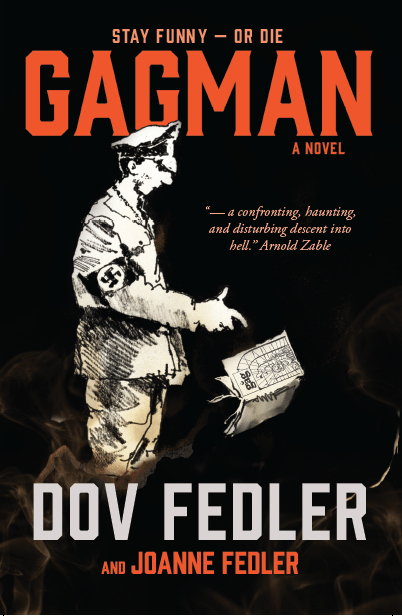
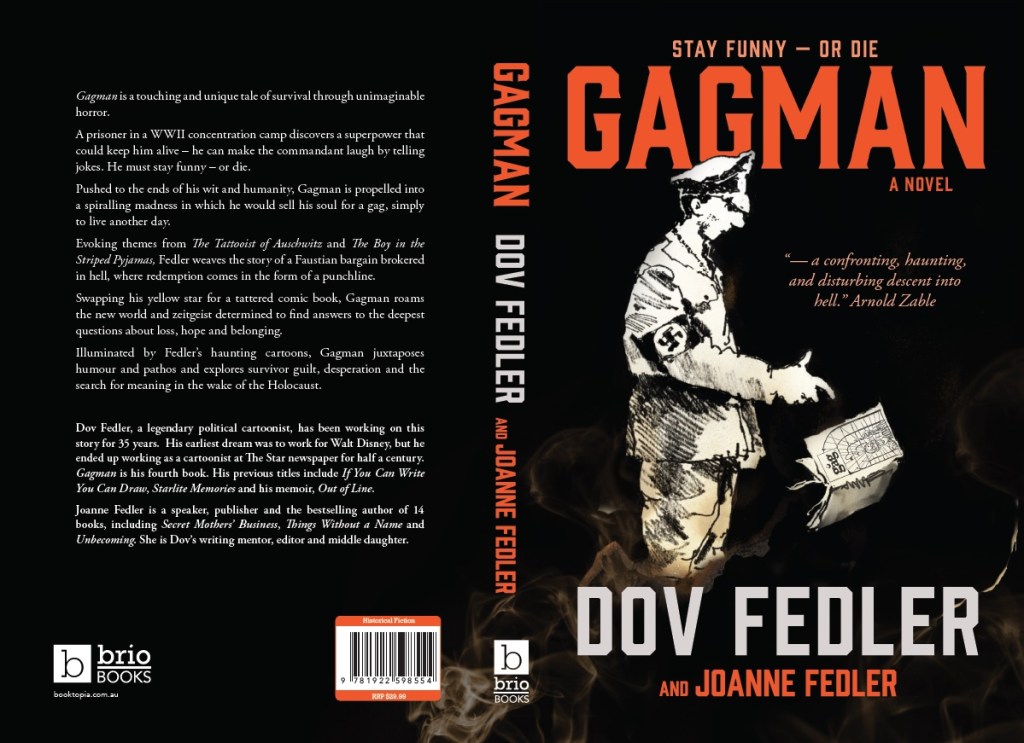
WE ARE DELIGHTED TO ANNOUNCE THAT KARAVAN PRESS IS THE SOUTH AFRICAN DISTRIBUTION PARTNER FOR DOV AND JOANNE FEDLER’S HAUNTING NOVEL, GAGMAN.
A prisoner in a WWII concentration camp discovers a superpower that could keep him alive – he can make the commandant laugh by telling jokes. Pushed to ends of his wit and humanity, Gagman is propelled into a spiralling madness in which he would sell his soul for a gag simply to live another day.
Evoking themes from The Tattooist of Auschwitz and The Boy in the Striped Pyjamas, Fedler weaves the story of a Faustian bargain brokered in hell, where redemption only comes in the form of a punchline. He must stay funny – or die.
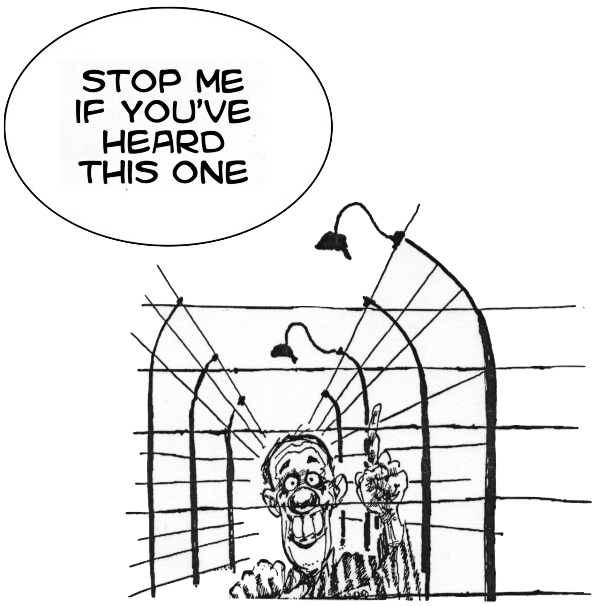
Enhanced by Fedler’s own haunting illustrations, Gagman masterfully juxtaposes humour and pathos, while exploring themes of survivor guilt, desperate determination and the search for the meaning of life in the wake of the Holocaust. Swapping his yellow star for a tattered comic book, Gagman roams the new world and our consciousness determined to find answers to the deepest questions about loss, hope and belonging.
Gagman is a touching and unique tale of survival through unimaginable horror.
“Gagman is a daring and uncompromising work, both allegory and achingly real — a confronting, haunting, and disturbing descent into hell, drawing on word and image to create a world in which to remain sane one must go mad. Dov Fedler totally inhabits his protagonist, and pushes his craft and his imagination to the limits to expose the horrors of Nazism, and to explore the redemptive power of art, humanity and humour.” — Arnold Zable
“Dov Fedler, in Gagman, has plunged the reader into a crazy world where the Holocaust collides with Superman and Nietzche and the result is a virtuosic graphic and written allegory. It is a very original take on a highly contested history – who can tell the story of the Holocaust? Through a pastiche of Talmudic scholarship and confronting black humour, Gagman is a way of looking into the abyss. A 21st century Scheherazade, a tale for our times.” — Sydney Jewish Museum
“Gagman is a searing and brilliant book which does more to expose the horrors of the Nazis than any book since Eli Wiesel’s Night.” — Alan Gold
“With a humour so searing and audacious it made me gasp, revered cartoonist Dov Fedler bears witness to the horrors of the Holocaust in this extraordinary work of startling originality and ingenuity.” — Suzanne Leal, author of The Deceptions
“Gagman is an extraordinary piece of work — strange and haunting and uniquely itself.” — John Maytham
“Can we transform suffering into art and, more outrageously, into humour? Two Jews walk into my heart with a book that made me laugh and cry at the same time. Gagman treads the edge of the forbidden joke, speaking to the histories of all marginalized people. A book of bitter and sweet nuance in which ‘everything is speakable’.” — Tyson Yunkaporta, author of Sand Talk
ABOUT THE AUTHORS
DOV FEDLER, one of South Africa’s legendary political cartoonists (now retired), has been working on this story for 35 years. His earliest dream was to work for Walt Disney but he ended up working for The Star newspaper as their cartoonist in the early 1970’s instead, and had a career that spanned half a century. Gagman is his fourth book. His previous titles include his memoir, Out of Line (Tracey McDonald Publishers, 2015), If You Can Write, You Can Draw (Joanne Fedler Media, 2018) and Starlite Memories (Tafelberg, 2020).
JOANNE FEDLER is an internationally bestselling author of 14 books, speaker and publisher. Her book Things Without a Name has been optioned for a TV mini-series. She is Dov’s writing mentor, editor and middle daughter.
If you are a bookseller, please contact BOOKSITE to order copies of Gagman. If you are a reader, please ask your local bookshop to order the book for you via Booksite.
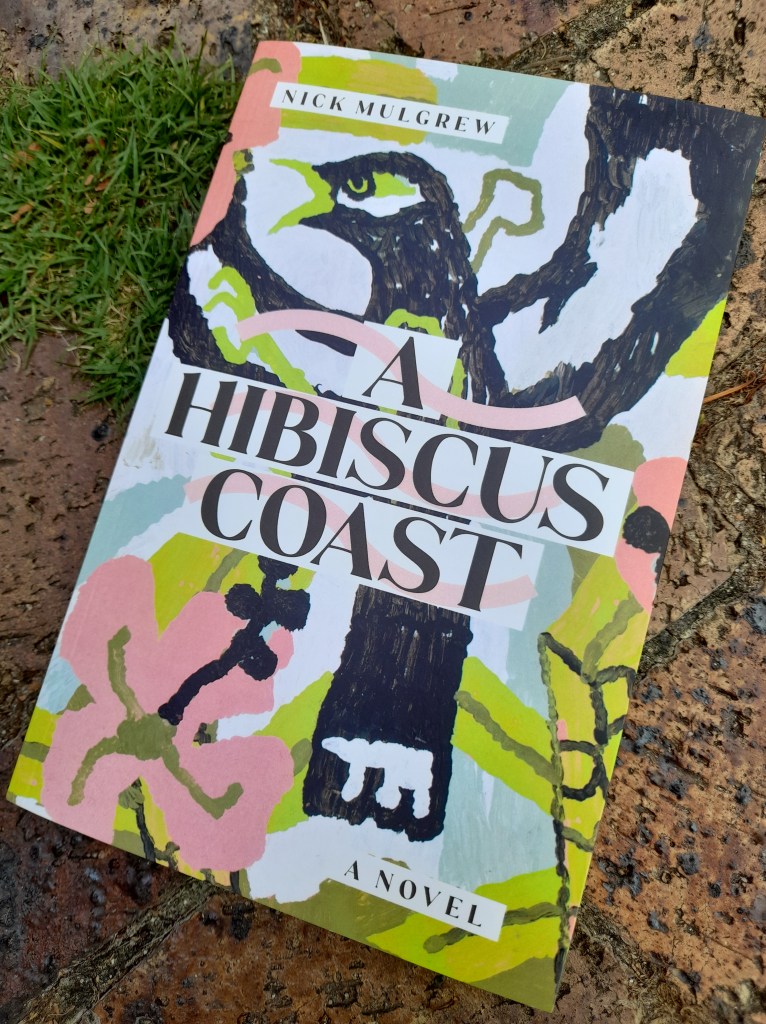
In my opinion, Nick Mulgrew is the most extraordinary young man of words. Quick bio run down: In 2014, in his early twenties, he founded uHlanga, a magazine of poetry from KwaZulu-Natal – the now award-winning uHlanga Press publishes poets more widely. Personally, he’s had the support of the German Sylt Foundation, the Swedish Literature Exchange, amongst others, and was a Mandela-Rhodes scholar. His work, mainly short fiction and features, has won lots of awards and accolades, including a Thomas Pringle and Nadine Gordimer Award. He’s written four books, was born in South Africa in 1990, raised both in Durban and Orewa, New Zealand, is currently doing his PhD at Dundee University and is based in Edinburgh. This is not to over-brag on his behalf, just to expand on his background which again, in my opinion, throws light on why this, his fourth book and first novel is also completely extraordinary. And absolutely original.
The story starts in South Africa – the opening line, ‘The neighbours were murdered at Christmas.’ lays the cards on the table, and then, through the person of 19-year-old Mary, makes its way across oceans to New Zealand. It’s no coincidence that there is a Hibiscus Coast in both countries.
On the imprint page, it says ‘This book is a work of fiction. Any descriptions…of actual persons, places, events or organisations are fictitious.’ I’m sure this is quite true, but the persons, places, events and organisations here are so meticulously described as to ring peels of bells – both in what a reader may have experienced or imagined. Whilst I’ve never been to New Zealand, the images, and dialogues especially, appear to have been born from close and processed observation. And research. Mulgrew acknowledges, together with the South Coast Herald archives, the National Library of New Zealand, the Auckland City Library, Takupuna Library and UCT Library as some of his sources. Interestingly, something of a graphic artist, young Mary spends a bit of time in libraries too. He was also helped tremendously by ‘komiti members of Te Herenga Waka of Orewa’ – so those who know little of the indigenous culture of NZ are in for some lessons. Now I know what a ‘hangi’ is, and that it needs to get laid. In fact I think I learnt quite a bit about South African culture too – for better and worse.
But aside from the extraordinary insight that’s gone into this book, as well as lived experience and research, what I found to be so absolutely original is its construction. The text is ‘illustrated’ with what you might call ‘supporting documentation’ – affidavits, newsletters, newspaper cuttings, posters, flyers, even hand-written notes. It’s been conceived and laid out with such care, that it commands respect – as well as a place in the timeline of both countries. I’m sorry not to have given any details of the plot itself, but oty to discover. Finally, they say you can’t tell a book by its cover, but what you can tell from this one, is that it really IS absolutely original.







 karavanpress.com